Tag: PhD

  • Samuel Hahnemann

    Samuel Hahnemann

    by Beth Haley

    “By similar things a disease is produced and through the application of the like is cured.” Hippocrates (460-377 BC), ‘Father of Medicine’


    In the 5th century B.C.E., the Greek physician Hippocrates, known as the “Father of Medicine,” was first to understand the principle of treating the body with a remedy that produces similar symptoms to the ailment that was suffered. He studied the symptoms, how a person reacted to an ailment and their own ability to heal, to diagnose and then choose a cure. Through his work, he developed his own homeopathic remedies.

    However, it was the German physician, Samuel Hahnemann (1755 – 1843), who first developed homeopathy as we know and practice it today. Hahnemann was a physician, author and chemist. He noticed that the methods of treatment at that time were often more debilitating than the disease, and that these practices were not working.

    Hahnemann was one of the first physicians to advocate for improved diet, fresh air, and better hygiene. However, he did not generate much support and so he gave up his medical practice and became a translator of medical texts in Leipzig. One text was called, “A Treatise of Materia Medica,” by Dr. William Cullen of London University. Cullen wrote about quinine (an extract of Peruvian bark), and credited its ability to heal malaria to its astringent properties. Hahnemann knew that quinine was an effective remedy for malaria, but didn’t believe that it was because of its astringency. Thus began Hahnemann’s exploration of how quinine helped with malaria.

    He began to take doses of quinine, recording his reactions, and found that he developed all the symptoms of malaria (palpitating heart, irregular pulse, sleepiness, and thirst), despite the fact that he did not have malaria. Every time he took a dose of quinine, the symptoms returned. He deduced that it was quinine’s ability to produce malarial symptoms that made it an effective treatment. He also tested doses of quinine on others with the same results.

    Thus the idea behind the phrase, “Like cures Like,” was born.


    According to homeopathic principle, the symptoms that a substance causes, it can also cure.


    Substances causing similar symptoms, stimulate a healing response, giving the body what it needs to do its healing work. This healing reaction is called ‘vital response’.

    Substances gathered as ingredients for homeopathic remedies can actually be very harmful as they are. Where do antidotes come from? For example, antidotes can be made from snake venom, which from a bite, can be lethal. But turned into medicine, they can heal the same issue that was caused by the venom originally. They can even heal issues that have similar symptoms such as skin eruptions.

    Example: Bees are used to make a remedy called Apis Mellifica which can bee helpful in treating rashes that burn and “sting.”


    Testimonial

    A friend of mine used to have a terrible time with scabbing and flaking on her scalp. She noticed that when she traveled to different areas and showered in different water, that her scalp would clear up. She said it happened by the coast, and that the water smelled like sulfur. I happened to have some homeopathic Sulfur, and when she took it, her scalp cleared up. She found that taking it a few times a week kept her scalp clear.

    A substance that can cause extreme skin discomfort (such as burning hives), in a minute homeopathic amount, caused a healing reaction for her scalp condition.


    Sources:

    The School of Homeopathy

    The Illustrated Encyclopedia of Healing Remedies by Norman Shealy MD, PhD

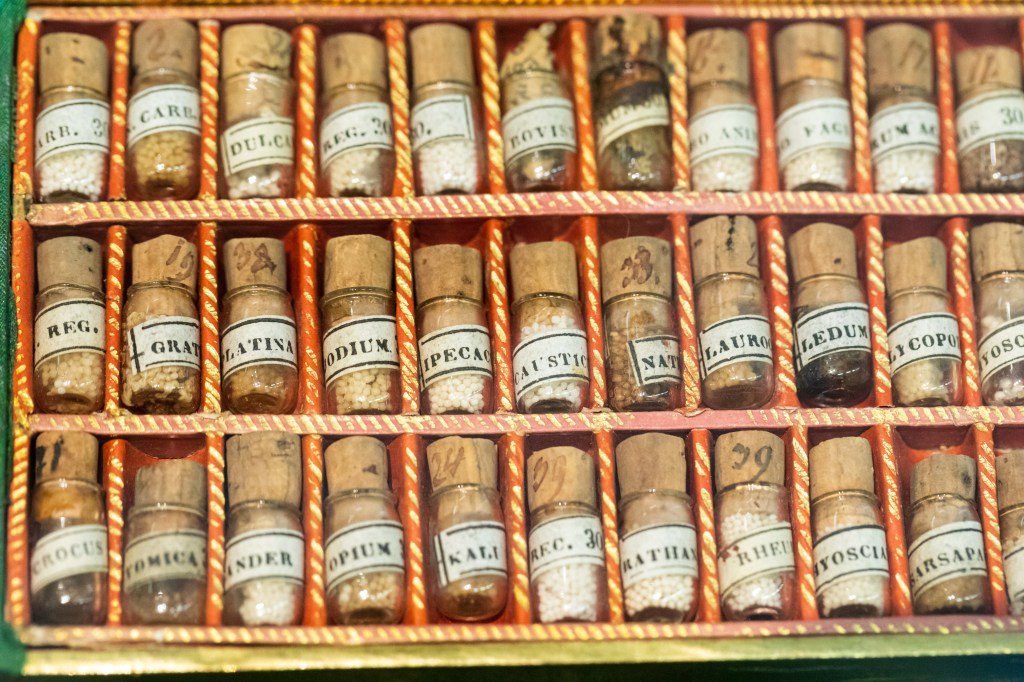
    Photo by Zdenek Machacek

  • Memory Observation Practice

    Memory Observation Practice

    by Beth Haley

    Observation skills can take some time to develop. When you’re in the middle of reacting, it’s hard to remember that you have other options. The goal of observing emotions and responses can be forgotten in the storm of the moment, and sometimes it feels like the commitment to make a choice between one response versus another, is overridden by the events and emotions. It can be discouraging, but mindfully observing yourself during triggering moments, does improve over time.


    Memory Observation Exercise

    Find a comfortable position in a peaceful, safe space and close your eyes.

    Take a deep cleansing breath, in through your nose, and exhale away any tension out through your mouth.

    And another deep cleansing breath in through your belly, and blow away any remaining tension.

    Now turn your mind back to a recent memory where you became upset or felt triggered. Let this memory return in full detail, and just sit with it and observe. Look at every part of the event…the room, the temperature, textures and colors… who was there, and what is being said.

    Let your emotions build as the scene unfolds again in your mind, and see and hear what is happening. Just watch and listen until your emotion in that space is strong enough to observe. As you observe this feeling, see if you can name it, and try to name any other feelings you notice.

    What thoughts come up during this time? Thoughts about the situation…thoughts about the emotion or feelings?

    What physical sensations go with your emotions? Do you feel it in a specific place in your body? Notice sensations in your head, face, chest, arms, stomach and legs.

    What does the emotion make you feel like doing? What urges rise to the surface? Observe how you respond. Are you swept away on the swell of emotion, or can you see a choice in how you respond?

    Now, while you are in this safe and quiet space, with more time to think and analyze, can you develop, through this exercise, a game-plan you want to follow the next time you are triggered in the same way?

    By really sinking into a memory by observing it, you may get a sense of having a choice, and be able to separate yourself from the same old actions and reactions (withdraw, attack, blowup, deflect) and redefine a new way of being and responding.

    Journal the emotions, thoughts, sensations, and urges you encounter during this exercise. After doing this exercise a few times, you will get more accustomed to observing your triggered reactions. The more you become used to watching your reactions from the past, the better you will become at observing triggers as they happen in real-time. You’ll begin to notice moments of choice where you start to define new ways of interacting and responding to stressful situations.

    We can learn to watch our emotional sky and feel and see what the weather is like. We can choose to watch a storm instead of react to it, or become the sky, holding an experience, rather than being tossed around by it.

    That old sense of helplessness, where you felt forced to react to everything that triggered you, will, with time, no longer define you. Instead, you can stand at a distance, watching people or situations that trigger you, watching your emotions and urges, and still feel a sense of choice.

    Emotions don’t have to dictate your behavior; you will decide what matters in your life, and you will choose what to do.


    Another View

    Perhaps, like me, with some memories, you’re not ready for a new game-plan. As in, there is no action required, other than to heal. It may be that in order to heal, you let the memory unfold just to be with it. To acknowledge what happened and what is felt, not pushing any part of it away, but pulling the feelings close, embracing them in acceptance; letting them find their expression, perhaps for the first time, and allowing healing to come.

    A good exercise for healing past trauma, is to visualize your twin self entering the space you are at in this memory. And, walking up to you, they offer to you exactly what you need. Maybe it is a hug, to be held, to be heard, to be told specific words; perhaps it is to comfort the child that is you in this memory. Allow your twin-self to give you whatever you need at that point in time.

    Note: if the image of your twin-self doesn’t resonate with you, substitute this for something that really reaches you, such as: an Angel, God, a parent, Goddess, Source, The Great Spirit, The Divine…


    A great post on “How Memories Affect our Present” from Pointlessoverthinking.com:

    http://pointlessoverthinking.com/2019/07/01/how-memories-affect-our-present-reblog/


    Source: The Interpersonal Problems Workbook
    by Matthew McKay, PhD
    Patrick Fanning
    Avigail Lev, PsyD

    Michelle Skeen, PsyD

    Photo Credit: jplenio@pixabay