by Beth Haley
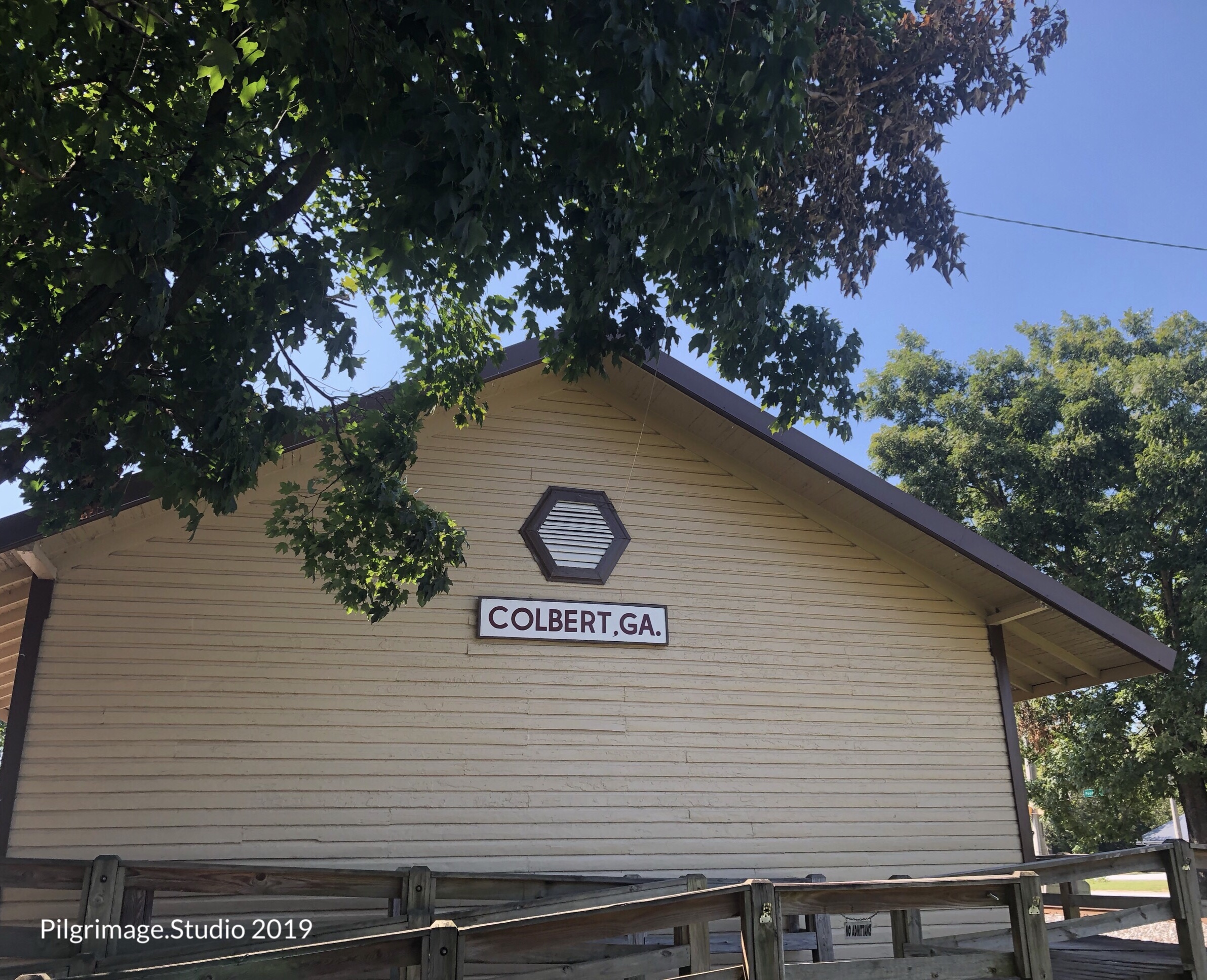
Trains, Trains, and by all means! One more moving. I am not sure why, but when I’m taking a picture of a train… one always seems to fly by.
And, the shot I was really after:


by Beth Haley
Trains, Trains, and by all means! One more moving. I am not sure why, but when I’m taking a picture of a train… one always seems to fly by.
And, the shot I was really after:
by Beth Haley

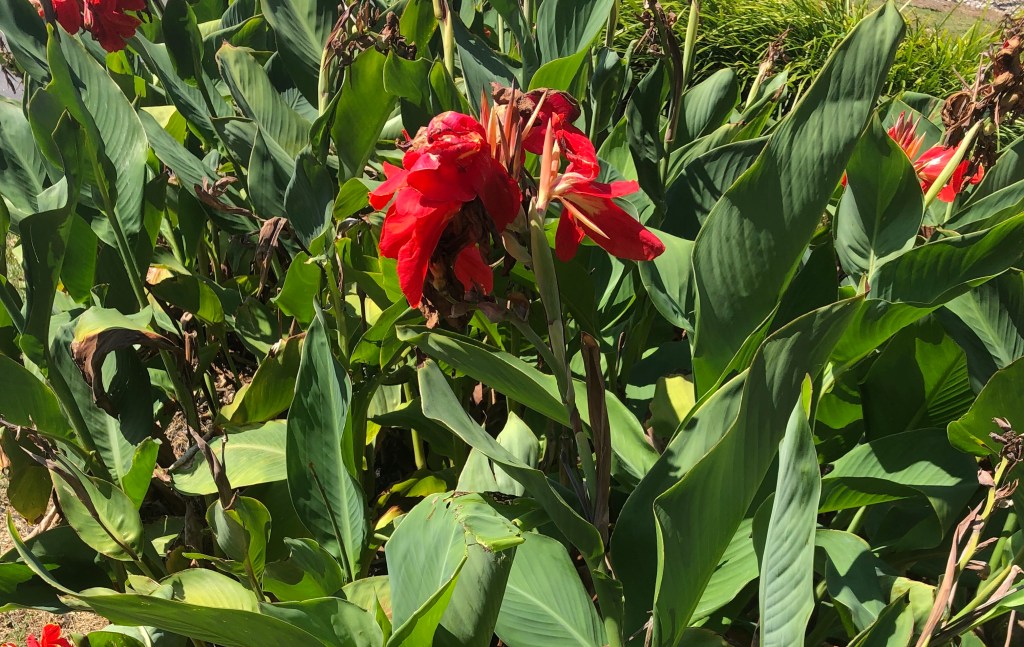
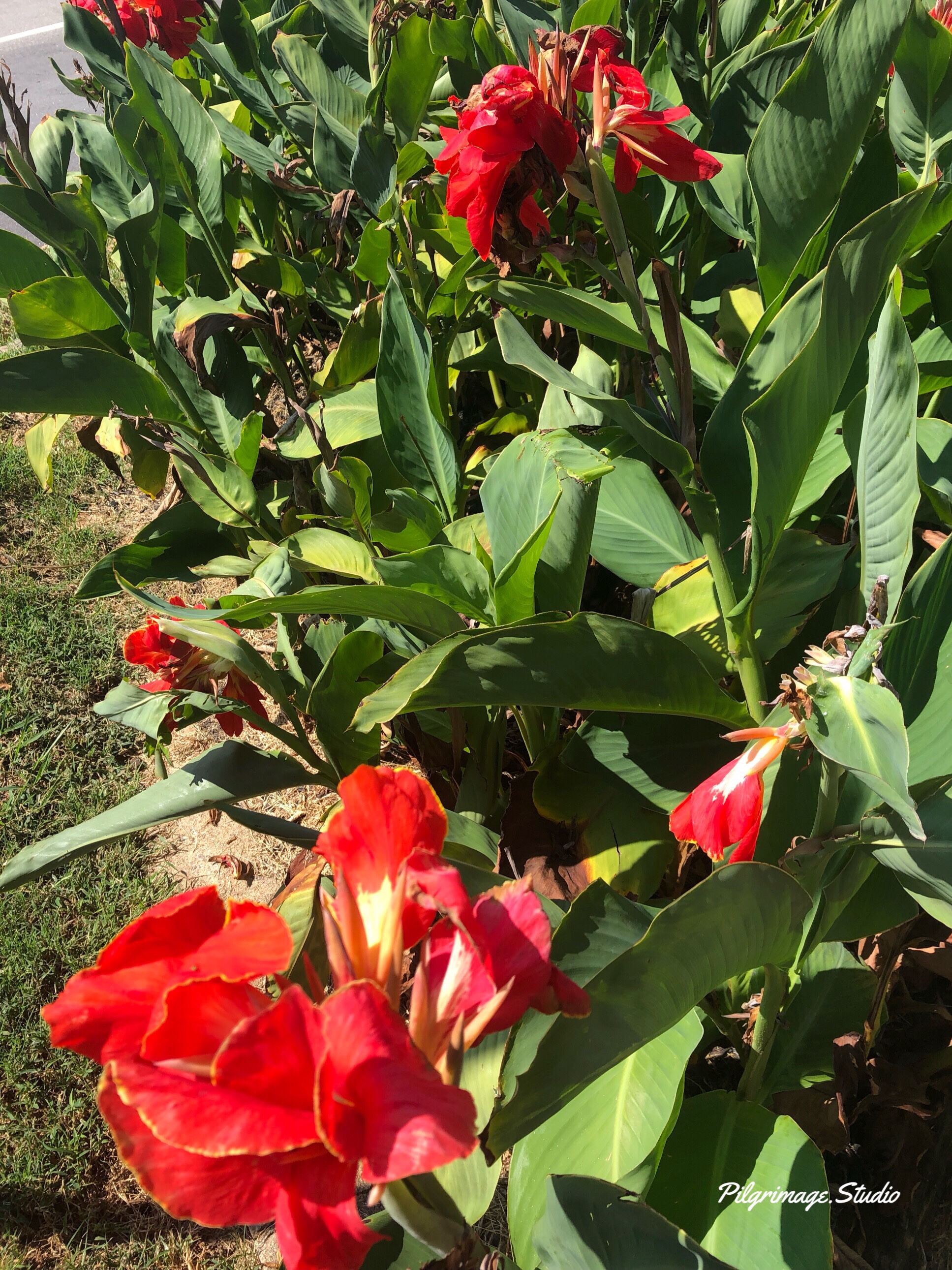
The Canna edulis, also known as Canna indica, is the only variety of Canna that has a history of use as food. Seeds from the canna plant are used to make natural seed jewelry.

by Beth Haley
If you are learning a new language, colloquialisms can be confusing. The metaphors, slang, and idioms most people are used to hearing every day might make very little sense.
For example: The saying, “Beware of Greeks bearing gifts,” has little to do with the Greeks, except for the history of the Trojan horse, and more to do with being cautious about overly generous gifts.
“I’m sitting on pins and needles,” might be a saying that is a “head scratcher” for people learning English. They may wonder about the safety of their chair and if the person speaking has a scalp condition.
“On the other hand, ” if you were to look at the “flip side,” most people, once familiar with a language, understand these types of sayings, and know that considering another point of view, or listening to opposite, or additional information, is what is represented by these sayings.
There is however, another group of people who can have difficulties with the everyday colloquialisms that they hear in their own language, and these are people on the autism spectrum. For them, slang terms that make sense to others are like “ships passing each other in the night” and their symbolism is not translated into a clear picture of what is meant or represented.
One might “bend over backwards” in an effort to speak clearly, but even with the best attempts, if colloquialisms are used, someone with autism may envision, “bend over backwards,” as a person doing a backbend.
For someone with autism, this goes farther than just the literal spoken words, and can affect being able to correctly interpret tone and body language as well.
For example, Sarah interprets “hello” as a greeting. Yet spoken in a different tone and using specific body language, a “Hello” might be someone trying to convey romantic interest. Despite the differences in tone and body language, Sarah still interprets “hello” as literally, just hello. This can create quite a bit of confusion unless the person in question clearly states their intentions and interests.
And, if being literally-minded is not challenge enough, once a metaphor is understood, knowing then how to appropriately respond, can be an even greater challenge.
For some, the challenges of a language dissipate with learning. For others, this has been, is now, and will always be a struggle for understanding – making each social encounter and conversation an event which feels like… well, like sitting on pins and needles.
‘Copy & Paste’ – Hidden Asperger’s – Girls with Aspergers | Niamh McCann | TEDxDunLaoghaire
by Beth Haley
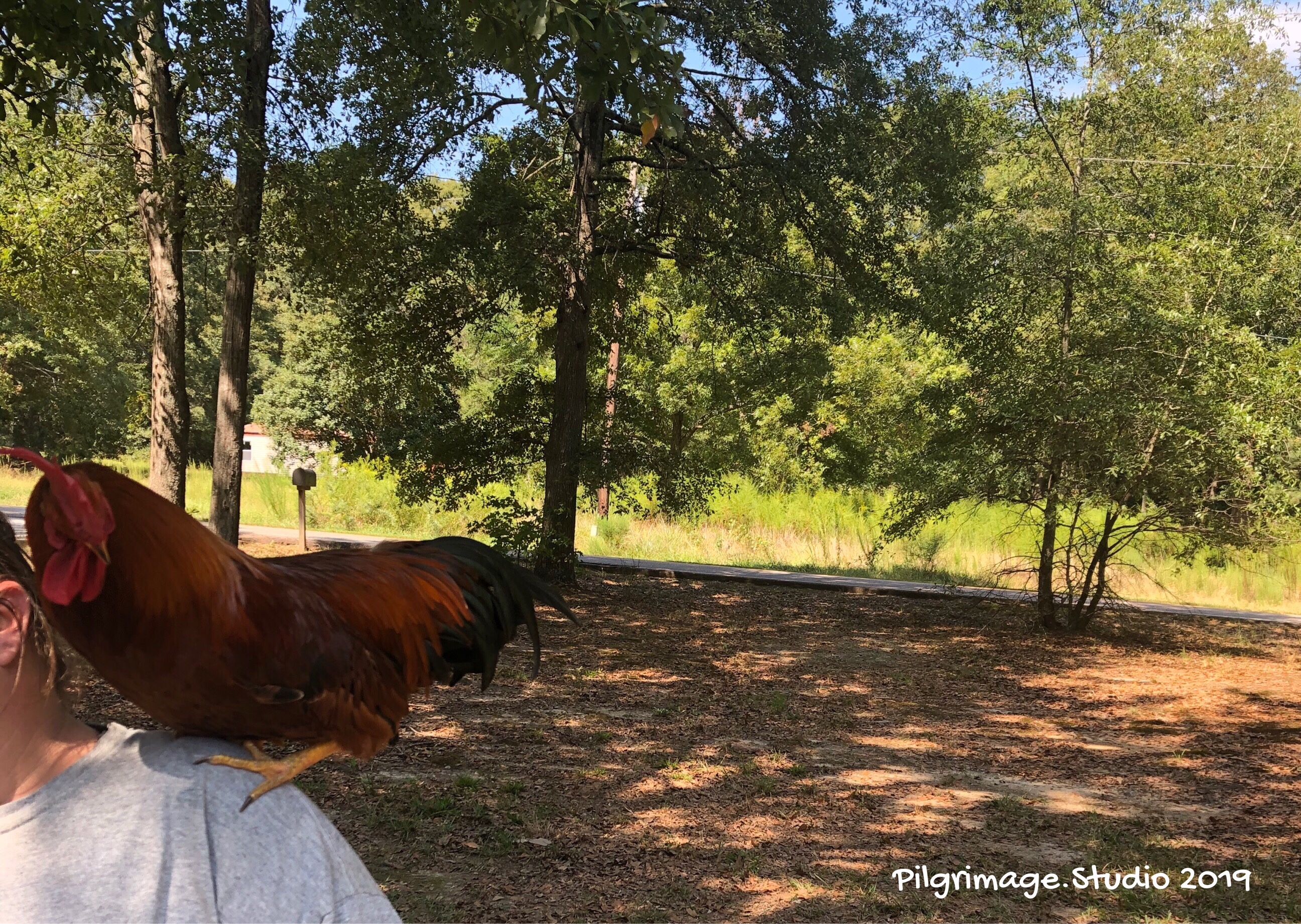
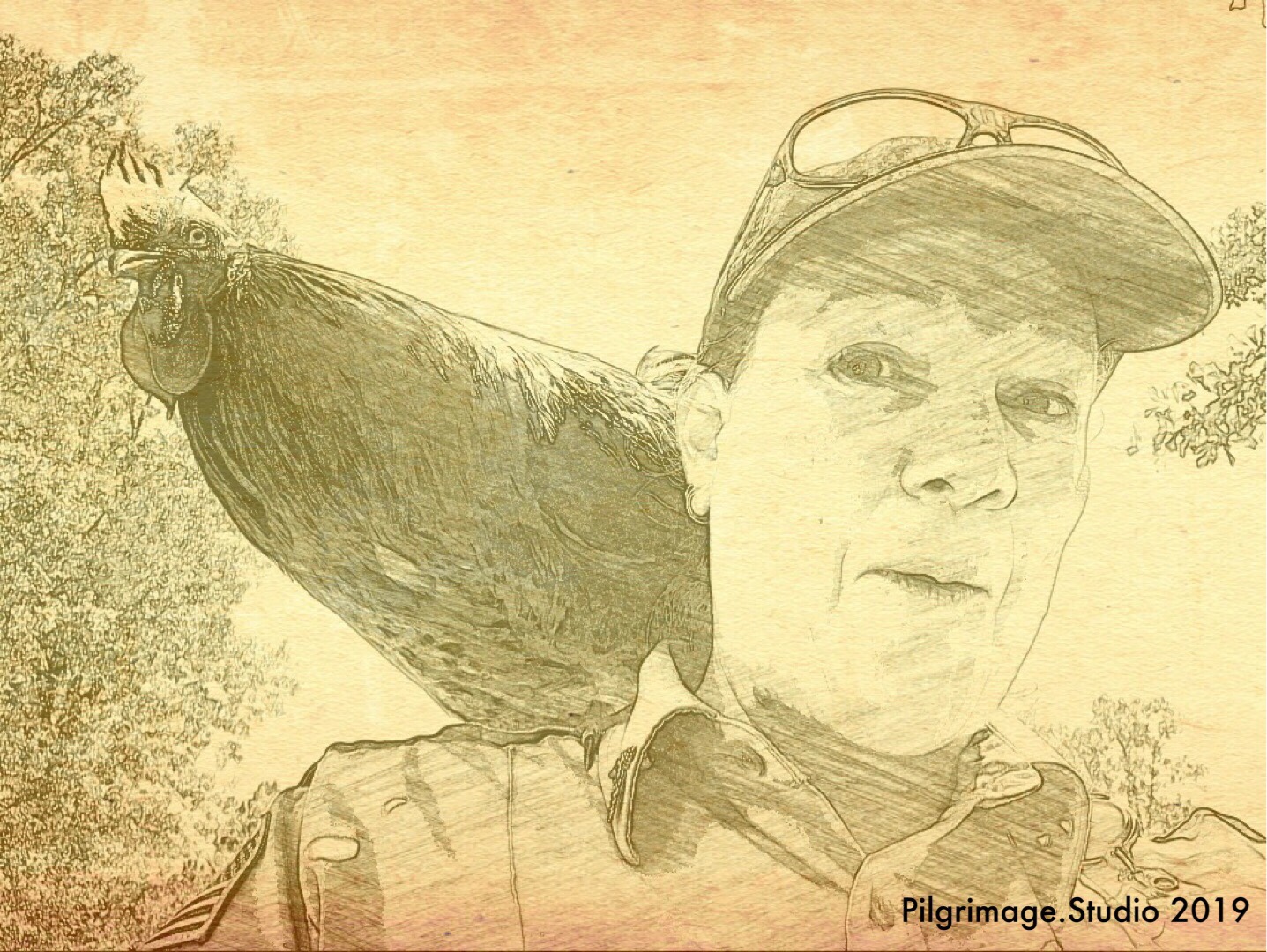
I came across something in my travels today that I had not seen before on this side of the woods: the new Vehicle Security System and travel companion, all in one.

Roost is very friendly and will happily sit on your shoulder, but beware: don’t stick your hand through the window!
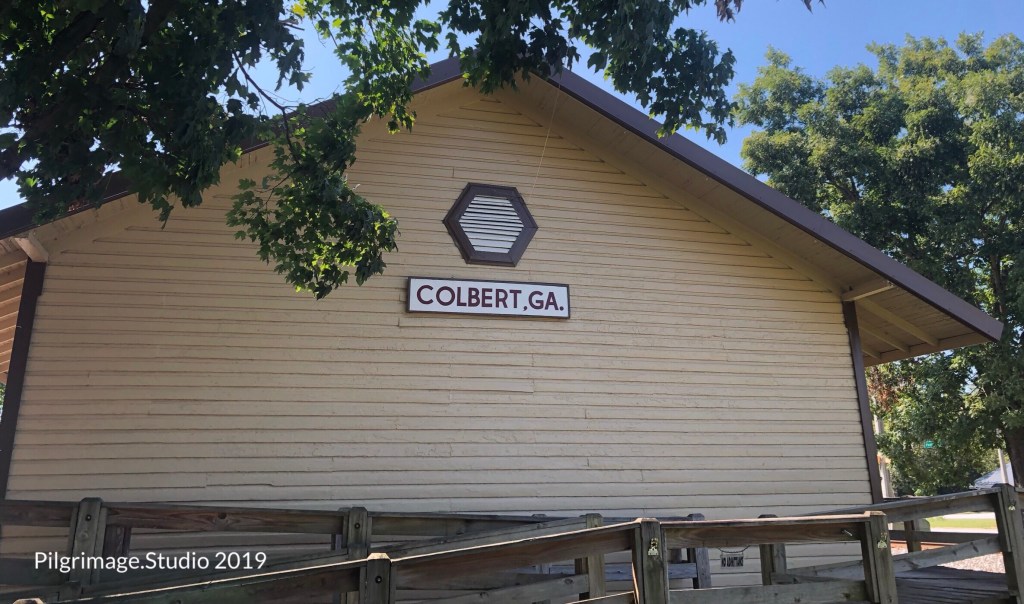
So far, I’ve only seen this new security system installed in one place, giving it the well-earned title:


From the North American Ute Indians
Earth teach me stillness
As the grasses are stilled with light.
Earth teach me suffering
As old stones suffer with memory.
Earth teach me caring
As parents who secure their young.
Earth teach me courage
As the tree which stands all alone.
Earth teach me limitation
As the aunt which crawls on the ground.
Earth teach me freedom
As the eagle which soars in the sky.
Earth teach me resignation
As the leaves which die in the fall.
Earth teach me regeneration
As the seed which rises in the spring.
Earth teach me to forget myself
As melted snow forgets its life.
Earth teach me to remember
As dry fields weep with rain.
–North American Ute Indians




Sparta Historic District, National Register of Historic Places

There is a Fountain of Youth: It is your mind, your talents, the creativity you bring to your life and the lives of the people you love. When you learn to tap this source, you will truly have defeated age.
Sophia Loren

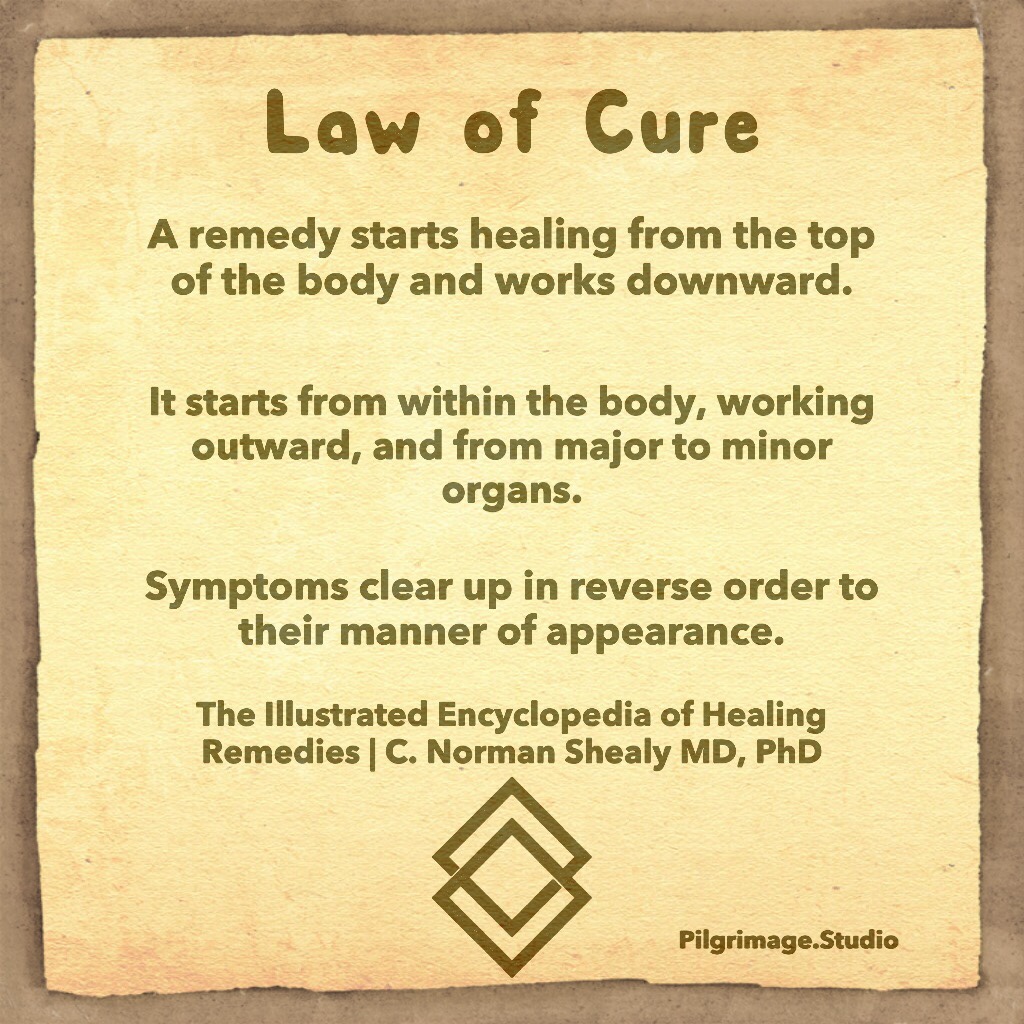
Hering believed that: healing begins at the deepest part of us – such as our minds and emotions and major organs – and then works outwardly to our extremities – that symptoms appear and clear up in reverse order to their original order of appearance, and that we heal from the upper parts of the body downward.
“The cure must proceed from centre to circumference. From centre to circumference is from above downward, from within outwards, from more important to less important organs, from the head to the hands and feet…Every homœopathic practitioner who understands the art of healing, knows that the symptoms which go off in these directions remain away permanently. Moreover, he knows that symptoms which disappear in the reverse order of their coming are removed permanently.” – Hering’s Law of Cure
Canadian Academy of Homeopathy
“Hering read through the works of Dr. Hahnemann; he felt challenged by Hahnemann’s words and set out to disprove his writings, but as he conducted his own experiments, he became convinced that Hahnemann’s conclusions were accurate.”
The first Law of Cure (similia similibus curantur) is considered to be ‘Like Cures Like.’
The second Law of Cure is Hering’s Law, which focuses on the direction that symptoms disappear during cure.
by Beth Haley
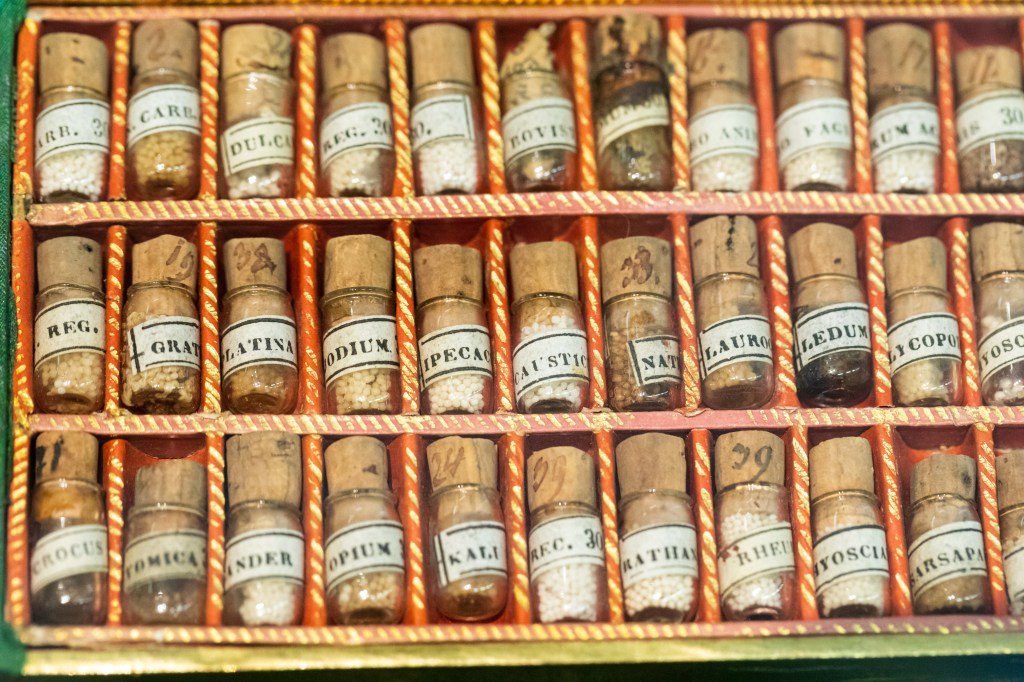
In the 5th century B.C.E., the Greek physician Hippocrates, known as the “Father of Medicine,” was first to understand the principle of treating the body with a remedy that produces similar symptoms to the ailment that was suffered. He studied the symptoms, how a person reacted to an ailment and their own ability to heal, to diagnose and then choose a cure. Through his work, he developed his own homeopathic remedies.
However, it was the German physician, Samuel Hahnemann (1755 – 1843), who first developed homeopathy as we know and practice it today. Hahnemann was a physician, author and chemist. He noticed that the methods of treatment at that time were often more debilitating than the disease, and that these practices were not working.
Hahnemann was one of the first physicians to advocate for improved diet, fresh air, and better hygiene. However, he did not generate much support and so he gave up his medical practice and became a translator of medical texts in Leipzig. One text was called, “A Treatise of Materia Medica,” by Dr. William Cullen of London University. Cullen wrote about quinine (an extract of Peruvian bark), and credited its ability to heal malaria to its astringent properties. Hahnemann knew that quinine was an effective remedy for malaria, but didn’t believe that it was because of its astringency. Thus began Hahnemann’s exploration of how quinine helped with malaria.
He began to take doses of quinine, recording his reactions, and found that he developed all the symptoms of malaria (palpitating heart, irregular pulse, sleepiness, and thirst), despite the fact that he did not have malaria. Every time he took a dose of quinine, the symptoms returned. He deduced that it was quinine’s ability to produce malarial symptoms that made it an effective treatment. He also tested doses of quinine on others with the same results.
Thus the idea behind the phrase, “Like cures Like,” was born.
Substances causing similar symptoms, stimulate a healing response, giving the body what it needs to do its healing work. This healing reaction is called ‘vital response’.
Substances gathered as ingredients for homeopathic remedies can actually be very harmful as they are. Where do antidotes come from? For example, antidotes can be made from snake venom, which from a bite, can be lethal. But turned into medicine, they can heal the same issue that was caused by the venom originally. They can even heal issues that have similar symptoms such as skin eruptions.
Example: Bees are used to make a remedy called Apis Mellifica which can bee helpful in treating rashes that burn and “sting.”
A friend of mine used to have a terrible time with scabbing and flaking on her scalp. She noticed that when she traveled to different areas and showered in different water, that her scalp would clear up. She said it happened by the coast, and that the water smelled like sulfur. I happened to have some homeopathic Sulfur, and when she took it, her scalp cleared up. She found that taking it a few times a week kept her scalp clear.
A substance that can cause extreme skin discomfort (such as burning hives), in a minute homeopathic amount, caused a healing reaction for her scalp condition.
Sources:
The Illustrated Encyclopedia of Healing Remedies by Norman Shealy MD, PhD
Photo by Zdenek Machacek



 Pilgrimage Studio