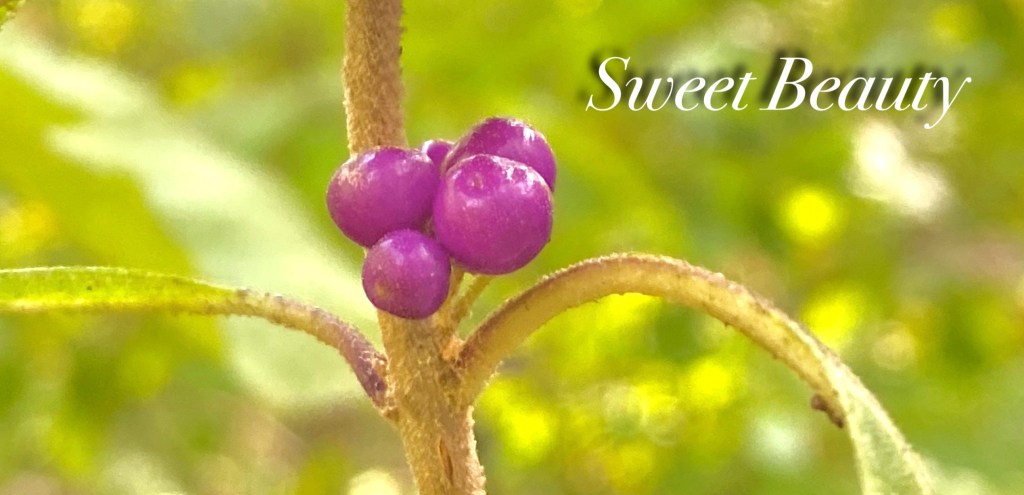
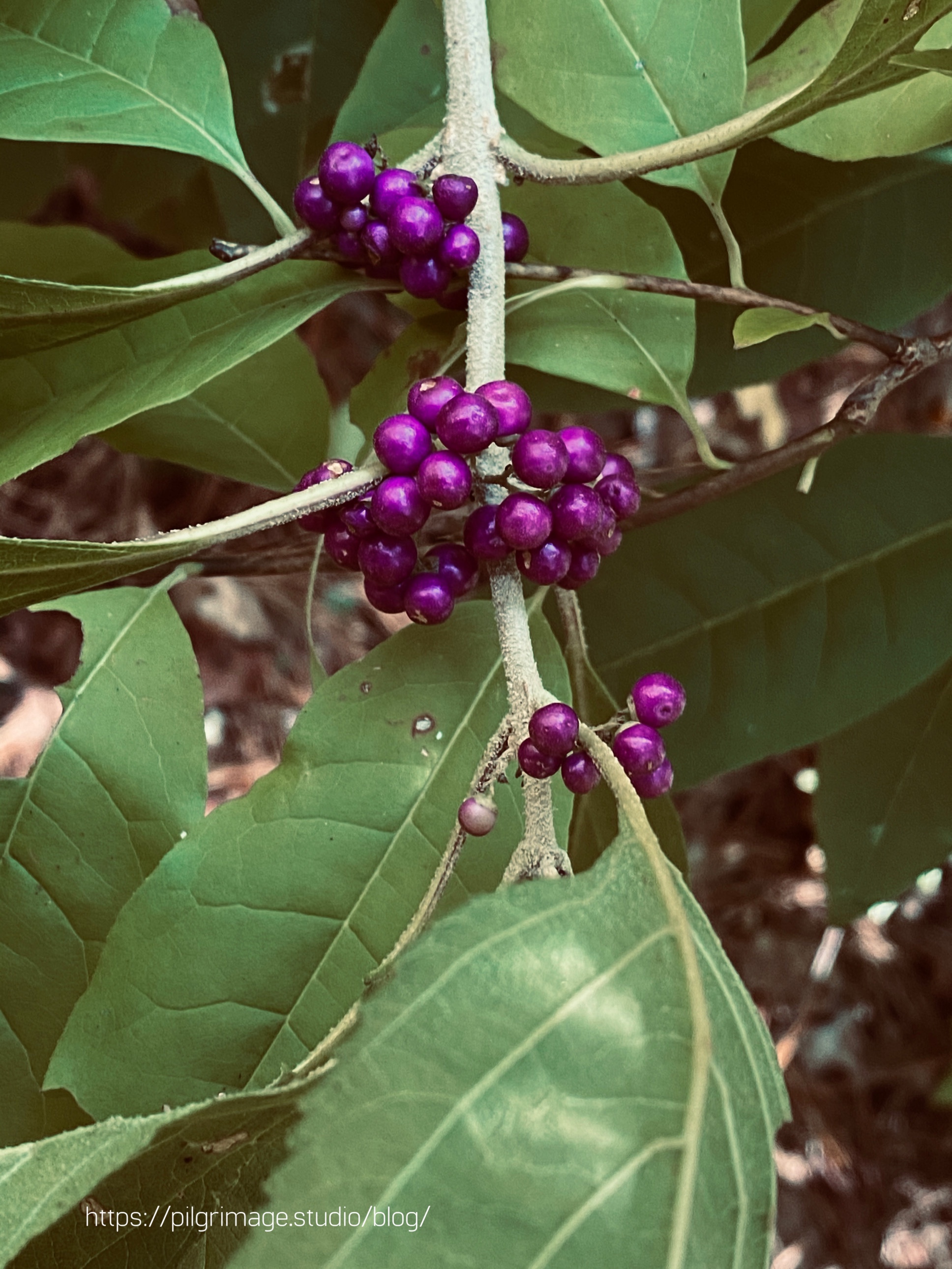
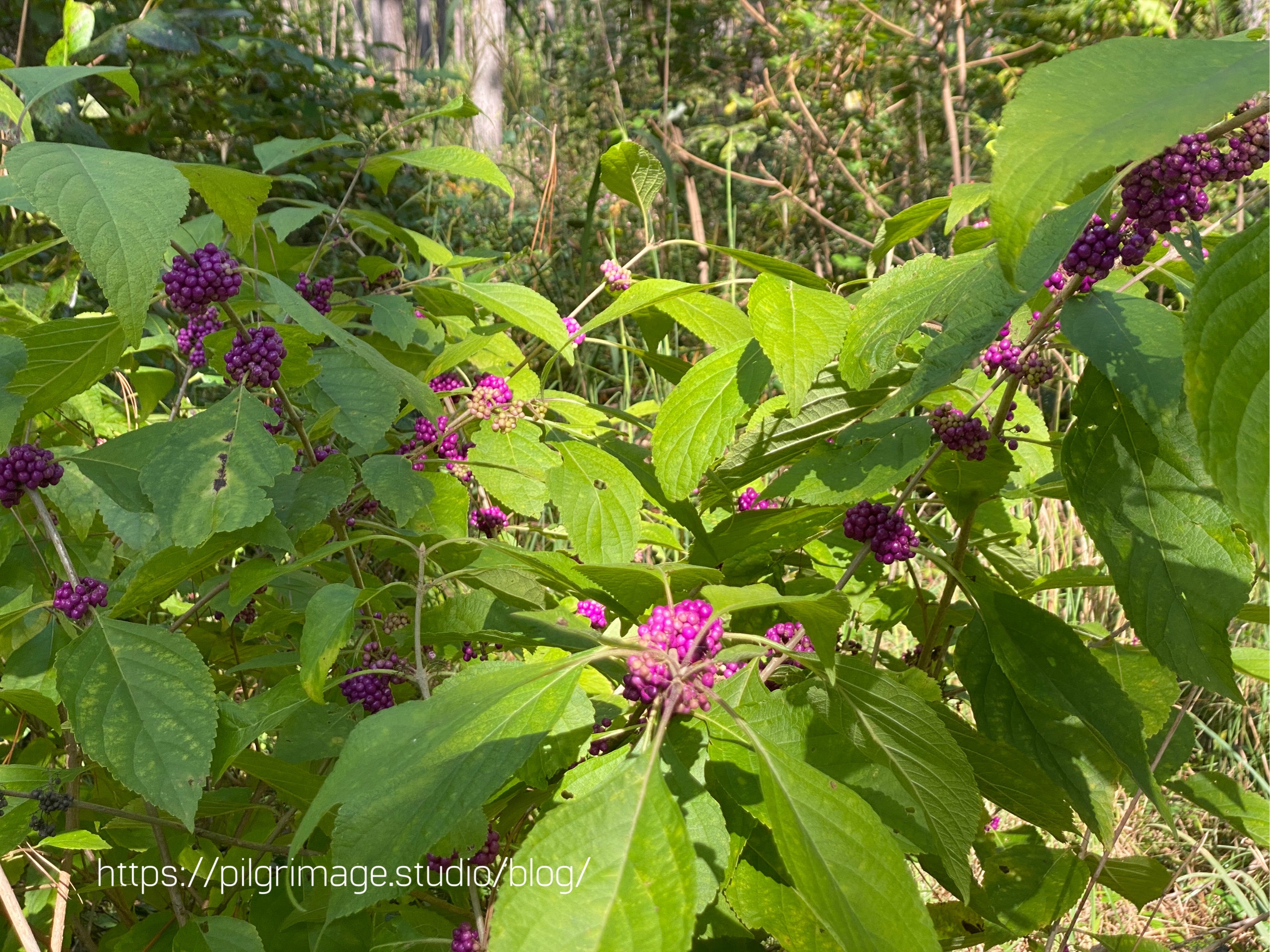
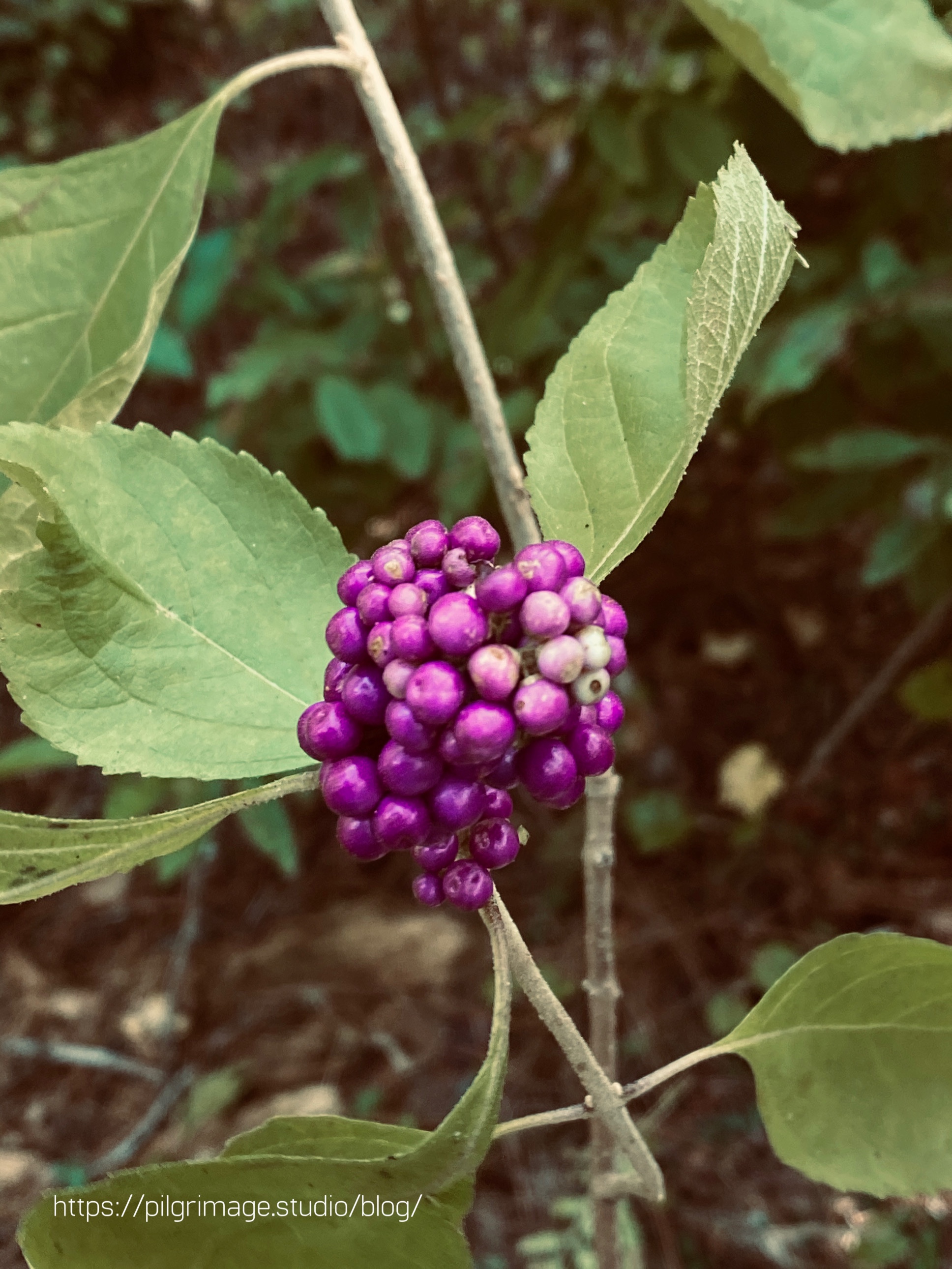
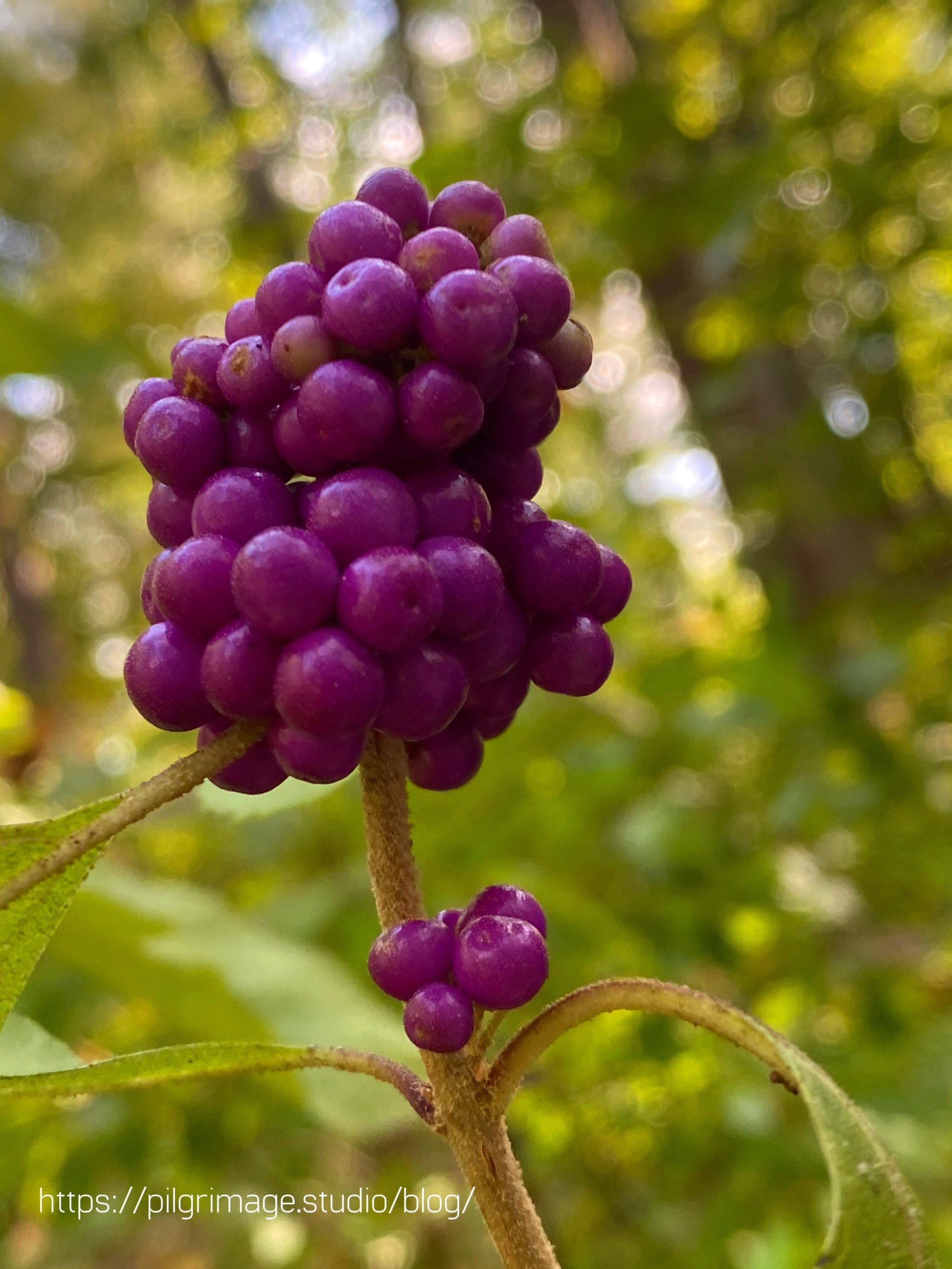
Callicarpa americana is known as American Beautyberry, French Mulberry and Spanish Mulberry.
Callicarpa americana
Callicarpa means beautiful fruit. The bush is not much to look at until these magenta beauties appear in early fall. The berries have been used for jelly and wine and are another favorite for wildlife.
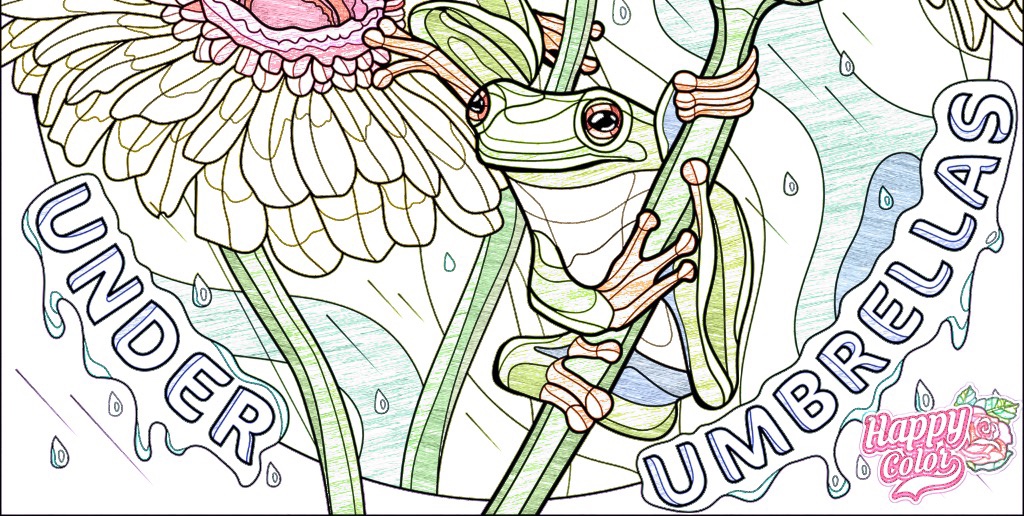
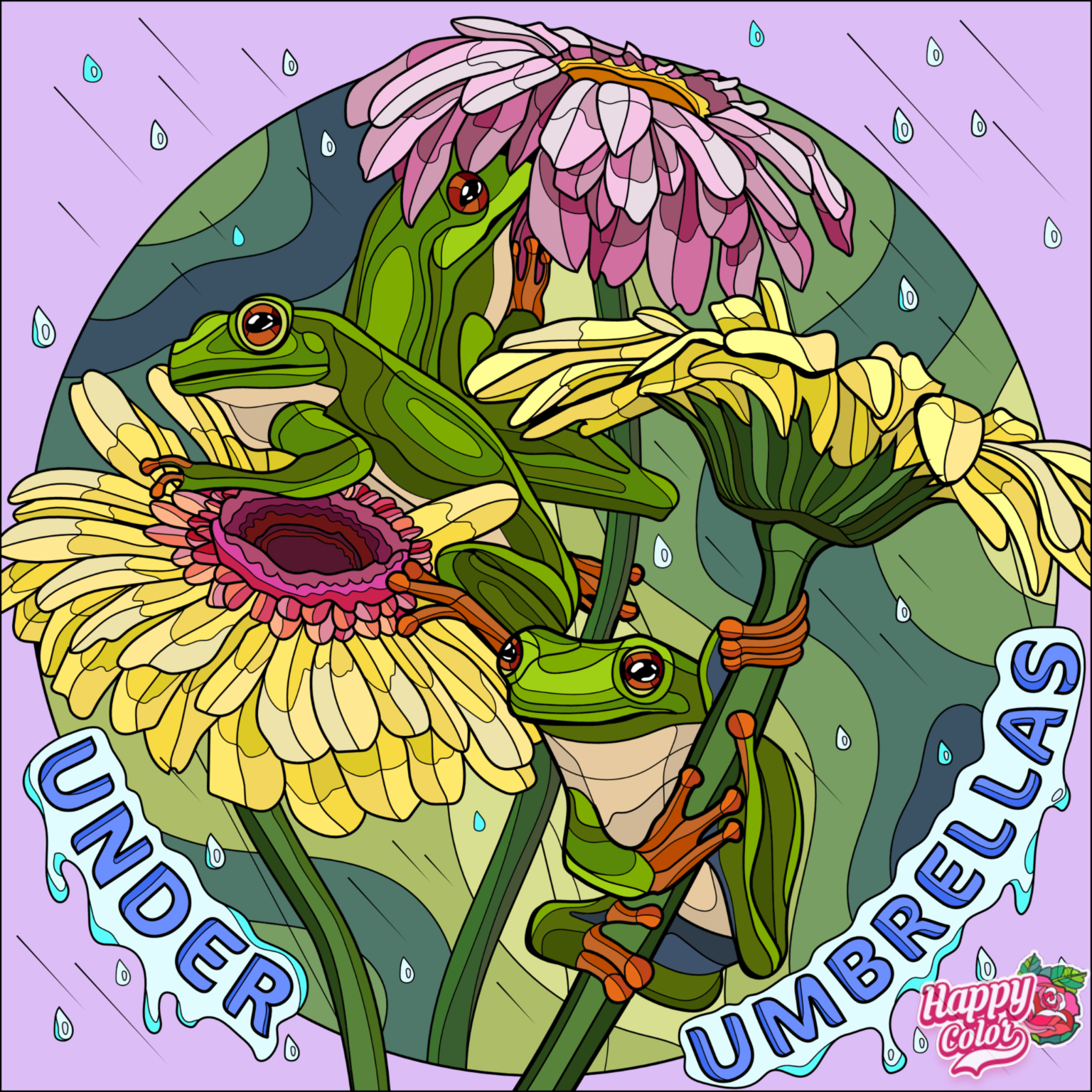
It has rained a lot here and I liked the thought of frogs using these flower heads as their umbrellas. There were a few days I wished I was small enough to fit under a flower. 😊
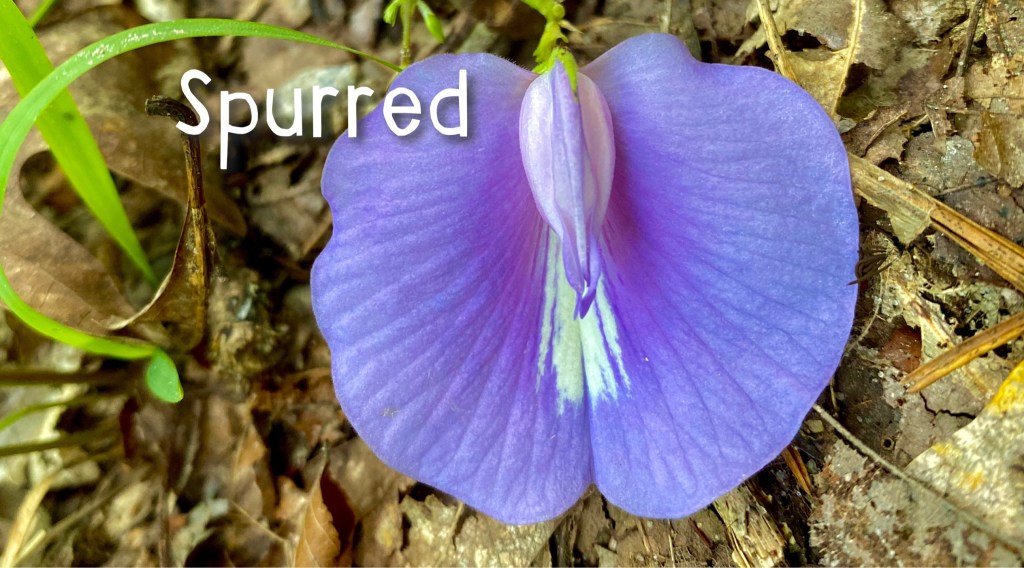
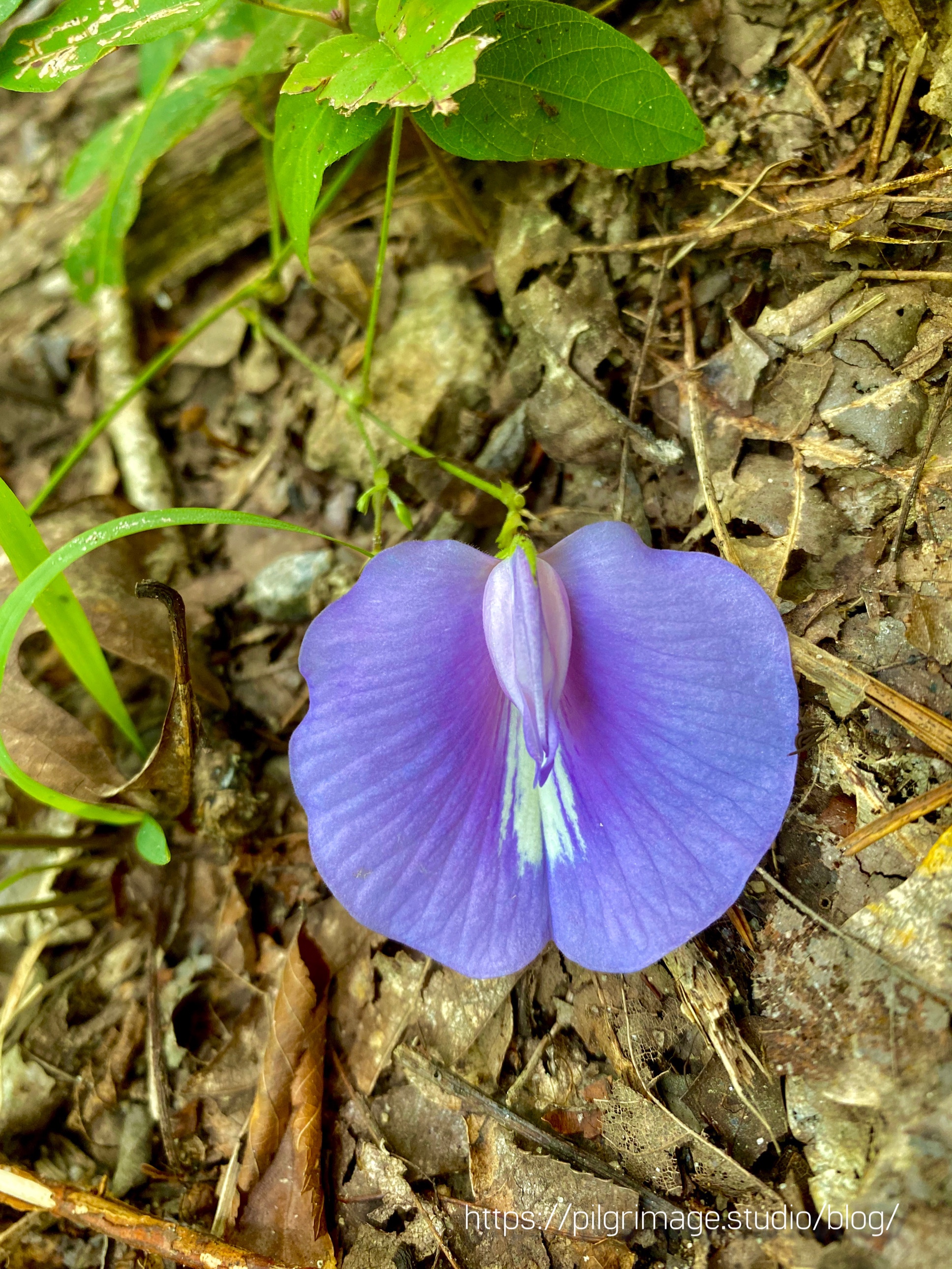
Centrosema virginianum, Spurred Butterfly Pea, Butterfly pea, Wild blue vine, Blue bell, or Wild pea is an herbaceous perennial. It is often confused with Clitoria mariana which is also called Butterfly pea. The difference is in the spur. With virginianum, you don’t see the long corolla tube like you see on the mariana.
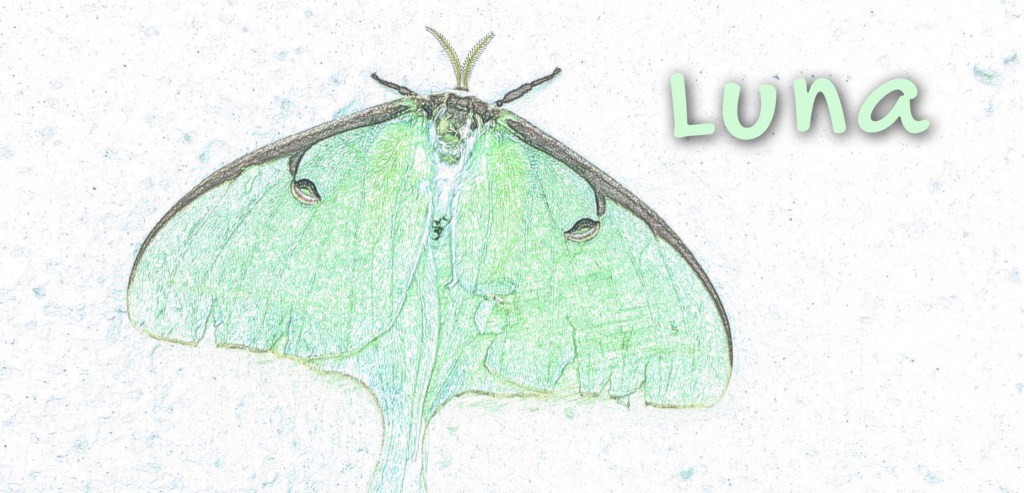
I am counted along with the largest moth species in North America flying in with a wingspan of 3-4 inches. You might be surprised to know that as an adult, I don’t eat. I don’t have a digestive system and my mouth no longer has any useful function for eating. My only job by this age is to reproduce and I have a time limit of about a week – and then I die. I know that doesn’t sound very cheerful, but it’s just how I am, and I’m ok with that.
Camouflage is the name of my game and I have more than one trick fluttering in my wings. For one, I blend into the leaves in the daytime which can make me a rare find in my natural habitat. For two, the tops of my wings look like twigs and my teardrop shapes look like buds, so I blend in with the branches of plants. My teardrops also look like eyes which can scare away predators like birds during the day. The third trick I posses is my tail. I need most of my protection at night when preditors hunt by sound or sonar. My ruffled tail creates an echo from all directions which can confuse preditors’ sonar (like bats) so that I can escape being their dinner.









 Pilgrimage Studio