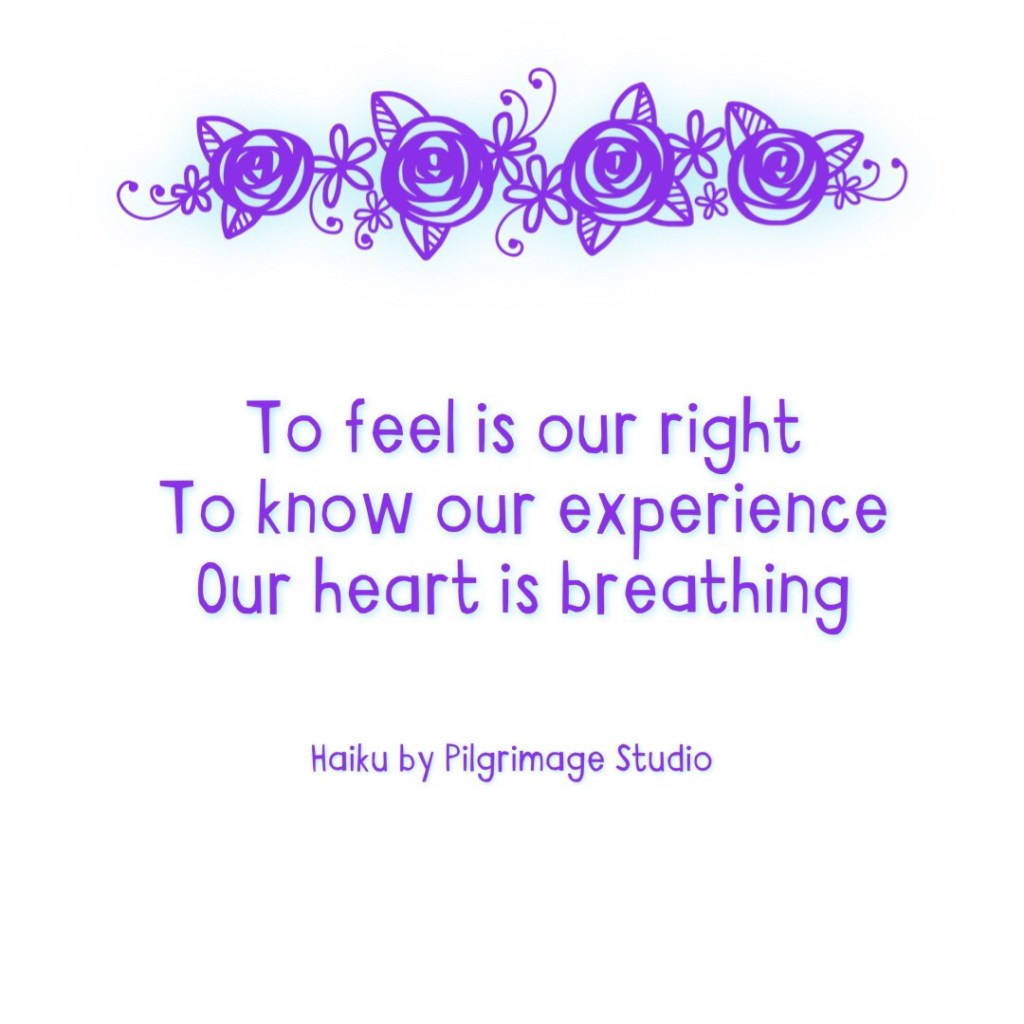
To feel is our right
To know our experience
Our heart is breathing-Pilgrimage Studio
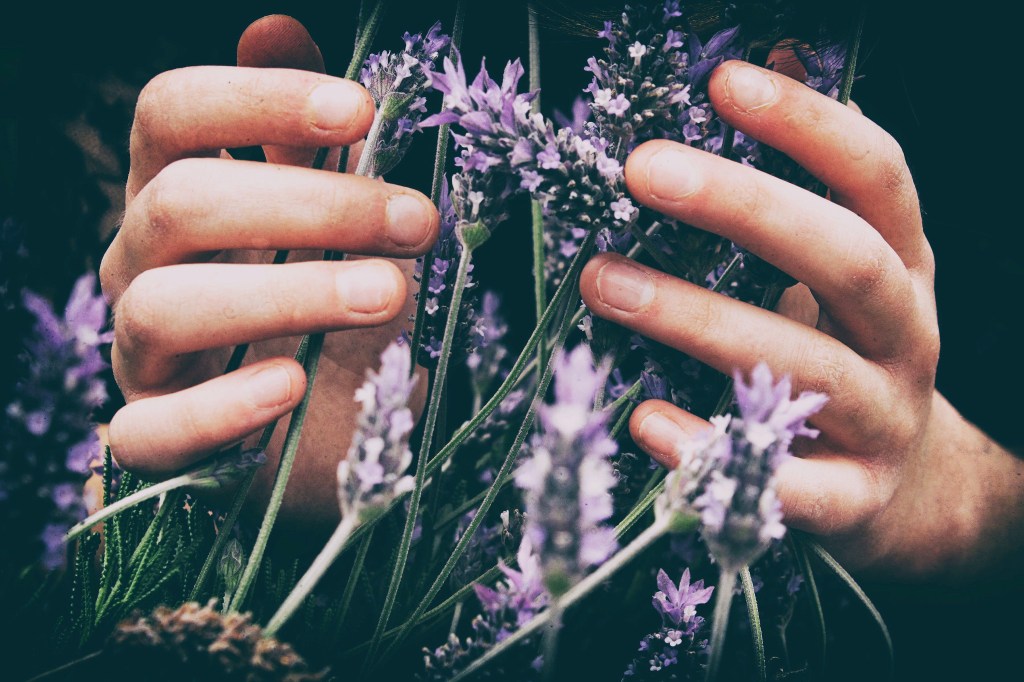
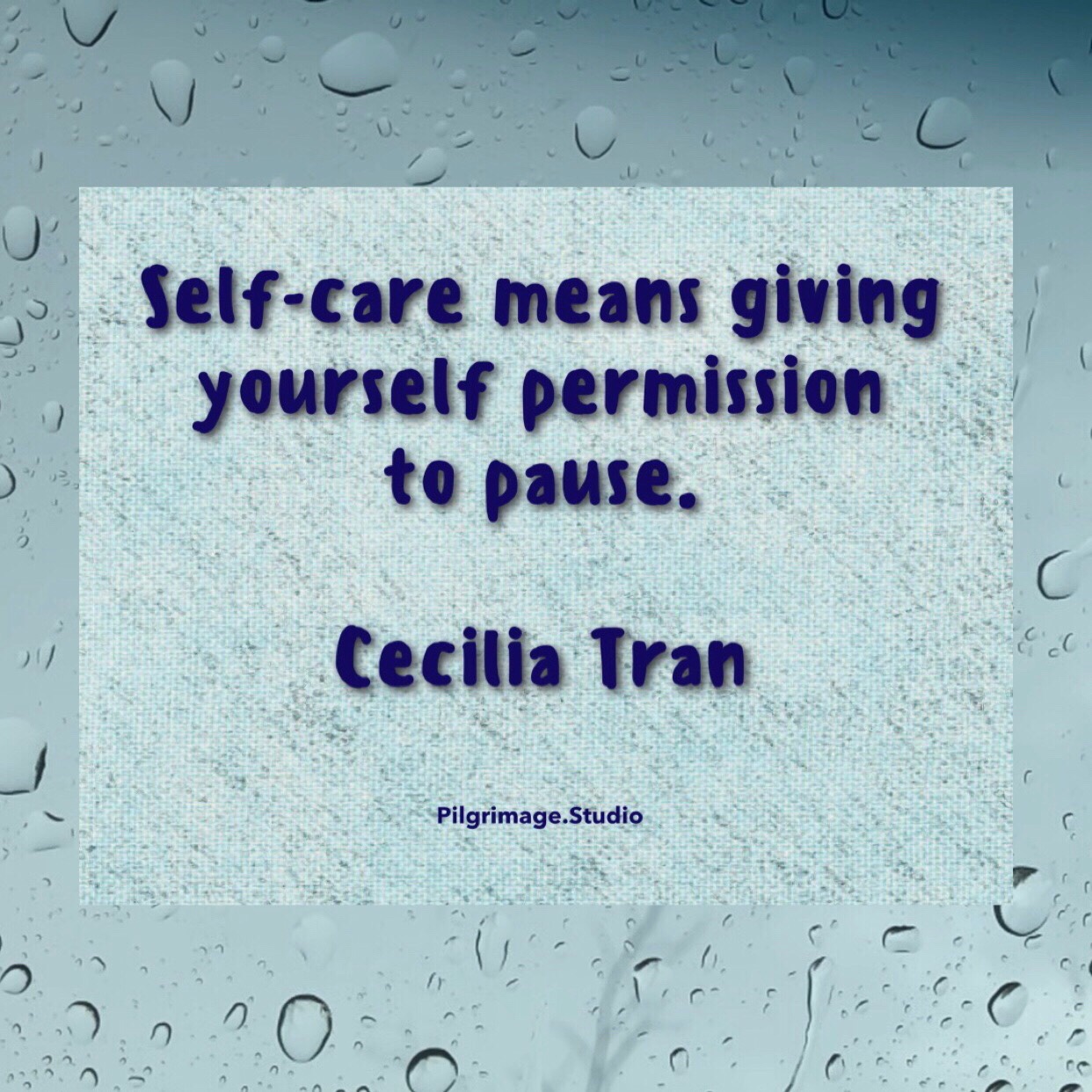
In our busy lives, many times self-care can end up last on our list of things to do. And yet it is one of the most important elements for living life at our full potential and performing at our highest level.
What comes to mind for you when you think of “self-care?” What nourishes and refuels your mind, body, and spirit on a deep level? Make a list of things you would like to make more time for.
We could rush through a meal, not really taking time to enjoy it. Or, we could be mindful in the moment, present and aware, and really enjoy the act of nurture and nourishment.
One assignment for school this week is to add some new ways to add more self-care to our routine.
Journal how keeping this new addition to your routine made you feel.
Keep your list handy as a reminder to take time for yourself and continue trying out new things.
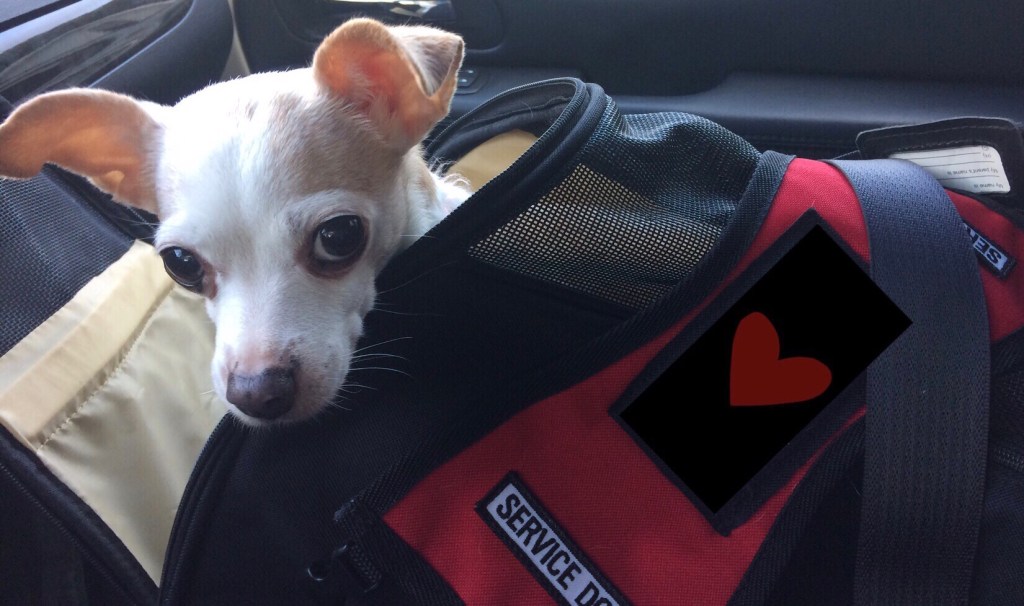
Hi, my name is Peanut and I am a registered emotional support animal, or ESA. There were no vests in my size for an ESA, and so I have a service dog vest with an ID card in the pocket which shows that I am an ESA. With the proper documentation, such as a letter from your person’s doctor, we are able to go to many places!

There are many kinds of animals that can be ESA’s, and there are many jobs that we do! Our main job is to provide comfort, companionship, and support to our special person.
One of my gifts is knowing when help is needed and how to give it. This is unique to each therapy animal and person. This is why emotional support animals are owner-trained. Each situation is different, and many times, specialized training isn’t needed as we innately know how to give the support needed, by just being there.
Emotional support animals truly assist those who need it. They can help their person have a much higher quality of life just through their unconditional love and companionship.
One example of a therapy we offer is: a person with social anxiety can take us into social settings so that they are able to participate and interact socially instead of having to stay at home. We give courage.
Today my job was to travel to North Carolina with my special person, Beth, so that we could pick up a blind patient to transport to a blind rehab clinic. In this way, I also do some therapy work with patients.
I am a great co-pilot, but it is a lot of work!
At the end of the day, I have earned every second of my next nap!

ESA’s and Therapy dogs are not considered pets, and as such, are protected from housing discrimination by two federal statutes:
Pet Therapy Prompt @ BeckiesMentalMess!

by Beth Haley
How do you really want to feel right now? And, how do you plan to get there? The answers say a lot about what you want and need.
Sometimes when we are navigating a spiritual path, we see it looking a certain way. Maybe our vision of “arriving” looks like someone who only wears yoga pants, meditates 10 hours a day, who dances with fairies, is calm, speaks in a hushed tone, and who has changed their name to, “Pink Unicorn.”
Spiritual freedom, to one person, may be dropping their shorts for a room full of strangers at a nudist retreat. Hey, you won’t be strangers for long! However, this isn’t for everyone.
If this isn’t for you, and you find that you don’t fit the “spiritual movement” or “mold”, does that really make you less fulfilled or spiritual? Of course not, right!?
“One man’s meat is another man’s poison.” Lucretius
Perhaps these things really are what someone else’s happiness looks like. That doesn’t mean that’s what it will look like for you.
Follow your own path. What does your happiness look like and feel like?
Visualize it and use your senses: see it, feel it, taste it, hear it and smell it: and then make a game plan on how to get there.
And by all means, if dropping your shorts for a nudist gathering is what does it for you, then more power to you!
I for one, will be found at the local library, clothed, and taking notes for my ongoing growth pilgrimage.
Inspired today by: Love, Service, and Living Your Truth with Danielle LaPorte and Chase Jarvis.
Danielle LaPort is the author of:
The Desire Map and White Hot Truth
And, inspired always by: Sahara Rose
by Beth Haley
Imagine that you’re on a date, and your date showers you with their description of everything you are to them:
“You love the color pink, and we both love white wine! You are always so patient and just adore bungee jumping. Based on all these things, that you are, I see us happy forever!
I look around. There’s no one else there.
Me: Who are you talking about?”
Them: “Well… you.”
Me: “I don’t even like pink.”
Them: “Oh, yes you do! I’m sure of it.”
Me: “I’ve never bungee jumped. Never will.”
Them: “But, I know you, and you’ll love it.”
Me: “No. I won’t.”
Me: “I don’t like white wine.”
Them: “Sure you do! You just haven’t tried it with salmon yet.”
Me: “I don’t like salmon.”
Them: “Well… sure you do. You just haven’t eaten salmon from the other restaurant.”
Me: “I’m not patient. Patience is something I am working toward. Today however, patience has escaped me completely.”
Them: “Naw, you’re the most patient person I know! We’re a match made in heaven!”
Seeing someone through the lens of what you want them to be, rather than who they actually are, isn’t love. It’s called an “overlay.”
Seeing a fantasy instead of reality, is dangerous to our well-being because we see what we want to see, rather than what is really there. If what is really there, is a cliff with a 100-foot drop off the ledge, then it’s a really bad time to see a rose-covered bridge.
Knowing and seeing reality gives you the correct information, to make the choices that are right for you.
Inspirational Reading:
Overlay (What Prevents You From Having a Real Relationship) by Teal Swan

by Beth Haley
I had started studying mudras months ago, but before I could really get started on mudras, I became captivated with the principles of mantras. So this week, I am picking back up with mudras for a class.
What has been interesting to me in studying mudras, is that many hand positions that I’ve often seen others, or myself do, are actually mudras: they have a name, and have a specific effect on the body, mind, and emotions.
Which, is why we do them instinctively.
For example: the habit of placing the fingertips of one hand against the fingertips of the other hand, is something I see people do when they’re thinking or need more clarity, which is called the Hakini mudra.
Another well-known hand gesture is to hold your hands in the prayer 🙏 posture. This is known by a few different names such as: Anjali mudra, Pranav mudra, and Namaste mudra. According to Zenned Out, this mudra represents union, connecting the left and right sides of the brain, and also connects our masculine and feminine energies. I’ve seen prayer posture held before the heart and also against the forehead.
This is another aspect of the magick in our hands that I had never really thought about.
The thumb is associated with the element of fire. So what do you do when there’s a fire, such as an emotional upset? Sticking it in your mouth helps to sooth and put the fire out.

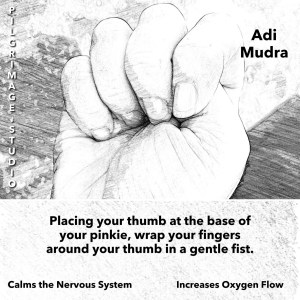
This mudra is done by placing your thumb next to the base of your pinkie finger, and then wrapping all of your fingers over and around your thumb.
This is another one I didn’t know was a mudra, or know that it had a name. I now know that some of its benefits are to help soothe and relax.
For about 3 years, I often fell asleep with this mudra, or I would hold my hands this way when I was anxious or stressed in some way. I didn’t know why. It just seemed comforting. I saw a picture of it today, and realized that I rarely ever use this mudra anymore.
A few years ago I was beginning to be interested in the practice of mindfulness, and I spoke to a counselor who specialized in mindfulness training. I entered her office with my stack of mindfulness books. After I met with her a few times, she looked at me very quizzically, and asked, “Why do you have all these mindfulness books for anxiety? You’re not anxious.”
That was a fine moment: to be able to look back and see that where I used to be standing, is no longer where I am standing today.
I realize now, that the years that I used this mudra and studied mindfulness books for anxiety, were during the same years. And today, I am free of both: the anxiety and the need to use the mudra.
The mudra, along with mindfulness practice, were tools. They were coping skills.
All this to say: Mudras! They really work. For whatever issue you are dealing with, physically, emotionally, or mentally… there’s a mudra for it!
Note: If you, or anyone you know, suffers from abandonment / separation anxiety, give the Adi mudra a try. Use it like a meditation for 10 minutes a day. And, if you combine an intention with your mudra, and a mantra (stating your intention out loud), it is even more powerful.
As with any alternative practice: mudras, and the content written here, are not meant to take the place of professional advice. Even the best practices can come with contraindications, precautions, and warnings. While mudras are beneficial, working with our bodies energetic meridians, energy points, and chakra centers, not all mudras are a good fit for everyone. If in doubt, check with a health care professional first.

It all starts with you!
Appreciation is a Choice
“I can promise you this, there’s somebody in the world, praying to be in your shoes.”
“Be grateful for everything that you have.”
“Appreciation is a choice that you can make every single day.”
“It all starts with you!”
-Trent Shelton
by Beth Haley
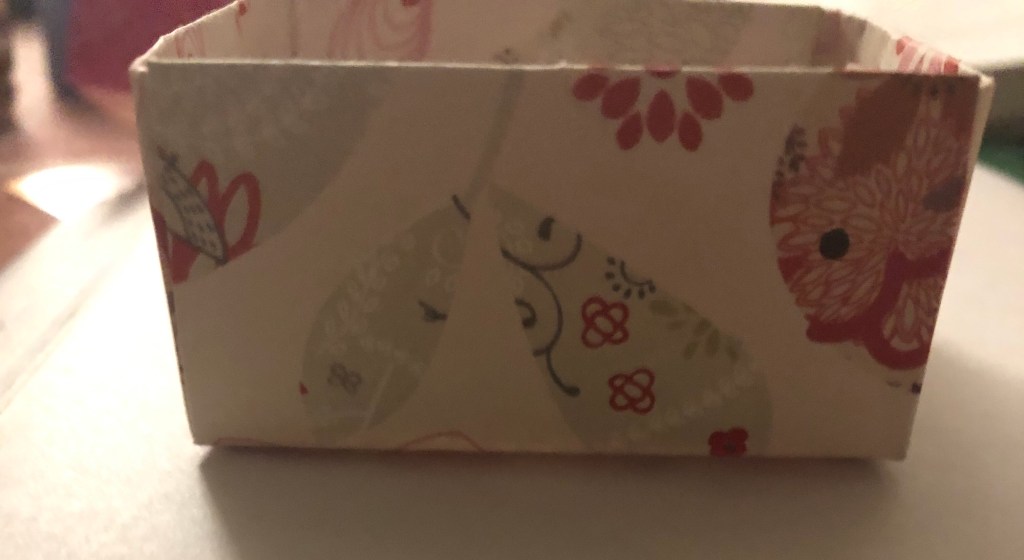
Masu boxes were originally square wooden boxes used for measuring out rice during a time when powerful families, military warlords and samurai ruled Japan, called the feudal period of Japanese history.
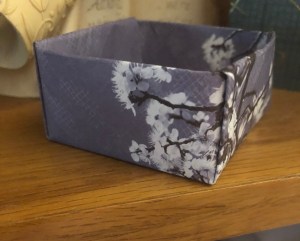
Today, I made a masu box, with a lid, out of origami paper.

It’s a great size for small treasures or small desk items like paperclips, and for an uncovered box, if you double the paper with both plain sides facing inward, the bottom of your box will have a nice design also.

Otherwise the inside looks like this:

Which is fine if it’s going to be covered by a lid anyways!
Directions for making an origami masu box: Origami.me
by Beth Haley
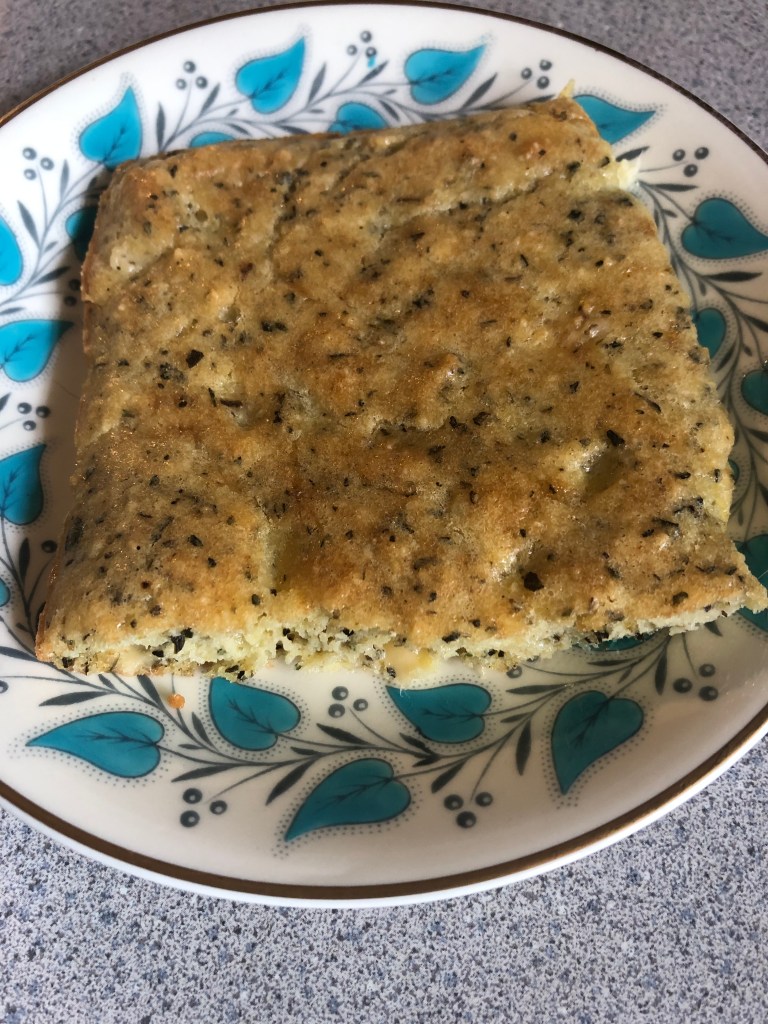
This recipe is for people who are on a low-carb or Keto eating plan. There are many different types of low-carb eating plans. The trick is to find the plan that works for you. There is not a “one-diet-fits-everyone” type of plan out there.
The nice thing about eating low-carb, is that you’re not necessarily eating less … you’re just eating different.
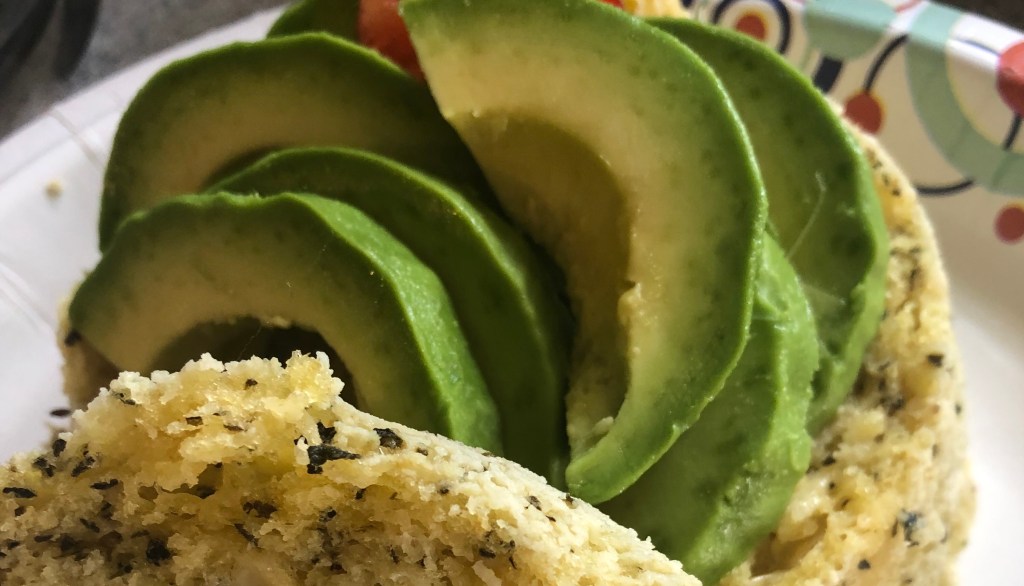
This was inspired by 90-Second Keto Bread @ Tasty, but I wanted to make a bigger batch that is cooked in an oven instead of a microwave.
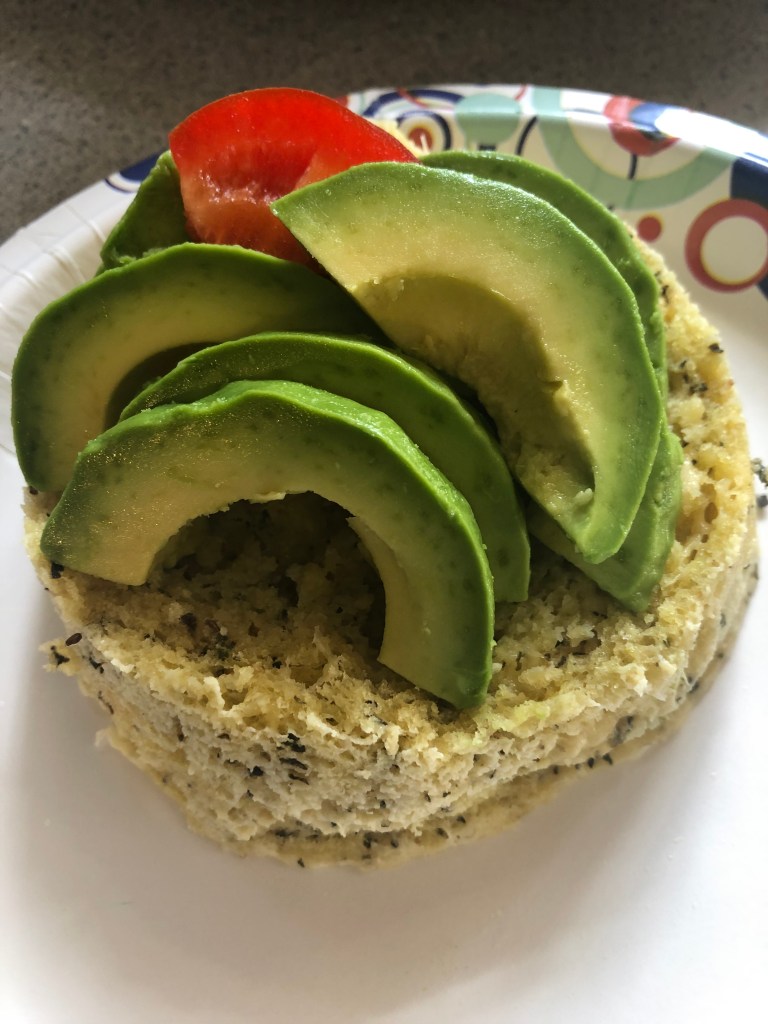
Servings: 2-4
6 TBS. almond flour
1 tsp. Baking powder
1/2 C grated Dubliner cheese (or your favorite)
2 tsp. Fresh basil chopped, or 1 tsp. Dried basil
1 tsp. Garlic powder
1/8 tsp Pink Himalayan salt (or to taste)
Pepper, to taste
2 TBS. butter, melted
2 eggs, beaten
Mix all dry ingredients together until well blended. Then add meted butter and beaten eggs. Mix until smooth.
Split mix into two single-serve ramekins and bake at 400 degrees for 8-10 minutes.
Or, I spread mine onto the bottom of a small square casserole dish, then cut it into squares.
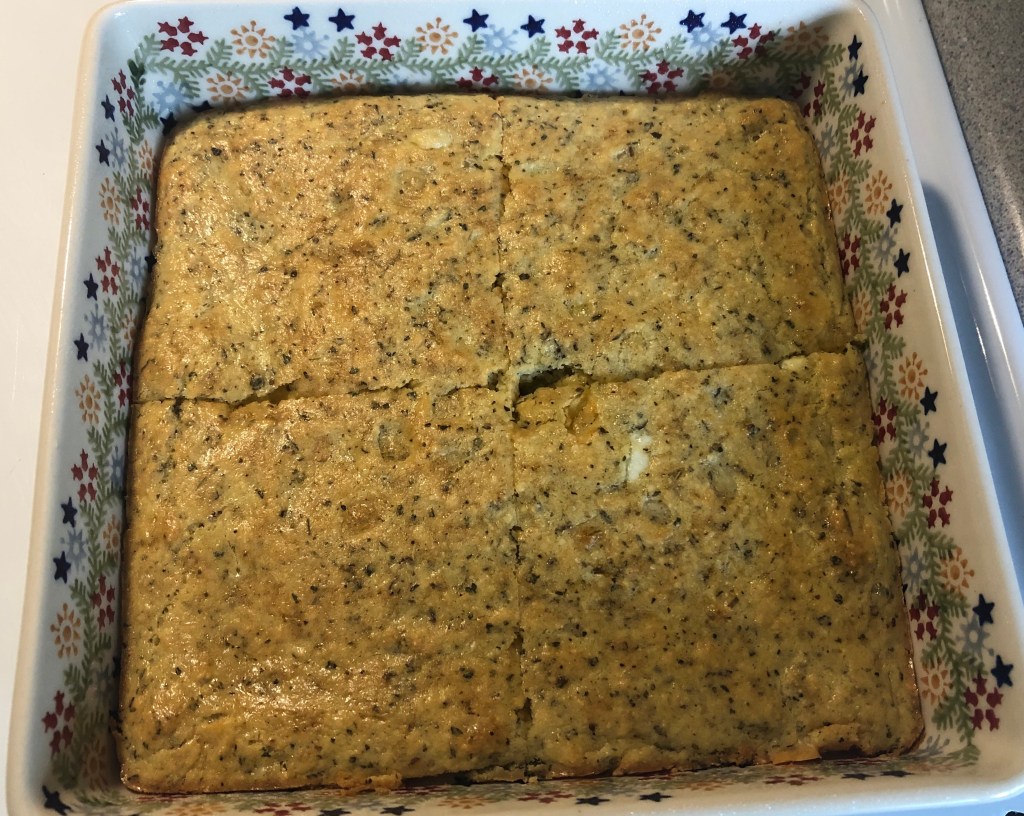
This bread is thin enough to exchange for two slices of regular bread to make a veggie sandwich with.

 Pilgrimage Studio