Your voices were heard! 😊👍
It is good to see how bloggers can pull together to influence change!

Your voices were heard! 😊👍
It is good to see how bloggers can pull together to influence change!
by Beth Haley
A while ago I taught a class on journaling, and today, while I was decorating journals for my boy’s birthdays, I remembered some fun things from the class to share.
There are so many fun things to do with a journal! The sky is the limit.
Take the inside of the front cover or first page to write a book blessing to bless and protect your book. Many people pass down their journals, so it could also be a blessing to the person to whom your book is passed down to.
Family stories, customs, and your lineage are the types of journals you might want to pass down to family members or to a special friend.
In my Celtic tradition, we celebrate all the seasons…and more! A journal is a great way to note how you celebrate throughout the year. Special prayers or gatherings, events and dinners, are great to remember.
We fashion live performances which we do on a stage with our (hopefully) lines memorized, so these scripts go into my books.
Add dried flowers and leaves. Rummaging through sweater and coat pockets, I always find acorns. While I can’t add an acorn to a journal, I can add an oak leaf!
The pine cones just have to be added to the counter. With the acorns. Sigh. 😀 But you could add pine needles to a journal.
Then again, if your journal is thick enough… you could cut a box through the paper to nest an acorn in.

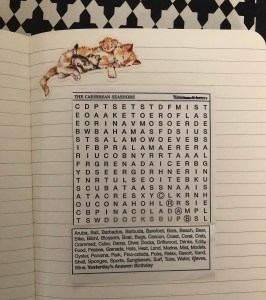
Draw or paint. Add jokes and puzzles. Decorate it like you would if you were scrapbooking. This tag I glued into my son’s journal.

There is so much fun to be had with stickers and cut-outs.

I make small paper envelopes which I glue onto a page of the journal. Inside is a small piece of paper with a note or quote. These are especially fun if you’re giving the journal as a gift.

A journal can be organized, chaotic, decorated, hand written, or printed and glued onto the pages.
Work with photos, like photo journalism.
Write about your impressions or experiences with special places. Vacation spots. A walk through the forest. Meditation by a stream.
Document your dreams.

Add recipes!
I have so many journals now that I’ve started giving each of them a theme: love, blessings, school, moon phases, meditations, etc.
Regular glue tends to bubble the paper. My favorite is rubber cement. It dries flat and is less visible on the next page.
Tip: Keep your journals in a safe place. I don’t carry my journals around with me because it is so easy to set them down and leave them somewhere. So if I want to write while I’m away from home, I write notes on my phone and transfer them to a journal later.
There’s so much more to say 😊
I’ll save it for another day.
Happy journaling!
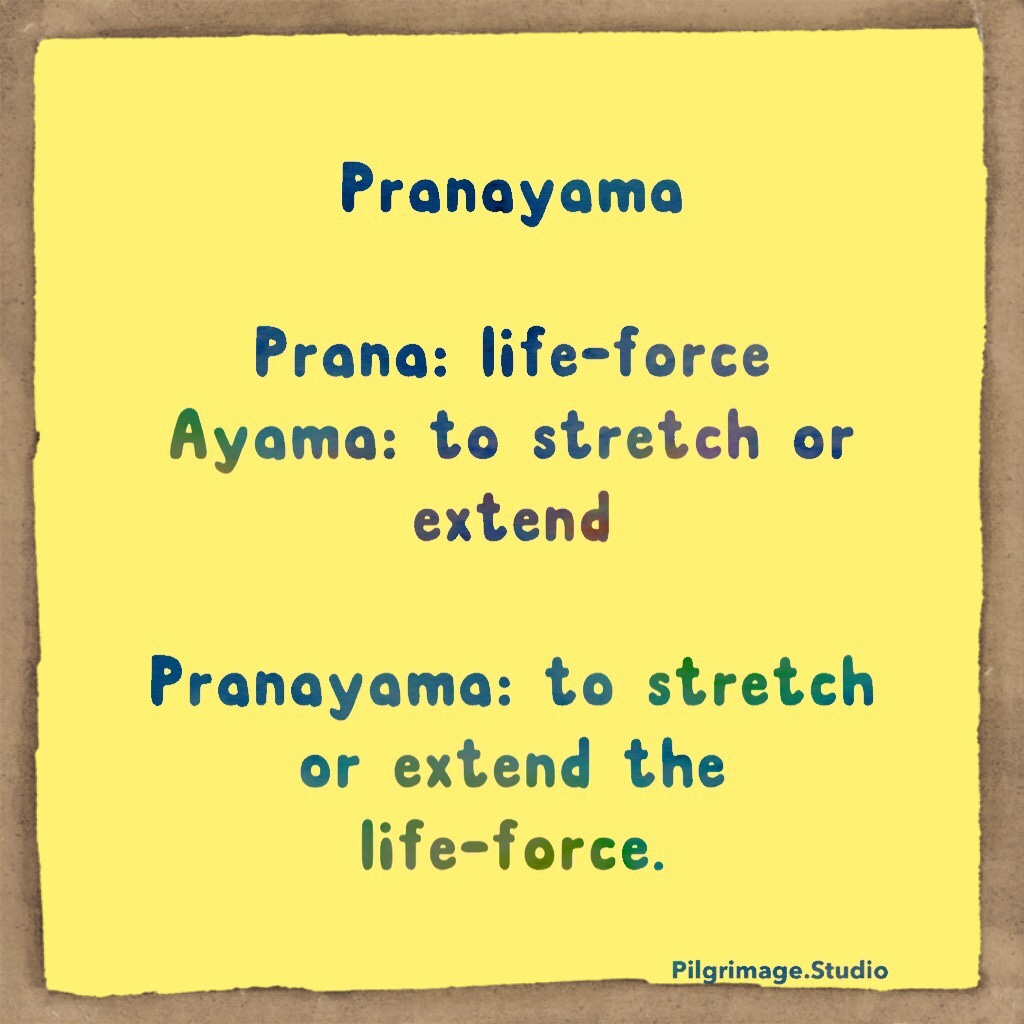
Prana: life-force
Ayama: to stretch or extend
Pranayama: to stretch or extend the life-force.
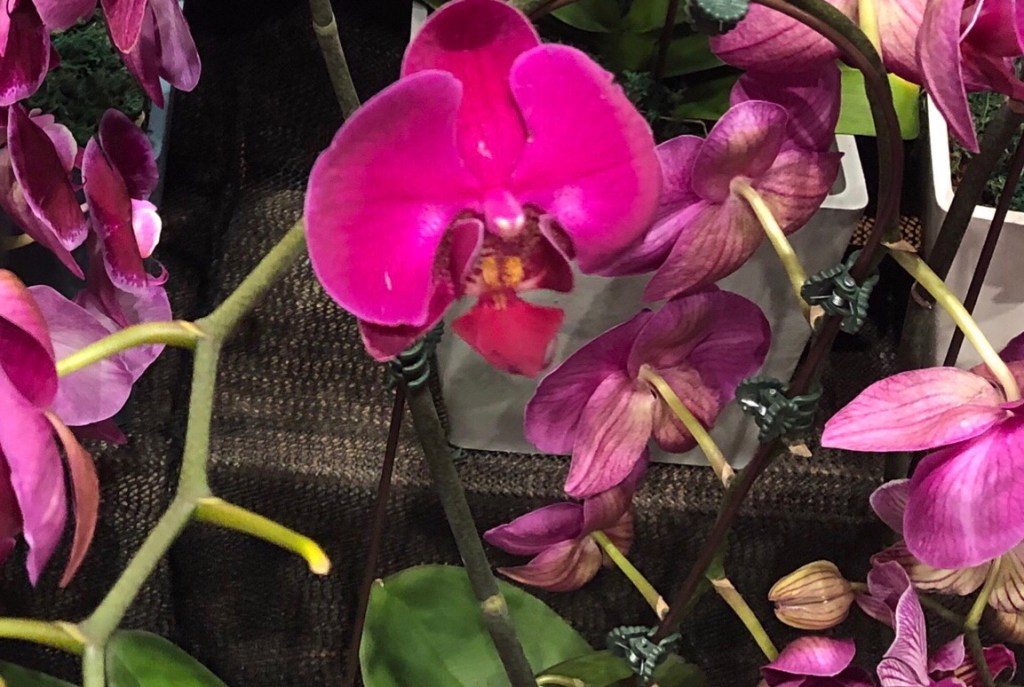
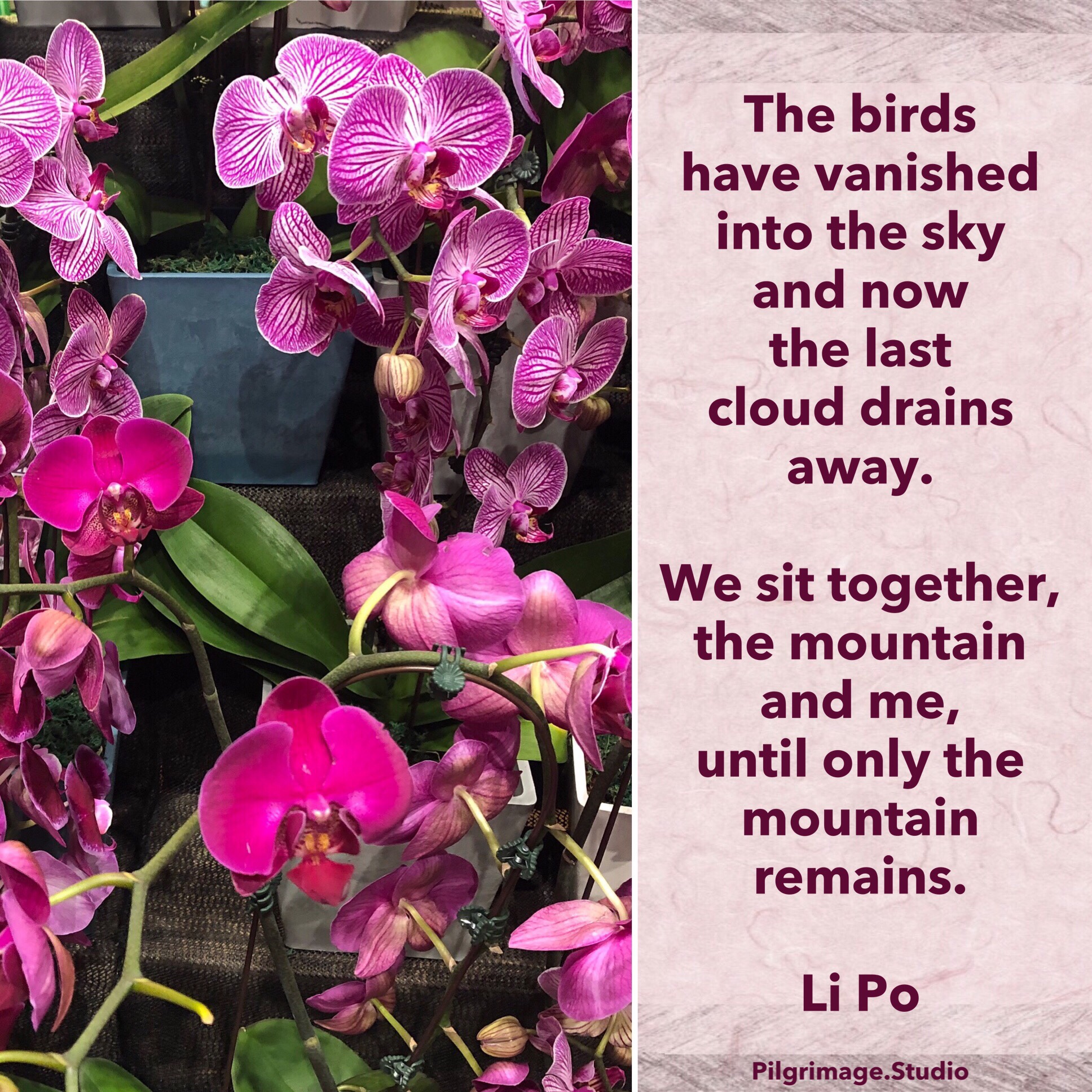
The birds have vanished into the sky and now the last cloud drains away. We sit together, the mountain and me, until only the mountain remains. –Li Po
Happy 😊 weekend
by Beth Haley
Imagine that you’re on a date, and your date showers you with their description of everything you are to them:
“You love the color pink, and we both love white wine! You are always so patient and just adore bungee jumping. Based on all these things, that you are, I see us happy forever!
I look around. There’s no one else there.
Me: Who are you talking about?”
Them: “Well… you.”
Me: “I don’t even like pink.”
Them: “Oh, yes you do! I’m sure of it.”
Me: “I’ve never bungee jumped. Never will.”
Them: “But, I know you, and you’ll love it.”
Me: “No. I won’t.”
Me: “I don’t like white wine.”
Them: “Sure you do! You just haven’t tried it with salmon yet.”
Me: “I don’t like salmon.”
Them: “Well… sure you do. You just haven’t eaten salmon from the other restaurant.”
Me: “I’m not patient. Patience is something I am working toward. Today however, patience has escaped me completely.”
Them: “Naw, you’re the most patient person I know! We’re a match made in heaven!”
Seeing someone through the lens of what you want them to be, rather than who they actually are, isn’t love. It’s called an “overlay.”
Seeing a fantasy instead of reality, is dangerous to our well-being because we see what we want to see, rather than what is really there. If what is really there, is a cliff with a 100-foot drop off the ledge, then it’s a really bad time to see a rose-covered bridge.
Knowing and seeing reality gives you the correct information, to make the choices that are right for you.
Inspirational Reading:
Overlay (What Prevents You From Having a Real Relationship) by Teal Swan
I was looking today for a mudra that could capture, in some way, what the new moon represents:
I came across so many different ones that have been used for new moon meditations. So, as I tried out different mudras, I just picked the one that really stood out and resonated with me energetically.
It is called Adhara Mudra.
Define your intention, as a simple statement.
You can cleanse your hands and activate energy by rubbing them together, and then by shaking them out.
Find a comfortable sitting position, and hold the Adhara mudra in front of your navel, shoulders relaxed.
Focus on your inhale and exhale, feeling your breath rise and fall in your body.
Feel the energy of this mudra through your hands. What sensations do you notice?
Consider the space you’ve created through the palms of your hands. Begin to focus on your intention and how you have created this sacred space within your hands as a gesture of your openness to receive.
Hold this mudra, and your intention in your mind, for 10 minutes. Before releasing your hands, repeat your intention, like a mantra, three times.

by Beth Haley
I had started studying mudras months ago, but before I could really get started on mudras, I became captivated with the principles of mantras. So this week, I am picking back up with mudras for a class.
What has been interesting to me in studying mudras, is that many hand positions that I’ve often seen others, or myself do, are actually mudras: they have a name, and have a specific effect on the body, mind, and emotions.
Which, is why we do them instinctively.
For example: the habit of placing the fingertips of one hand against the fingertips of the other hand, is something I see people do when they’re thinking or need more clarity, which is called the Hakini mudra.
Another well-known hand gesture is to hold your hands in the prayer 🙏 posture. This is known by a few different names such as: Anjali mudra, Pranav mudra, and Namaste mudra. According to Zenned Out, this mudra represents union, connecting the left and right sides of the brain, and also connects our masculine and feminine energies. I’ve seen prayer posture held before the heart and also against the forehead.
This is another aspect of the magick in our hands that I had never really thought about.
The thumb is associated with the element of fire. So what do you do when there’s a fire, such as an emotional upset? Sticking it in your mouth helps to sooth and put the fire out.

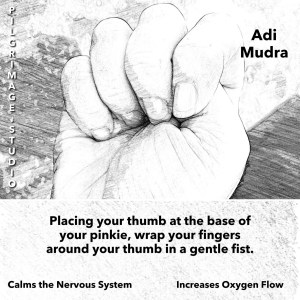
This mudra is done by placing your thumb next to the base of your pinkie finger, and then wrapping all of your fingers over and around your thumb.
This is another one I didn’t know was a mudra, or know that it had a name. I now know that some of its benefits are to help soothe and relax.
For about 3 years, I often fell asleep with this mudra, or I would hold my hands this way when I was anxious or stressed in some way. I didn’t know why. It just seemed comforting. I saw a picture of it today, and realized that I rarely ever use this mudra anymore.
A few years ago I was beginning to be interested in the practice of mindfulness, and I spoke to a counselor who specialized in mindfulness training. I entered her office with my stack of mindfulness books. After I met with her a few times, she looked at me very quizzically, and asked, “Why do you have all these mindfulness books for anxiety? You’re not anxious.”
That was a fine moment: to be able to look back and see that where I used to be standing, is no longer where I am standing today.
I realize now, that the years that I used this mudra and studied mindfulness books for anxiety, were during the same years. And today, I am free of both: the anxiety and the need to use the mudra.
The mudra, along with mindfulness practice, were tools. They were coping skills.
All this to say: Mudras! They really work. For whatever issue you are dealing with, physically, emotionally, or mentally… there’s a mudra for it!
Note: If you, or anyone you know, suffers from abandonment / separation anxiety, give the Adi mudra a try. Use it like a meditation for 10 minutes a day. And, if you combine an intention with your mudra, and a mantra (stating your intention out loud), it is even more powerful.
As with any alternative practice: mudras, and the content written here, are not meant to take the place of professional advice. Even the best practices can come with contraindications, precautions, and warnings. While mudras are beneficial, working with our bodies energetic meridians, energy points, and chakra centers, not all mudras are a good fit for everyone. If in doubt, check with a health care professional first.
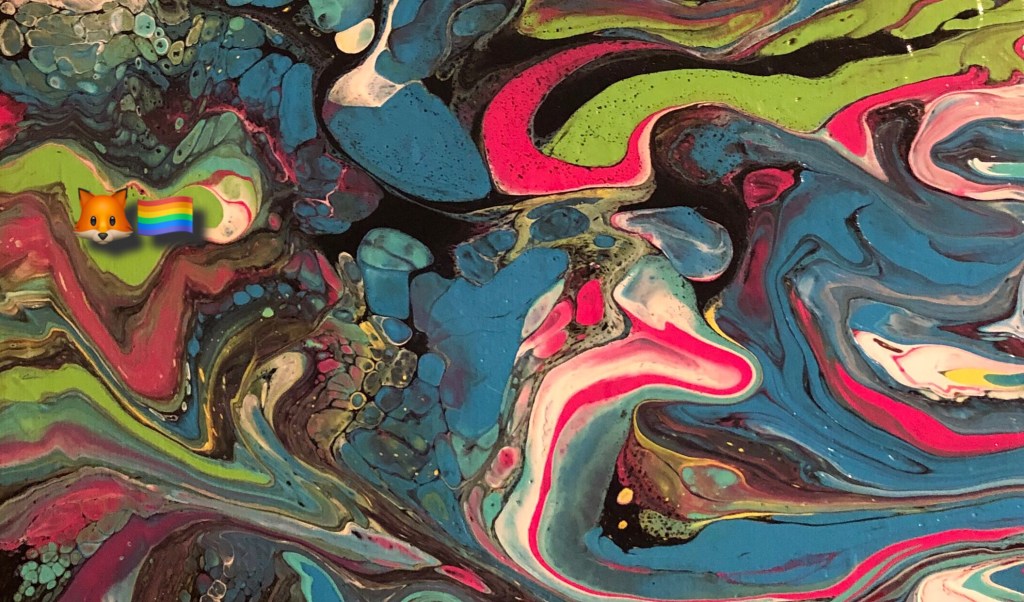
I normally name my paintings, but no names jumped out at me for this paint pour.
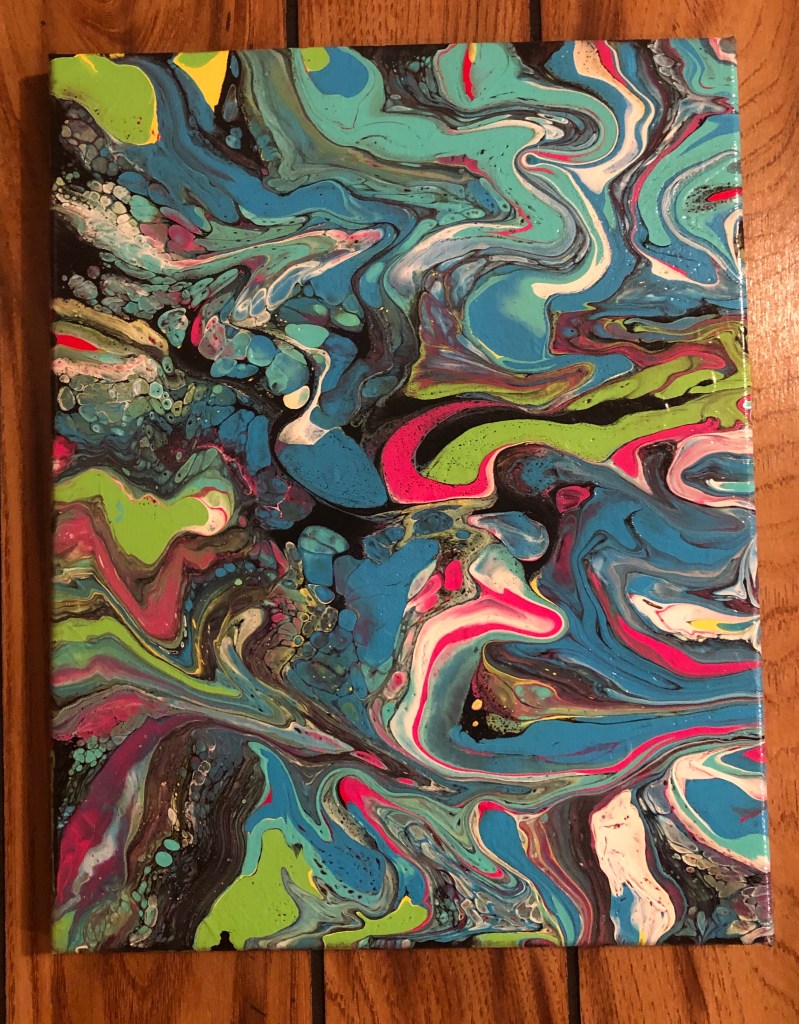
Can you help me name this painting?
If you have any ideas, I’d love to see them! 😊
And, this is the only post where the comment box seems to have magically disappeared…
It all starts with you!
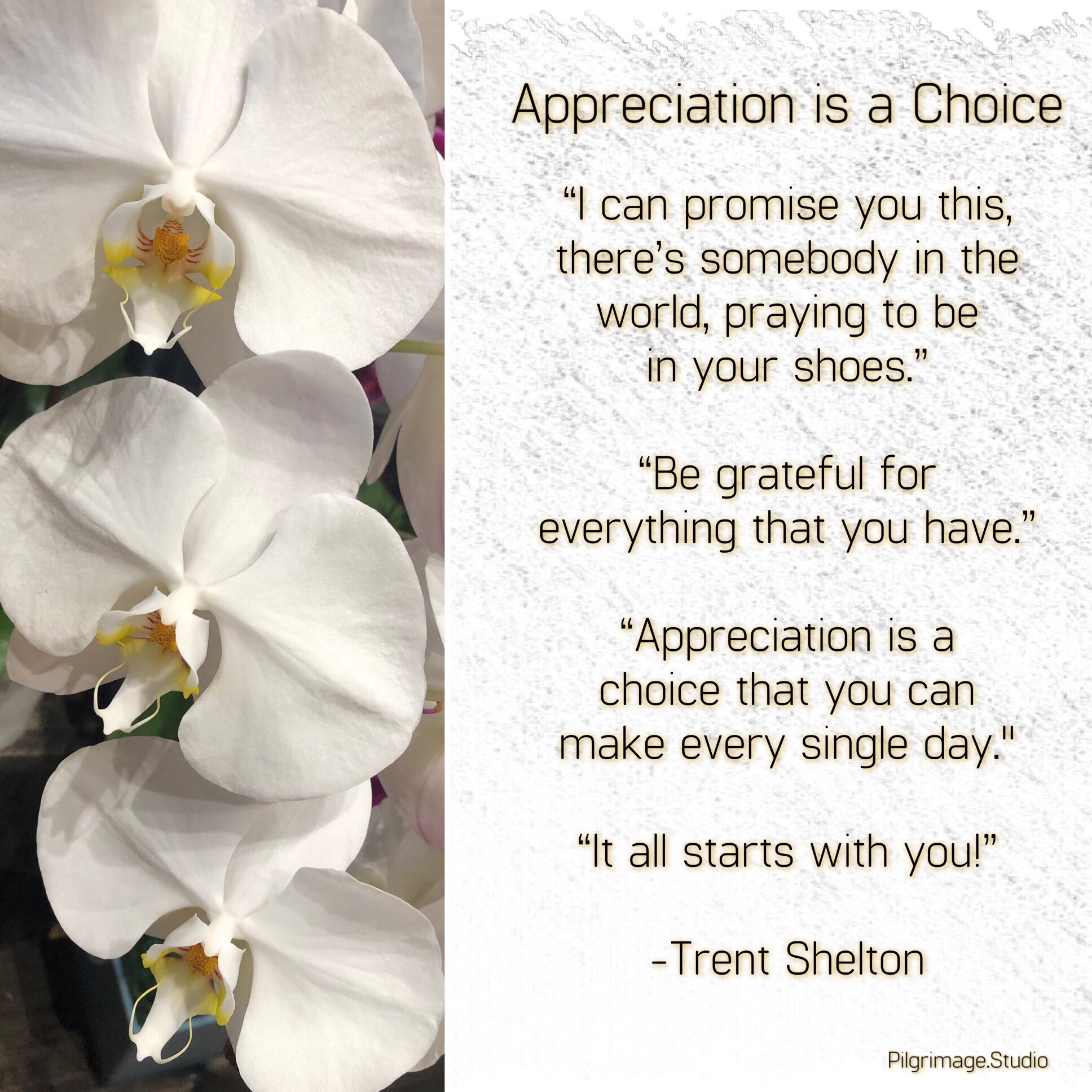
Appreciation is a Choice
“I can promise you this, there’s somebody in the world, praying to be in your shoes.”
“Be grateful for everything that you have.”
“Appreciation is a choice that you can make every single day.”
“It all starts with you!”
-Trent Shelton
by Beth Haley
Masu boxes were originally square wooden boxes used for measuring out rice during a time when powerful families, military warlords and samurai ruled Japan, called the feudal period of Japanese history.
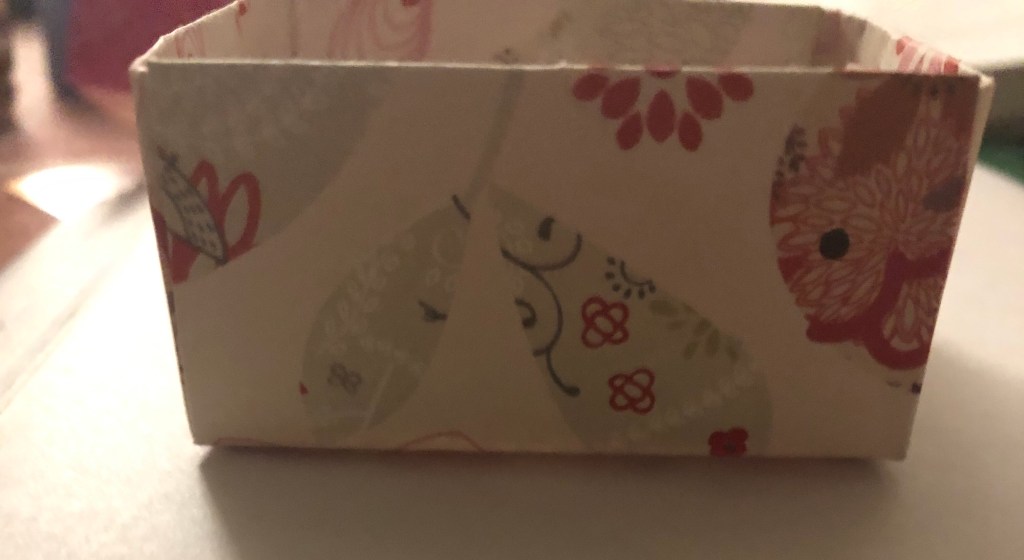
Today, I made a masu box, with a lid, out of origami paper.

It’s a great size for small treasures or small desk items like paperclips, and for an uncovered box, if you double the paper with both plain sides facing inward, the bottom of your box will have a nice design also.

Otherwise the inside looks like this:

Which is fine if it’s going to be covered by a lid anyways!
Directions for making an origami masu box: Origami.me
 Pilgrimage Studio