Blog

  • The Three Metal-Smiths

    The Three Metal-Smiths

    by Beth Haley

    Once upon a time, a terrible drought plunged an ancient kingdom into hard times. The people were not able to work their lands as they normally would and food was becoming scarce. So the good king employed workers from the surrounding villages to help with the new temple that was being built.

    At that time, a traveler came riding through the city and came upon three people who were working near the temple site. They tended the hot fires of a forge, working and shaping, heating and cooling pieces of misshapen metal.

    Curious, the traveler asked the first worker, “What are you doing?”

    The first worker replied instantly, “I’m out here in this stinking heat, sweating my brains out over these fires and hammering on ugly chunks of metal all day like a slave to make dishes for the temple. Curse this!”

    A bit taken back, the traveler approached the second worker and asked the same question, “What are you doing?”

    The second worker replied, “I am refining and shaping this metal into service dishes for the temple, many hours a day, so that I can provide food for my family.”

    Intrigued by the spirit of these two different answers, the traveler asked the same question of the third worker.

    Carefully placing a beautifully molded cup into the fire once more, her eyes never leaving her work, she replied, “I am crafting the Golden Chalice!”


    Three workers. Three very different attitudes and perspectives about what they were doing.

    The first two workers were opposite sides of the same coin: one side was negative and the other side was positive.

    The third worker seemed to have a different view. She was not fighting the steam, the heat of the day, the scorch of the fires, or worry about her life in general. She was not deliberating over a paycheck, or the fate of the future, but instead was focused on the task set before her. She accepted the good along with the bad, without resistance.


    According to the Bhagavad Gita the third worker’s view of life would be considered as “Pure.” The “pure” way of looking at life is more meditative and reflects a peace of mind and of being less attached to life’s ups and downs.


    Adapted from: “The Story of the Stone Cutters

    Pixabay

  • Release Physical Tension

    Release Physical Tension

    by Beth Haley

    Find a comfortable place to sit or stand.

    When you are ready, exhale all the air from your lungs.

    When you inhale, raise your shoulders to your ears. Hold. Then exhale completely as you gently drop your shoulders.

    Inhale: Raise your shoulders and make fists with your hands tightening all muscles in your arms and chest. Hold. Exhale deeply and release your shoulders, chest and arms. Open your hands.

    Inhale deeply: Raise your shoulders, make fists, tighten arms, and arch your feet tightening all the muscles of your legs and stomach. Hold. Exhale and release. Open your hands… relax your feet.

    Inhale slowly: Raise your shoulders, make fists, arch your feet, tighten every muscle in your body and scrunch your face. Every muscle should be tight. Hold. Then exhale fully and release your whole body!

    This is one way my meditation class and I relax before meditating.

    Always practice in a way that is safe for you.

  • Reiki

    Reiki

    by Beth Haley

    Dedicated to my teacher Ray

    At the time my yoga teacher, Ray, mentioned she was teaching a Reiki level I class, I had never heard of Reiki. Having an interest in healing practices, I wanted to check it out.

    On our first day of class, Ray stood, and looking at each one of us she said,

    “We all come from different backgrounds. We may all have a different name for God or Deity:

    God, Higher Power, The Universe, Jesus, Mother, Father, Lord, Lady, Goddess, Jehovah, Cernunnos, Brahman, Great Spirit…

    And, there’s so many more expressions for Deity.

    Or perhaps, she continued, you have no name at all.”

    We went around the room, and those of us who wanted to share, spoke our name for Deity. Some were the same, and some were different. Some were unspoken, and some had no name at all.

    Then Ray looked at us and said, “You are all welcome here.”

    By this point in my journey, I’d spent almost 40 years in church, and this was the first time in my life that I’d ever heard a message of acceptance for others who were different.

    This message wasn’t delivered under the fake title of “tolerance”. We didn’t have to merely “tolerate” each other. It was seeing each other exactly as we were and accepting that each of us was different. And that it was ok. That we were each OK, just as we were.

    To this day, Ray is the only Reiki teacher I have ever had. So, I don’t know if this teaching is unique to all Reiki classes, or just unique to Ray. However, I do know that great teachers are irreplaceable.

    During the 1920s, Mikao Usui, who was a Japanese Buddhist priest, rediscovered an ancient practice of working with healing energy, known to us today as Reiki.

    Reiki is a holistic approach to relaxation, healing and the balancing of mind, body, emotions and spirit. It also encourages personal growth and spiritual development.


    Pixabay

  • Letting Go

    Letting Go

    You don’t have to have it all figured out today.

    You don’t have to have all the answers now.

    Just let it all go …


    Pixabay

  • Eagle Breath

    Eagle Breath

    by Beth Haley

    Dedicated to Periphas

    “Aetos Dios” means “Eagle of Zeus”

    As legends go, Aetos Dios was said to be Zeus’s companion on Mount Olympus. Today the eagle is depicted on Greek coins.

    One version of the story states that Zeus became jealous of the mortal king Periphas and wanted to destroy him. Apollon intervened, and instead, Zeus turned Periphas into an eagle.

    To me, the eagle represents keen vision, and I’d like to think that clearing my airway with some active eagle breaths, helps instill some eagle spirit into my day.

    In a space where you have room to extend and raise your arms, stand or sit with a tall spine. Start a long inhale with your belly. As the air fills your belly and moves up into your chest, begin to raise your arms, like wings, until you are reaching gently up over your head at the top of your breath. Feel your arms and spine lengthen as you reach. Hold the inhale for a few beats.

    Then exhale slowly, lowering your arms to your sides. Reach your finger tips gently down toward the earth. Feel your ribs lift and widen. Hold your exhale for a few beats.

    Repeat this cycle with deep, full breaths for as many repetitions as feels right to your body. I do ten cycles. You’ll find that your arms and breath will synchronize.

    This exercise increases my energy and is great to do in the morning to wake up and get moving toward the day ahead.

    Aetos Dios

    Go at your own pace and always practice in a way that is safe for you.


    The story of Zeus is considered a myth, but I love to imagine that myths are factual biographies of the gods copied down by scribes who were there at the time.

    Pixabay

  • The King of Duir Forest

    The King of Duir Forest

    by Thela Foxgood

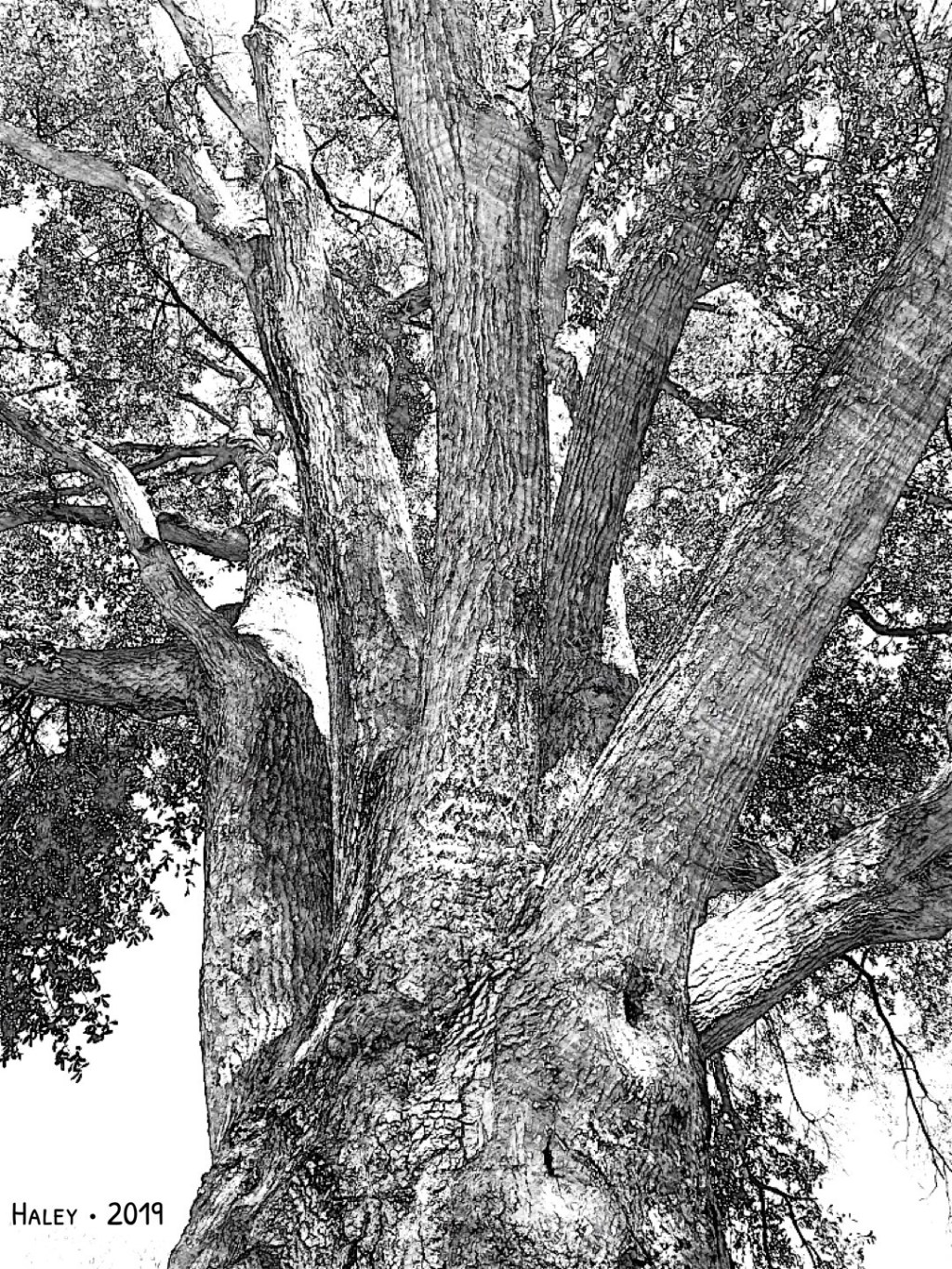
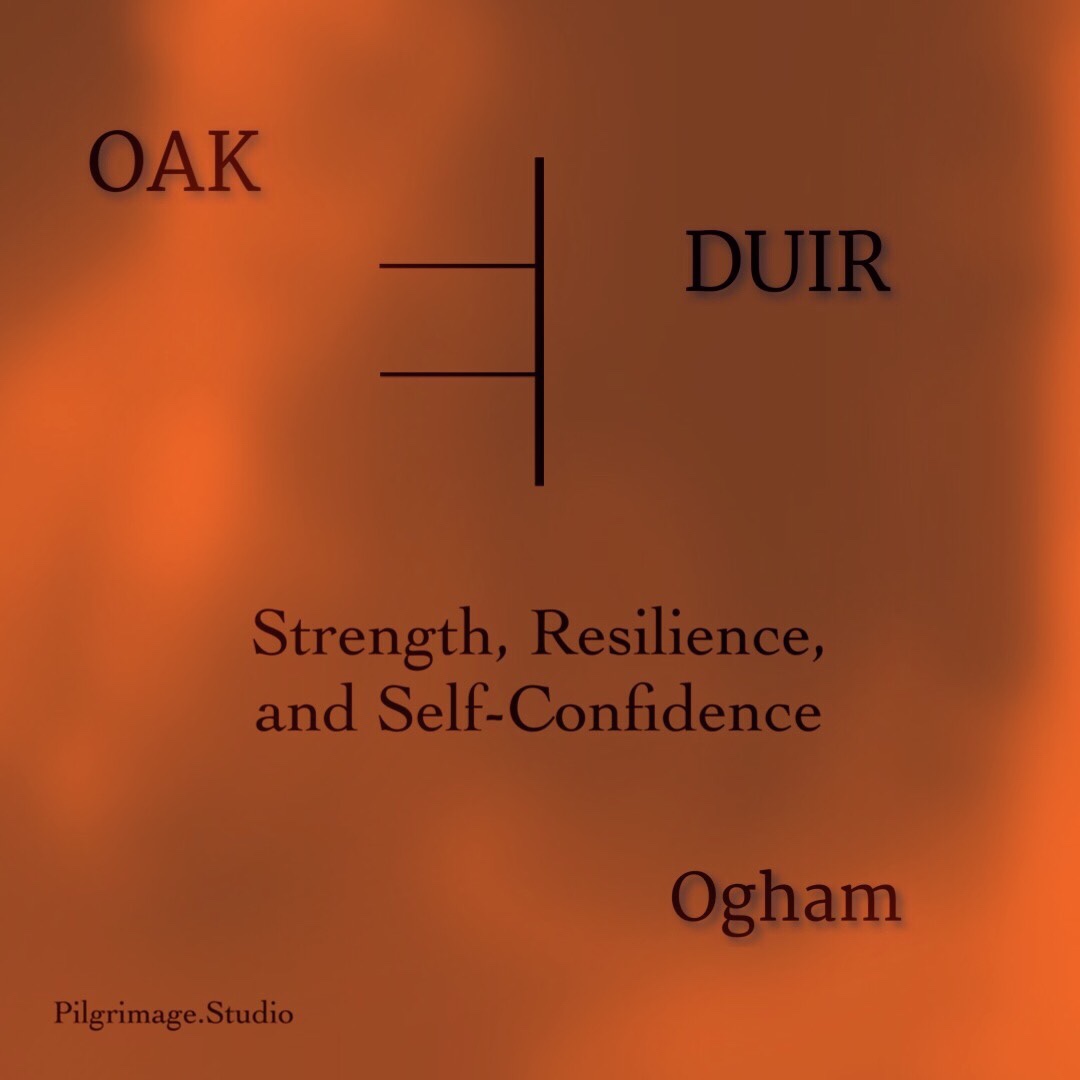
    Once upon a time, in the ancient land of Duir Forest, stood a mighty tree who was the King of his woodland home. His stature was so great that his long arms reached up to touch the stars and his roots wound down through the deepest secrets of the soil, embracing the earth dragon resting far below in earth’s keep.

    It came to pass, in the 500th year of his reign over Duir Forest, that there arose a terrible storm which battered and gusted the subjects of the entire realm, great and small. The mighty King of Duir was struck a terrible blow as lightning crisscrossed the angry sky, and he fell with a tremendous crash that shook the woodland kingdom to its roots. The subjects of Duir Forest threw up their hands and bowed low with grief at the loss of their sheltering King, who by his height and girth, had protected his subjects from the terrible storm.

    Many years passed, and then one day a Priest came walking through the land of Duir Forest. He sat for a time in meditation and prayer by the side of the great fallen King, and as inspiration filled his heart, he took out a sharp blade and began to carve into the sacred wood.

    As the priest continued to visit the forest each day, he carved deeper and deeper. He chiseled through many layers, until within its depths, he found preserved, the purest wood, untouched and without a single blemish.

    He had found the pure heart of the Forest King!

    Holding this treasure in his hands, he molded and crafted a lyre so beautiful it was beyond compare. However, with some despair, he later discovered that there was not a single musician who could play it. But, being a treasure of such beauty, the priest offered the lyre as a gift to the human king of a castle nearby.

    For many years, the beautiful lyre was treasured and coveted, but there was not one musician who could make it sing. The harder they tried, the more discordant a gnash of noise it made.

    Finally one day, a prince from a foreign land, and master musician, came to visit the human king, and taking up the lyre, he gently drew out with tender caress, the powerful voice that had rested within.

    The prince sang of the great Mother and her seasons, lakes and chuckling springs. He sang about mighty mountains that reached their heads far up into the clouds, and spoke with Father sky.

    The memories of the King of Duir Forest had suddenly revived!

    Once again, the sweet whispers of spring caressed the forest King’s face, awakening the bubbling laughter of the streams. He remembered newly-formed buds of promise, and the scent of damp earth in the rain.

    Awakened also were the dreamy days of summer where the chatter and hum of the insects mingled with a birdsong chorus, one hundred voices strong.

    Autumn now rises in the King’s heart, vibrant in its oranges, reds and yellows. Its frozen dewdrop mornings gleaming with the hint of frost’s first touch.

    Then snowflakes touched the great King’s skin as winter came once more, and hailstones knocked upon his branches with a fierce and icy roar.

    The prince then changed his tune, and began to sing of deepest love. The forest saplings began to sway like lovers dancing and blushing at their thoughts. But a shadow darkened the woodland floor, bringing with it little sign of hope.

    The tune changed again, and the fair prince sang of battle cries he himself had never heard, and of clashing swords and battle-torn earth he had never seen. But, the lyre sang out his song more fiercely, telling the tale that only he could sing:

    Of the dragon that plunged up and out of the mountain to fly with the lightening.

    The human King, amazed through and through, inquired of the prince, “Good sir, how does this lyre play only for you? What is the secret of its song?”

    “Good King” the prince replied, “Others sang about themselves. They wanted to sing their own song. But I let the lyre sing the tale: the one its heart knew all along.”

    “…The master calls forth notes we know not of. Memories long forgotten all come back to us with a new significance. Hopes stifled by fear, yearnings that we dare not recognize, stand forth in new glory.” –Kobori-Enshiu

    The tea-master, Kobori-Enshiu, also left us these memorable words:

    “Approach a great painting as thou wouldst approach a great prince.”


    “In order to understand a masterpiece, you must lay yourself low before it and await with bated breath its least utterance.”

    The Book of Tea by Kakuzo Okakura


    A Study in Art Appreciation

    The story behind the story:

    I have had the Book of Tea for many years. I loved the story “Taming of the Harp” and recently when I read it again, I just had an urge to weave a story of my own around the message Kobori-Enshiu gave through his work.

    I don’t have any other stories that I’ve written. I edit them out of existence. Maybe this one will be the survivor!!

    This lone story shouts, “I Will Survive!”
  • One Step

    One Step

    “A journey of a thousand miles begins with a single step” is a common saying that originated from a famous Chinese proverb. The quotation is from Chapter 64 of the Tao Te Ching ascribed to Laozi, although it is also erroneously ascribed to his contemporary, Confucius.

    It was reintroduced to Americans by John F Kennedy referencing the first nuclear test ban treaty of 1963.