Category: Complimentary Health

  • Whale Medicine

    Whale Medicine

    by Thela Foxgood


    The Story


    Oooouummmm Oooouummmm….

    I led a chanting meditation this weekend. We worked through the seven chakras using a seed sound mantra for each one.

    A few hours afterwards, I was working with Medicine Cards, and was pleased to see Whale show up. I then did a double-take as I read whale’s message.


    The Message


    “Whale Medicine teaches us to use the sounds and frequencies that balance our emotional bodies and heal our physical forms.”

    Allow your voice to use sound to release tension and emotion.

    Medicine Cards by Jamie Sams & David Carson


    Let it be Heard


    Find Your Cry

    Your Call

    Your Voice

    Your Song

    Your Chant

    Your Mantra

    Your Prayer

    May it ring out loud and clear.


    Picture credit: DarkWorkX@pixabay


  • Post-It Notes 3

    Post-It Notes 3

    Simple Steps


    Header Photo: Pixabay


  • Diaphragm Breathing

    Diaphragm Breathing

    by Beth Haley

    Breathing with the large diaphragm muscle in the middle of our body is what babies do naturally. With age, we can “forget” this very natural rhythm.

    In supine position (lie on your back), pull your knees up and place your feet by your buttocks.

    Placing your right hand on your abdomen, see if you can breath by only using your diaphragm. Your hand should rise and fall with your breath.

    Place your left hand on your upper chest and see if you can prevent your left hand from rising and falling as you breathe.

    Make a steady rhythm with your breath, counting to three on your inhale and to three on your exhale. Increase the count, as you are comfortable, to a count of ten.

    Complete a round of ten inhale and exhale cycles.


    Meditation for your Life by Robert Butera, PhD

    Photo Credit johnhain@pixabay

  • Allow Grief its Time

    Allow Grief its Time

    by Beth Haley

    Grief has its own Timetable


    Grief has it own timetable and it’s own unique expression within each of us. You will heal at your own pace, and in your own way.

    Six months ago my father crossed over. Being a pilot, he was used to flying the big skies, but on this day he flew on different wings.

    He’s flying with the big boys now.


    In Remembrance and Honor


    With Gratitude


    UNITED STATES AIR FORCE, 1951-1954.

    Korean War


    Sitting out at the airport this evening, I caught a wonderful view. And I could hear Papa’s short quip, “Looks like a fair day tomorrow!”


    CATHARSIS:

    The process of releasing…

    Finding ways to honor a loved one who has passed on can be very healing.


    Allow yourself to feel what you need to feel so that healing can come.

    Our physical health benefits when we allow ourselves to heal emotionally and spiritually. It’s all connected.


    “Well, take me back down where cool water flow, yeh

    Let me remember things I love…

    I can hear the bull frog callin’ me”

    by John Cameron Fogerty

  • Tacos Anyone?

    Tacos Anyone?

    by Beth Haley

    Tacos have been a long-time summer favorite. They’re easy to make and there are so many different ways to make them from veggies to fish.

    Another way of coping with the summer heat is with Sitali Pranayama (cooling flow) or taco breath. Sitali offers quick cooling during hot days and can also help with hot flashes and pitta imbalance. In addition, it can be helpful with fevers, bad breath, fatigue and high blood pressure.

    To prepare for this pranayama, sit in a comfortable position with your spine straight. Inhale and exhale deeply through your nose a few times.

    Making an O shape with your lips, roll your tongue upward like a tube or taco. Sticking your tongue out between your lips, inhale slowly like you are sipping air through a straw. Let your breath fill your chest and belly. Hold for five seconds.

    Withdrawing your tongue, close your mouth and exhale through your nose. Slowly empty out your lungs, drawing your bellybutton toward your spine.

    If your tongue does not curl, try Sitkari Pranayama instead.

    For sitkari pranayama, you can rest the tongue against the inside of your bottom teeth and closing your teeth gently, inhale through the gaps between your teeth. This makes a hissing sound. Closing your mouth, exhale through your nose.

    You can also extend a flat tongue and rest it on your bottom lip. Practice the same inhale and exhale exercise you would do with sitali.

    Make sure and moisten your tongue!

    Try practicing this technique for 3-5 minutes or gradually work up to 10!

    Sitali and sitkari pranayama both reduce body temperature so they are best done in hot weather or after exercising.

    Sitali Picture


    Cover photo from: Pixabay


    Stay cool my friends, love Pilgrimage Studio

  • Reading Nook 1

    Reading Nook 1

    by Beth Haley

    Growing up, my mother read to me for hours. We got lost in the classics: Charles Dickens, Wilson Rawls, Charlotte Bronte, Frances Hodgson Burnett, Kenneth Grahame, Fred Gipson, Daniel Defoe, Laura Ingalls Wilder and so many more! We spent hours on grand adventures, cried over sick or missing dogs and over the plight of princesses and orphans. We dreamed through secret gardens and were in awe as Ebenezer Scrooge met his ghosts.

    Then I read to my children. I started to record books for them so that when I was busy, they could still be following along with their books.

    They are all grown up now. I find I miss both being read to, and reading to others. This is a little bit different from Dr Seuss, but inspiring, I hope.

    Even though the title says “women” I think the message is relevant to men as well.

    This is from the book, “The Woman’s Book of Courage by Sue Patton Thoele.


    And, to the things we miss, and the things we wish for:

    A Dream is a Wish Your Heart Makes

  • Zen Intrigue

    Zen Intrigue

    I wondered how these worked!

    So, there’s a hole πŸ•³ in the bottom of the incense cone which you put on top of the hole πŸ•³ on the waterfall.

    The incense it came with though, doesn’t smell zen at all. More like…wear a face mask 😷 type of thing…

    It was fun to watch though!


    Pixabay

  • Posture First

    Posture First

    When I first started meditating and journeying, I would get very uncomfortable. My legs would fall asleep and I was constantly fidgeting. I would sink into meditation, then find that leg pain or numbness would distract me.

    A Zafu is a meditation Pillow

    Before beginning meditation it is helpful to know what posture will be comfortable and what will work best for you. The spine needs to be erect with the arms and legs settled comfortably.

    Breathing begins with the physical posturing of the body.

    For example: try breathing from a slouched position. Which part of your lungs feels restricted? Diaphragm (belly), rib cage, upper chest? How many seconds can you inhale and exhale? How did you feel when trying to breathe in this way?

    Now try this with your spine erect which allows for proper breathing. Leaning forward even slightly can restrict your breathing capacity.

    Despite the common vision of a monk sitting as still as a rock for hours on end in meditation, sitting too rigidly can shut off body awareness and can stress the cushioning of bones and muscles.

    If you feel any pain or numbness, reposition your body.


    Meditation for your Life by Robert Butera, PhD

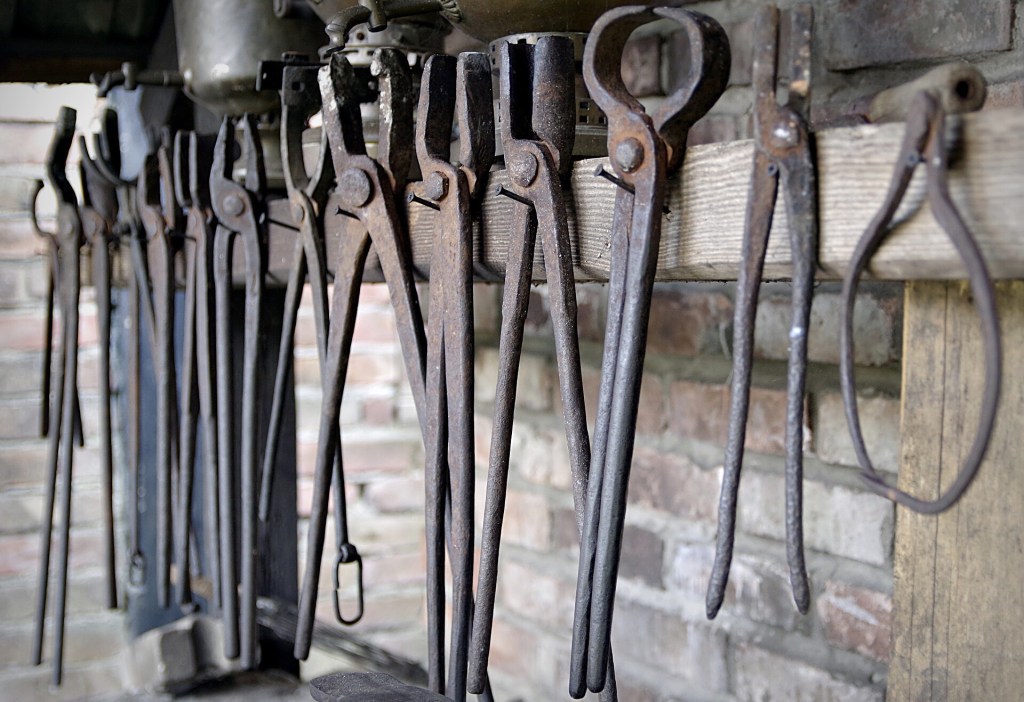
  • The Three Metal-Smiths

    The Three Metal-Smiths

    by Beth Haley

    Once upon a time, a terrible drought plunged an ancient kingdom into hard times. The people were not able to work their lands as they normally would and food was becoming scarce. So the good king employed workers from the surrounding villages to help with the new temple that was being built.

    At that time, a traveler came riding through the city and came upon three people who were working near the temple site. They tended the hot fires of a forge, working and shaping, heating and cooling pieces of misshapen metal.

    Curious, the traveler asked the first worker, β€œWhat are you doing?”

    The first worker replied instantly, β€œI’m out here in this stinking heat, sweating my brains out over these fires and hammering on ugly chunks of metal all day like a slave to make dishes for the temple. Curse this!”

    A bit taken back, the traveler approached the second worker and asked the same question, β€œWhat are you doing?”

    The second worker replied, β€œI am refining and shaping this metal into service dishes for the temple, many hours a day, so that I can provide food for my family.”

    Intrigued by the spirit of these two different answers, the traveler asked the same question of the third worker.

    Carefully placing a beautifully molded cup into the fire once more, her eyes never leaving her work, she replied, β€œI am crafting the Golden Chalice!”


    Three workers. Three very different attitudes and perspectives about what they were doing.

    The first two workers were opposite sides of the same coin: one side was negative and the other side was positive.

    The third worker seemed to have a different view. She was not fighting the steam, the heat of the day, the scorch of the fires, or worry about her life in general. She was not deliberating over a paycheck, or the fate of the future, but instead was focused on the task set before her. She accepted the good along with the bad, without resistance.


    According to the Bhagavad Gita the third worker’s view of life would be considered as “Pure.” The “pure” way of looking at life is more meditative and reflects a peace of mind and of being less attached to life’s ups and downs.


    Adapted from: “The Story of the Stone Cutters

    Pixabay