Tag: Complimentary Health

  • Memory Observation Practice

    Memory Observation Practice

    by Beth Haley

    Observation skills can take some time to develop. When you’re in the middle of reacting, it’s hard to remember that you have other options. The goal of observing emotions and responses can be forgotten in the storm of the moment, and sometimes it feels like the commitment to make a choice between one response versus another, is overridden by the events and emotions. It can be discouraging, but mindfully observing yourself during triggering moments, does improve over time.


    Memory Observation Exercise

    Find a comfortable position in a peaceful, safe space and close your eyes.

    Take a deep cleansing breath, in through your nose, and exhale away any tension out through your mouth.

    And another deep cleansing breath in through your belly, and blow away any remaining tension.

    Now turn your mind back to a recent memory where you became upset or felt triggered. Let this memory return in full detail, and just sit with it and observe. Look at every part of the event…the room, the temperature, textures and colors… who was there, and what is being said.

    Let your emotions build as the scene unfolds again in your mind, and see and hear what is happening. Just watch and listen until your emotion in that space is strong enough to observe. As you observe this feeling, see if you can name it, and try to name any other feelings you notice.

    What thoughts come up during this time? Thoughts about the situation…thoughts about the emotion or feelings?

    What physical sensations go with your emotions? Do you feel it in a specific place in your body? Notice sensations in your head, face, chest, arms, stomach and legs.

    What does the emotion make you feel like doing? What urges rise to the surface? Observe how you respond. Are you swept away on the swell of emotion, or can you see a choice in how you respond?

    Now, while you are in this safe and quiet space, with more time to think and analyze, can you develop, through this exercise, a game-plan you want to follow the next time you are triggered in the same way?

    By really sinking into a memory by observing it, you may get a sense of having a choice, and be able to separate yourself from the same old actions and reactions (withdraw, attack, blowup, deflect) and redefine a new way of being and responding.

    Journal the emotions, thoughts, sensations, and urges you encounter during this exercise. After doing this exercise a few times, you will get more accustomed to observing your triggered reactions. The more you become used to watching your reactions from the past, the better you will become at observing triggers as they happen in real-time. You’ll begin to notice moments of choice where you start to define new ways of interacting and responding to stressful situations.

    We can learn to watch our emotional sky and feel and see what the weather is like. We can choose to watch a storm instead of react to it, or become the sky, holding an experience, rather than being tossed around by it.

    That old sense of helplessness, where you felt forced to react to everything that triggered you, will, with time, no longer define you. Instead, you can stand at a distance, watching people or situations that trigger you, watching your emotions and urges, and still feel a sense of choice.

    Emotions don’t have to dictate your behavior; you will decide what matters in your life, and you will choose what to do.


    Another View

    Perhaps, like me, with some memories, you’re not ready for a new game-plan. As in, there is no action required, other than to heal. It may be that in order to heal, you let the memory unfold just to be with it. To acknowledge what happened and what is felt, not pushing any part of it away, but pulling the feelings close, embracing them in acceptance; letting them find their expression, perhaps for the first time, and allowing healing to come.

    A good exercise for healing past trauma, is to visualize your twin self entering the space you are at in this memory. And, walking up to you, they offer to you exactly what you need. Maybe it is a hug, to be held, to be heard, to be told specific words; perhaps it is to comfort the child that is you in this memory. Allow your twin-self to give you whatever you need at that point in time.

    Note: if the image of your twin-self doesn’t resonate with you, substitute this for something that really reaches you, such as: an Angel, God, a parent, Goddess, Source, The Great Spirit, The Divine…


    A great post on “How Memories Affect our Present” from Pointlessoverthinking.com:

    http://pointlessoverthinking.com/2019/07/01/how-memories-affect-our-present-reblog/


    Source: The Interpersonal Problems Workbook
    by Matthew McKay, PhD
    Patrick Fanning
    Avigail Lev, PsyD

    Michelle Skeen, PsyD

    Photo Credit: jplenio@pixabay

  • Turmeric Face Mask

    Turmeric Face Mask

    by Thela 🦊 Foxgood

    I was looking through a book today called “Herbal Goddess” by Amy Jirsa and came across a Turmeric Face Mask recipe. However, I was out of a few ingredients.

    I am not sure why shopping is so hard for me, but if I’m out of something, I just make due if possible. I am the Grocery-Store-Avoider! So, I crafted with what I had on hand.

    **Test on a small area of skin first to check for allergic reactions.


    Thela’s Turmeric Face Mask Shortcut

    Use a favorite store-bought face mask mix you already have on hand.

    Put the amount of mask mixture needed to cover your face, into a bowl, and mix in 1tsp organic Turmeric powder.

    I used a natural clay mask that is infused with essential oils, and added the Turmeric to that.

    If you have apple cider vinegar, this adds astringent benefits and makes a great toner. Add just enough to your mask mix to keep the thickness you need.


    Benefits

    Turmeric is good for troubled skin conditions such as redness, eczema, and rosacea. Its natural antiseptic qualities are excellent for treating acne.

    Note: a good time to try this is a day where you can be at home. Turmeric makes my face look like I have a tan, but it can turn skin a bit yellow.


    Photo Credit: Ajale@Pixabay

  • Destiny Number

    Destiny Number

    by Thela Foxgood

    I love working with numbers, letters and codes. One fun activity to do with letters and numbers is to use your full birth name to find your Destiny Number.

    1: A,J,S

    2: B,K,T

    3: C,L,U

    4: D,M,V

    5: E,N,W

    6: F,O,X

    7: G,P,Y

    8: H,Q,Z

    9: I,R


    Valerie Jane Morris-Goodall 

    V=4, A=1, L=3, E=5, R=9, I=9, E=5 =36

    J=1, A=1, N=5, E=5 = 12

    M=4, O=6, R=9, R=9, I=9, S=1 = 38

    G=7, O=6, O=6, D=4, A=1, L=3, L=3 = 30

    36 + 12 + 38 + 30 = 116

    1 + 1 + 6 = 8

    This makes the Destiny Number for Dr. Jane Goodall or known as, Dame Jane Goodall, the number 8.

    For doing your own, here is a list of number meanings at FeliciaBender.com

    This site also shows meanings for the master numbers 11, 22 and 33, which are numbers that you don’t break down into single digits when they are your final number.


    Life Path Numbers

    Using your full birth date such as, 8-22-1991, you can determine your Life Path Number.

    8+2+2+1+9+9+1 = 32
    3+2 = 5

    A Life Path number represents who you are and your purpose in life, while your Destiny/Expression Number represents how you can achieve your purpose.

    There are many resources for number meanings. However, these Life Path Number meanings from Creative Numerology, give a lot of detail.

    One

    Two

    Three

    Four

    Five

    Six

    Seven

    Eight

    Nine


    Have fun with your numbers!

    Photo Credit: Larisa-K@pixabay

  • I am my Breath

    I am my Breath

    by Beth Haley

    How many times do we think of who we are by what we have?

    I am my bank account.

    I am my house.

    I am my corvette (I’d be a corvette).

    I am what I’m wearing.

    I am my bills.


    How about disabilities:

    I am disabled, instead of: I have a disability.

    I am a Social Phobic, instead of: I have social anxiety.

    I am my loss, instead of: I have experienced loss.

    I am what I lack, instead of: I am grateful for what I have.


    Dr. Alberto Villoldo, who devoted 25 years to studying the healing practices of the Amazon and Andean shamans, starts his mornings with this ancient shamanic breathing practice:

    Inhaling, he says, “I am”.

    Exhaling, he says, “My breath.”

    In, “I am.”

    Out, “My breath.”


    The concept is that we start our life in this world with a breath. And at our last moment, we will leave this world with a final breath.

    Paraphrased:

    … when you take your last breath, at the very end of your life, you’re not going to be saying, “I am my bank account, I am disabled, I am my body, I am my job, I am my family, I am my name… No, you can go, “I am my breath,” and you will follow that last breath out…

    “This is my practice,” says Villoldo.

    “Otherwise I wake up in the morning and I go, “I am my to-do list, I am my emails that I haven’t responded to, and I am this problem that is going on right now””… when none of those things are who I am, although they may be what I have… “you can cultivate that identification with that part of you that will continue beyond this moment, and it can be tremendously liberating.”

    Dr. Alberto Villoldo


    I may not have that Corvette, but I also wont be paying the insurance on it either!

    I hear my father’s words whenever he would see something really expensive, “That’s some nice debt!” It was a way of teaching us that what we have, we also need to be willing to pay the price for. And sometimes the price isn’t worth it.


    I’d still be a corvette.


    So who are you really?

    Inhale: “I am.”

    Exhale: “Not a Corvette.”

    Sigh. I digress.

    Inhale: “I am.”

    Exhale: “My Breath”

    Inhale: “I am.”

    Exhale: “My Breath”

    Could I be a charger instead?


    I listened to Dr. Villoldo speak on the podcast: My Seven Chakras, “How to Grow a New Body Using Shamanic Healing and Nutrition” with Dr. Alberto Villoldo

    Corvette wish from angelic@pixabay

    Charger dream from oktagon1@pixabay

    Header Photo from johnhain@pixabay

  • Progressive Muscle Relaxation

    Progressive Muscle Relaxation

    A Meditation with Beth Haley


    Background soundtrack is from Insight Timer by Owen Jenkins, Nature Sounds: Flowing Stream

    And my dog 🐕 Peanut, who always finds ways to join in.

    Video Photo Credit: 12019@Pixabay

  • Re-lease

    Re-lease

    by Beth Haley

    Breathing retraining is changing the way in which we breathe. Many times we breathe shallowly, only feeling our chest and shoulders rise and fall. In breathing retraining, you learn to breathe deeper through your abdomen or diaphragm. Doing this reduces heart rate and symptoms of anxiety, while changing the ratio of carbon dioxide to oxygen in your bloodstream.

    Progressive muscle relaxation (PMR) is another common anxiety-management skill involving tensing and relaxing your muscles which helps you notice the difference between holding tension in your muscles and having relaxed muscles.


    Before doing this exercise, rate your stress or anxiety level on a scale from 0 to 10 (where 0 means relaxed and 10 means stressed or anxious) and again after this exercise, and see if you notice a difference.

    In a comfortable position, put your right hand on your chest and your left hand on your abdomen. Slow and deepen your breathing. Feel the hand on your abdomen rise and fall, more so than the hand on your chest. Just focus on how it feels to draw in the air and exhale it.

    As you inhale, think, RE. And as you exhale say, LEASE.

    While you’re doing this, just let stressful or anxious thoughts come and go, and simply focus on inhaling and exhaling with RE and then LEASE.

    Happy releasing! 🤩


    PhotoCredit: Pixabay

  • Au-then-tic-i-ty

    Au-then-tic-i-ty


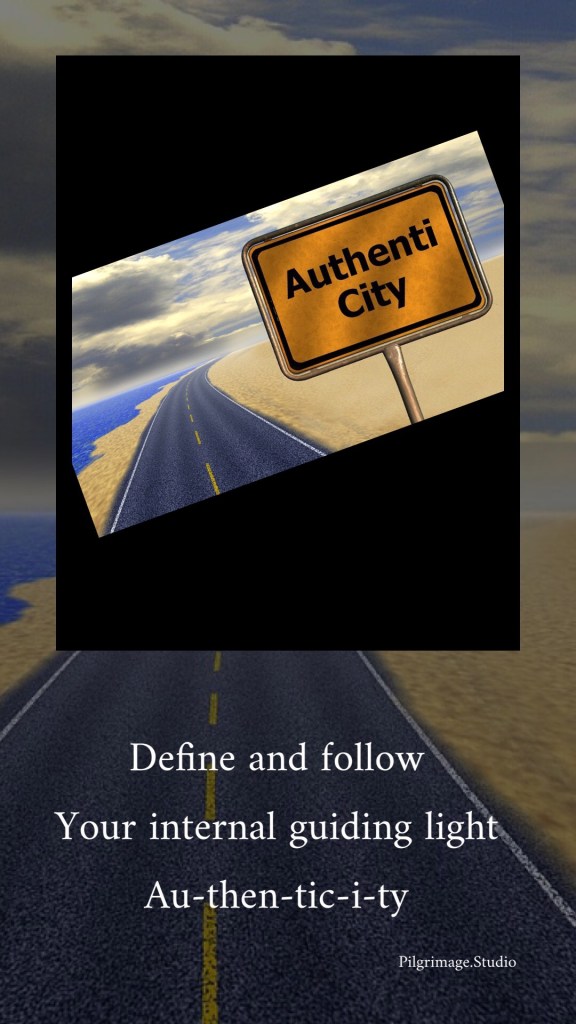
    Define and follow

    Your internal guiding light

    Au-then-tic-i-ty

    Pilgrimage.Studio • 2019

    geralt@pixabay

  • Drift

    Drift

    Meditation for the Soul


    “When under, remember the surface.

    When on the surface, remember the deep.


    Sit quietly and practice entering the deep

    Imagine each breath as a stroke

    Breathe slowly and stroke your way past all distractions

    When you feel the swell of life around you, simply drift… ”


    The Book of Awakening by Mark Nepo

  • Holistic Therapies

    Holistic Therapies

    by Beth Haley

    Reiki is just one of many therapies that is considered a “holistic” practice because it affects the whole person – body, mind and spirit.


    Body

    Reiki facilitates deep relaxation, a sense of positive wellness and overall feeling of wellbeing, while supporting and quickening the physical body’s own healing abilities so that we can operate more effectively in our life. It also helps develop a deeper connection or awareness of our body’s needs, like healthy nutrition, and regular exercise.

    It is similar to doing a body scan in yoga: what hurts? What part of your body feels tense or tight? Where is there struggle? Where is there resistance? It is a tuning in and creating awareness of what our body is trying to tell us.

    “My stomach feels tense and it hurts,” is not just a physical symptom. Knowing that someone just lost a job, puts physical symptoms into a whole new light. Emotions such as stress, affect us holistically, the same as relaxation affects the whole body holistically: body, mind, and spirit.


    When we bring ourselves into a relaxed state, our bodies’ healing capabilities are quickened.


    Mind And Emotions

    Because of the relaxing nature of Reiki, it allows for the release of stress and tension. It supports the examination of our emotions, and encourages us to let go of toxic emotions, thoughts, and attitudes such as bitterness and anger. Reiki stimulates healing of emotions such as sadness and grief, or imbalances in emotional response and reactivity, grounding one in a more balanced state of being, feeling, thinking and responding.

    Reiki encourages qualities such as love, care, trust, goodwill and sharing. It can also help to direct the energy of our emotions toward different or more positive outlets, such as creativity.

    There is a Taoist practice like this in which you channel or direct unneeded, or excess, sexual energy towards other goals: such as to create art or to write, or to breakthrough in a career or new business. If the energy is unused, misguided, or in excess (imbalanced) Reiki is very helpful in bringing back into balance and redirecting it to where it is needed most.

    From my personal experience: I can walk in the door after work in one state, lay down on my yoga mat for a self-treatment in Reiki, and by the time I get up 20-30 minutes later, it’s like I’m a different person.

    It has been very balancing for my entire body, especially my emotional body after such things as a big disappointment, after receiving bad news, or even just after a long day. I have literally laid down in tears, and gotten up smiling. It’s a night and day difference.


    Combinations can be amazing.


    That said, I am also doing a lot, in addition to Reiki, during a treatment. I am visualizing the colors, chanting mantras, praying, repeating an affirmation for each chakra center, meditating…

    Combine every therapy you know, that will fit the setting, into the one treatment.

    For example, if cranberry is all you need for a urinary tract infection, that is great! But if you combine cranberry with D-mannose and hibiscus, you now have a very powerful combination for your entire urinary tract system from kidneys on down.

    When I got a Reiki treatment from my yoga and Reiki instructor, I was getting yoga principles, massage, chiropractic techniques, acupressure, Reiki, and an anatomy lesson to boot!

    U-Tract Complete


    Spiritual

    Reiki helps bring acceptance and love to your whole self, and encourages a non-judgmental look at humankind, allowing you to accept each person as they are. It facilitates qualities of love, empathy, understanding and acceptance, and supports you on your individual path of personal growth and spiritual development.


    Reiki Principles

    Kyo dake wa – Just Today

    Okolu-na

    Shinpai suna

    Kansha shite

    Goo hage me

    Hito ni shinsetsu ni


    Just for today, do not anger

    Just for today, do not worry

    Honor your parents, teachers and elders

    Earn your living honestly

    Show gratitude to every living thing


    It is always today.


    Photo Credit : Ravi Roshan @ Unsplash

  • Post-It Notes 6

    Post-It Notes 6