Haiku by Thela Foxgood
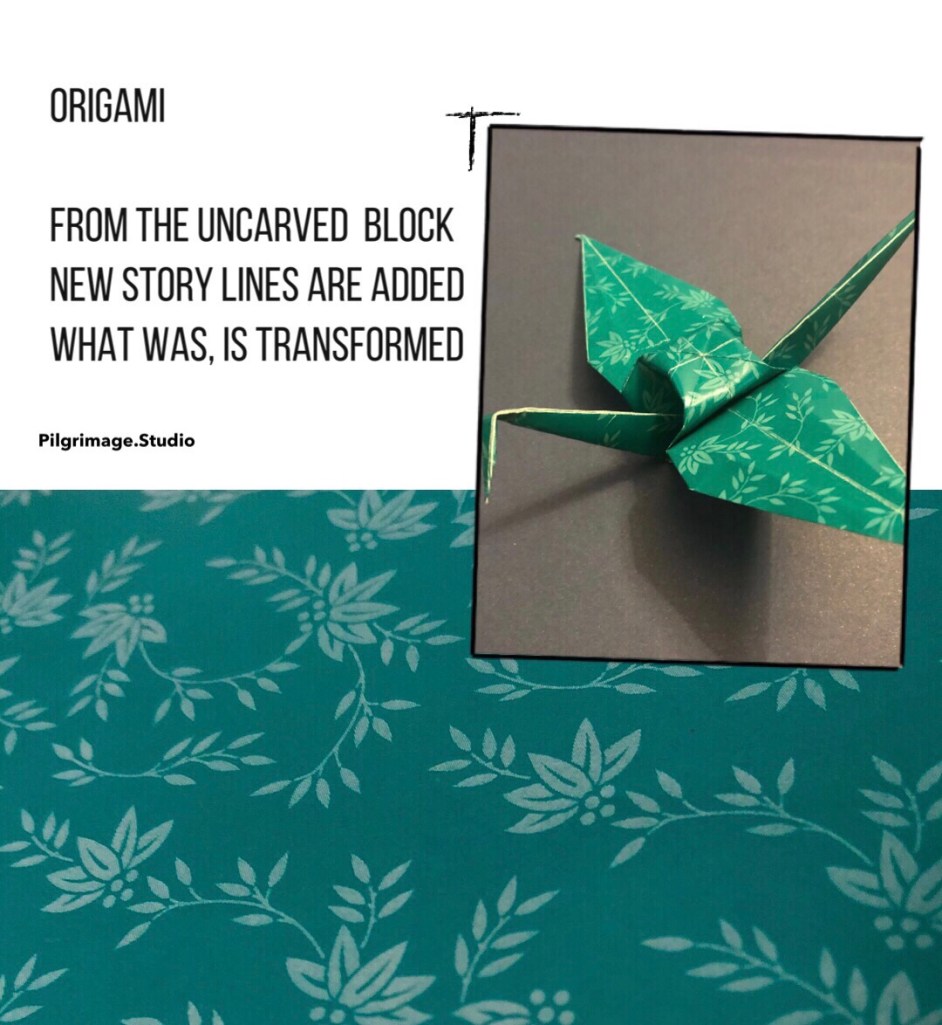
by Beth Haley
From this blank square of paper, the zen question, “Who am I?” becomes, “What am I?”
The end result is, not necessarily, as important as the process of creating. If we are mindful throughout this creative endeavor, we may each see something different.
“All things are given life and form.”
Religion in Chinese Garments by
The square is the uncarved block (Pu is a Chinese word meaning “unworked wood”). The Taoist meaning of Pu is: perception without prejudice and without the distinctions of right or wrong, beautiful or ugly, good or bad, black or white.

Fold after fold. Crease and un-crease; a new creation is coming into being. Just like we can take the old lines and creases of our life and transform them into something new.
The paper has memory; it remembers its past lines. They are like scars on the soul. They may heal, but once there, those lines remain.
We can unfold (turn back time), and remember our past. Then, make new creases and story lines to form a new shape, outlook, new picture, or a new present and future.

Haley 2019
A Haiku is a Japanese poem that has 17 syllables. The 1st line has 5 syllables, the 2nd line has 7, and the 3rd line has 5.
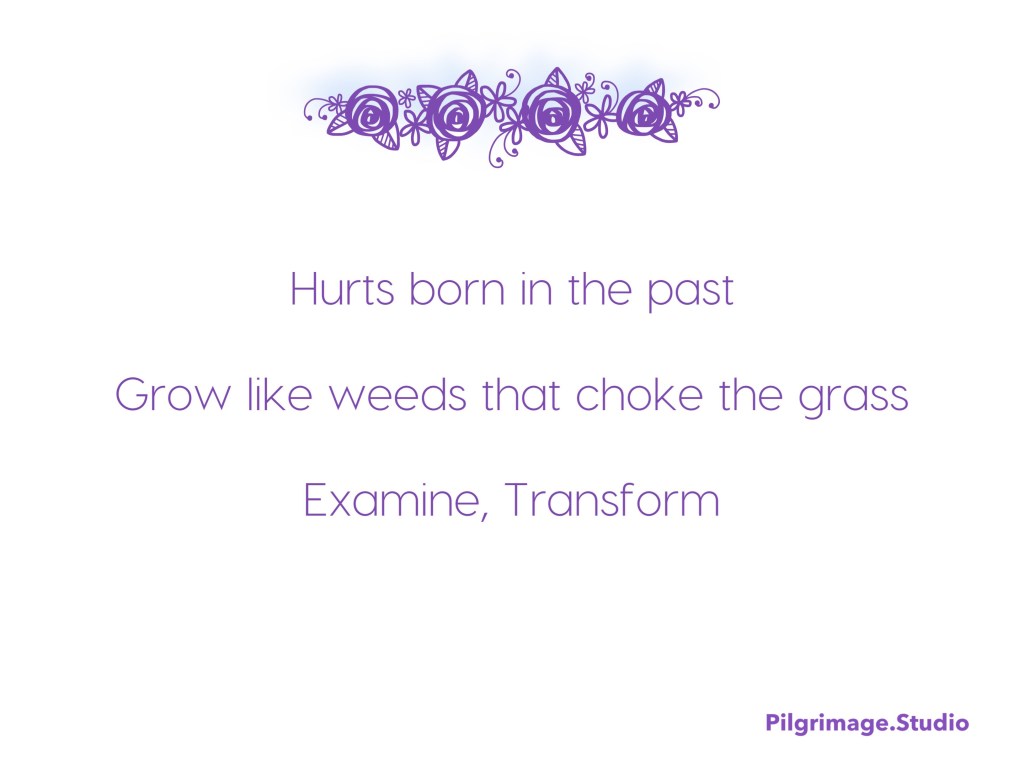
We aren’t truly limited. We are limitless. It is our perceptions, many times born from past pain, that cause us to think we are limited.
When it comes down to changing limiting habits and attitudes it can be helpful to make a list. I used these headings:
Mapping them out like this makes them easier to see. It is also easier then to see what path healing needs to take, or how to change our subconscious programming.
 Pilgrimage Studio