Tag: Alternative Health

  • Love Moon

    Love Moon

    by Thela 🦊 Foxgood

    The New Moon In Libra works with Venus the planet of love. It is a good time for new beginnings and fresh starts, and for setting goals and intentions.

    Love is an energy. It is friendship. It is family. It is romantic love. It has many faces and comes in many ways, shapes and forms.

    A part of bringing more love into our lives and opening up to receive it, is to begin releasing attachments: attachments to “who”, “when” and “how.” Let go of what you think love has to look like and open your heart to simply receive love in all her many forms.


    Inhale the vibration of love

    Exhale, and let go of “who”

    Inhale the vibration of deep connection

    Exhale, and let go of “when”

    Inhale the vibration of passion

    Exhale, and let go of “how”


    Instead of thinking that love has to be a specific person, at a specific time and in a specific way, make a list of what love “feels” like to you. Whether it is friendship, family or romantic love; whether it is an existing love or new, love feels like:

    It feels like security

    It feels like a warm fire on a cold night

    It feels like a cool pool of water in the heat of the day

    It feels delicious

    It feels caring

    It feels devoted

    It feels like sharing

    It feels like laughter

    It feels like sparkle and sunshine

    It feels like being heard

    It feels like abundance

    It feels healthy

    It feels balanced

    It feels mutual

    It feels like Anam Cara

    It feels tender

    It feels everlasting

    It feels like hugs

    It feels like kindness

    It feels like understanding

    It feels like a shoulder to lean on

    It feels like a solid foundation

    It feels like standing on holy ground

    It feels like connection

    It feels like peacefully sharing space

    It feels like communion

    It feels like angels all around

    It feels like kindred spirits

    It feels like magic

    It feels like adoring presence

    It feels like companionship

    It feels equal

    It feels spiritual

    It feels like being enough

    It feels like comfort

    It feels like coming home.


    Love is here now, in each of us. And, for each of us.


    Another part of receiving is giving thanks.

    So after making a list, spend some time in gratitude for your blessings now, and for new ones on their way!!


    Photo by Grant Mclver
  • Who Now?

    Who Now?

    by Beth Haley

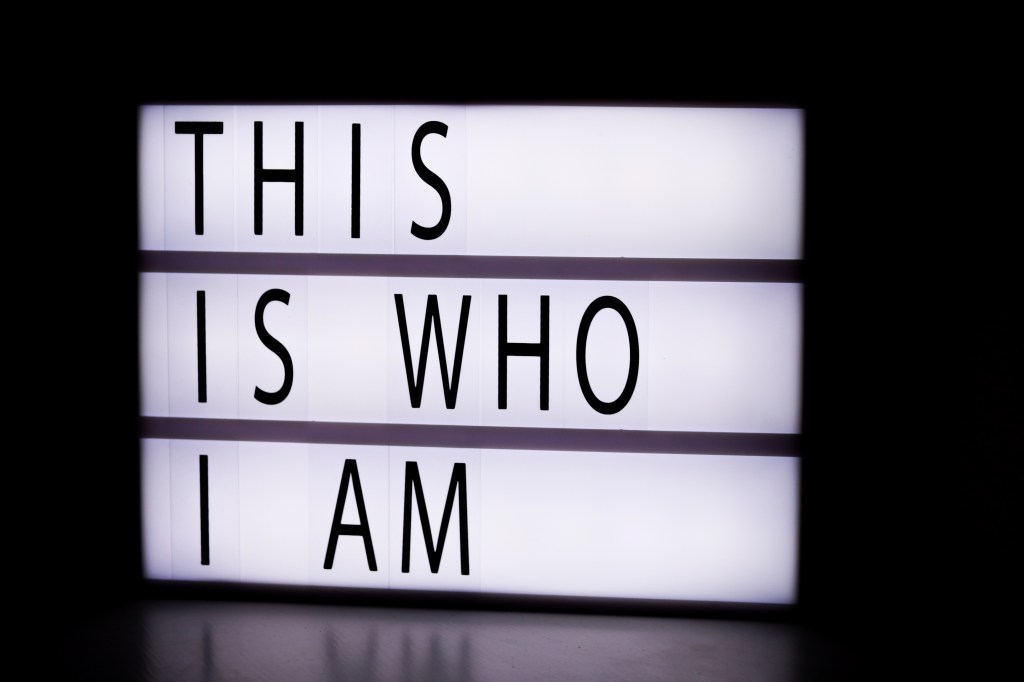
    If you were to remove the titles of all of the roles that you play in life (mother, friend, partner, daughter, son, sister, brother, yoga teacher, jogger, swimmer, computer programmer) and instead, focused on what those roles bring out in you, or bring to you (security, love, caring, sharing) or what it is about these roles that you like or that fulfill you, what would a journal entry titled, “Who am I?” look like now?

    What makes you the happiest? How can you create your life around the elements which bring you the greatest joy?


    Photo by Felicia Buitenwerf

  • Post-It Notes 16

    Post-It Notes 16


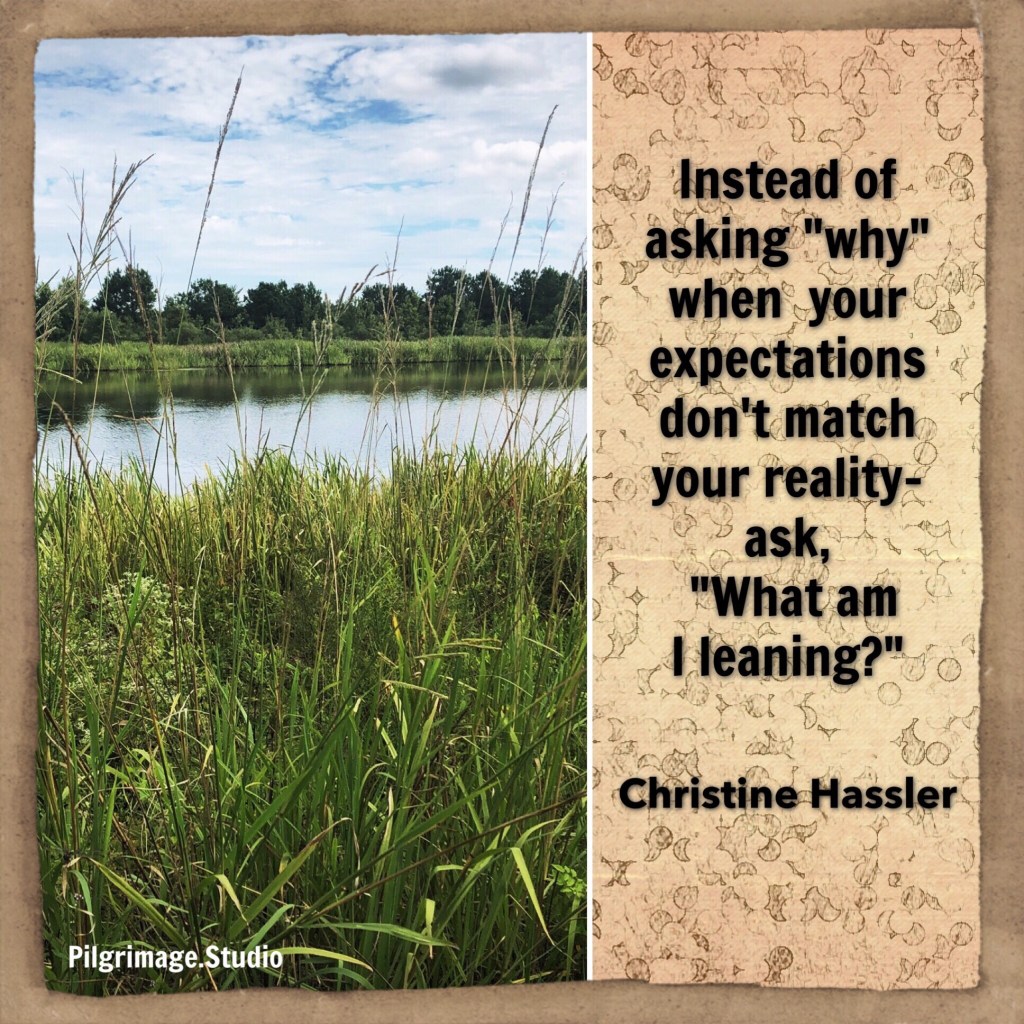
    Instead of asking “why” when your expectations don’t match your reality – ask, “What am I leaning?”

    Christine Hassler

  • Post-It Notes 15

    Post-It Notes 15


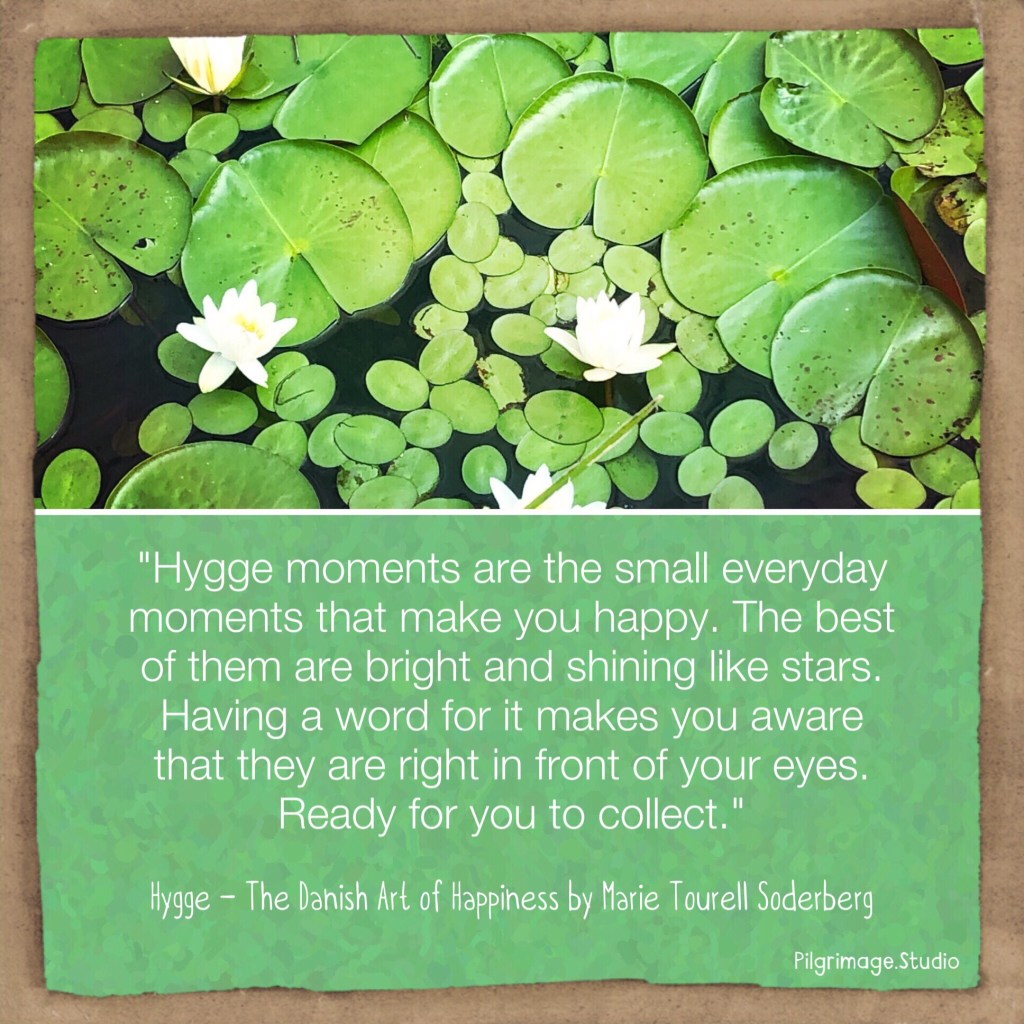
    “Hygge moments are the small everyday moments that make you happy. The best of them are bright and shining like stars. Having a word for it makes you aware that they are right in front of your eyes. Ready for you to collect.”

    Hygge – The Danish Art of Happiness by Marie Tourell Soderberg

  • Palm Tree

    Palm Tree

    by Beth Haley

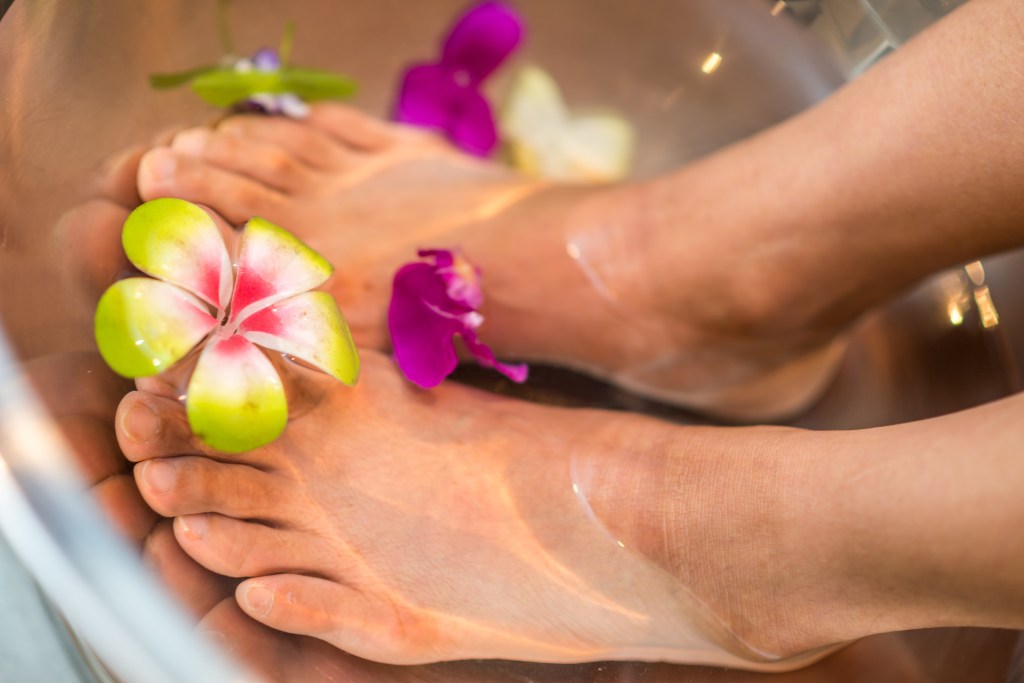
    A great exercise to strengthen your ankles, and calves as well, is the Palm Tree.

    Sit in a chair, or stand in Mountain Pose with your hands lightly touching a wall. As you inhale, raise your heels up as far up as is comfortable. Exhale and bring them back down. Repeat 5 to 10 times


    For more foot exercises see : Medical News Today

    Photo by Rune Enstad

  • Literally

    Literally

    by Beth Haley

    Colloquialisms

    If you are learning a new language, colloquialisms can be confusing. The metaphors, slang, and idioms most people are used to hearing every day might make very little sense.

    For example: The saying, “Beware of Greeks bearing gifts,” has little to do with the Greeks, except for the history of the Trojan horse, and more to do with being cautious about overly generous gifts.

    “I’m sitting on pins and needles,” might be a saying that is a “head scratcher” for people learning English. They may wonder about the safety of their chair and if the person speaking has a scalp condition.

    “On the other hand, ” if you were to look at the “flip side,” most people, once familiar with a language, understand these types of sayings, and know that considering another point of view, or listening to opposite, or additional information, is what is represented by these sayings.


    Literalism

    There is however, another group of people who can have difficulties with the everyday colloquialisms that they hear in their own language, and these are people on the autism spectrum. For them, slang terms that make sense to others are like “ships passing each other in the night” and their symbolism is not translated into a clear picture of what is meant or represented.

    One might “bend over backwards” in an effort to speak clearly, but even with the best attempts, if colloquialisms are used, someone with autism may envision, “bend over backwards,” as a person doing a backbend.


    In other words: Literalism is translating words in their exact sense and literal meaning.


    For someone with autism, this goes farther than just the literal spoken words, and can affect being able to correctly interpret tone and body language as well.

    For example, Sarah interprets “hello” as a greeting. Yet spoken in a different tone and using specific body language, a “Hello” might be someone trying to convey romantic interest. Despite the differences in tone and body language, Sarah still interprets “hello” as literally, just hello. This can create quite a bit of confusion unless the person in question clearly states their intentions and interests.

    And, if being literally-minded is not challenge enough, once a metaphor is understood, knowing then how to appropriately respond, can be an even greater challenge.

    For some, the challenges of a language dissipate with learning. For others, this has been, is now, and will always be a struggle for understanding – making each social encounter and conversation an event which feels like… well, like sitting on pins and needles.


    ‘Copy & Paste’ – Hidden Asperger’s – Girls with Aspergers | Niamh McCann | TEDxDunLaoghaire


    Remember Your Superpowers

  • Creative Flow

    Creative Flow


    There is a Fountain of Youth: It is your mind, your talents, the creativity you bring to your life and the lives of the people you love. When you learn to tap this source, you will truly have defeated age.

    Sophia Loren

  • Post-It Notes 14

    Post-It Notes 14


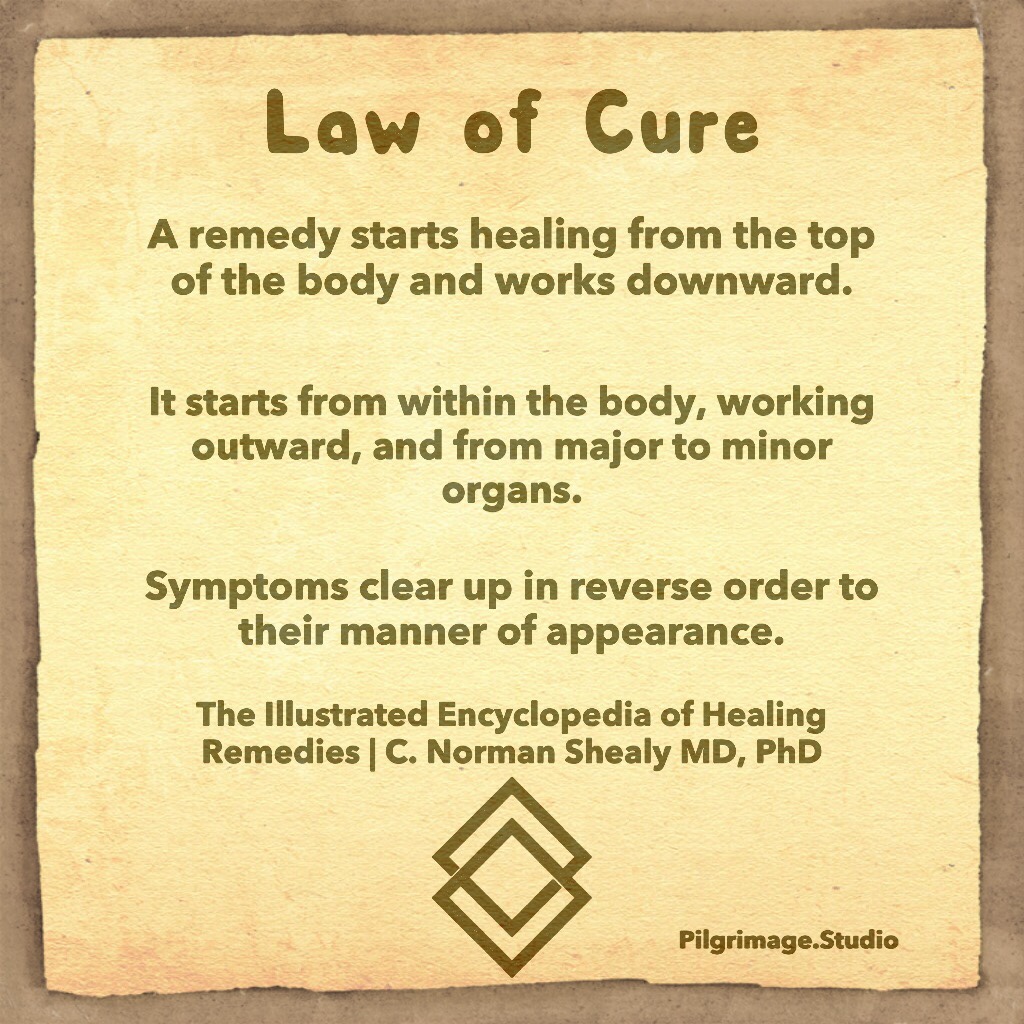
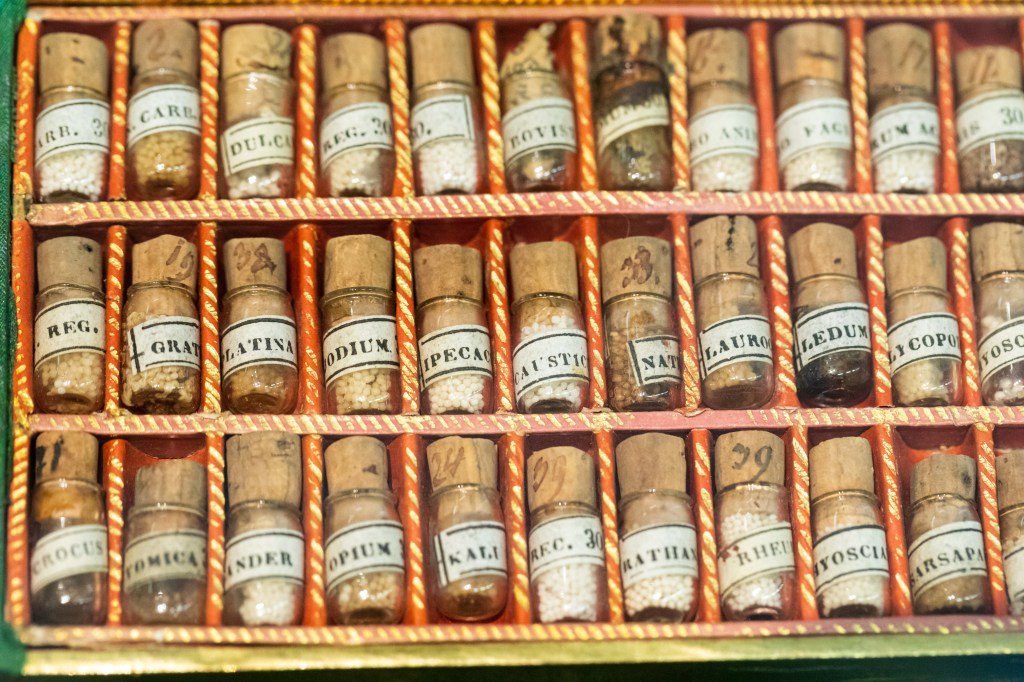
    Hering believed that: healing begins at the deepest part of us – such as our minds and emotions and major organs – and then works outwardly to our extremities – that symptoms appear and clear up in reverse order to their original order of appearance, and that we heal from the upper parts of the body downward.


    “The cure must proceed from centre to circumference. From centre to circumference is from above downward, from within outwards, from more important to less important organs, from the head to the hands and feet…Every homœopathic practitioner who understands the art of healing, knows that the symptoms which go off in these directions remain away permanently. Moreover, he knows that symptoms which disappear in the reverse order of their coming are removed permanently.” – Hering’s Law of Cure

    Canadian Academy of Homeopathy


    “Hering read through the works of Dr. Hahnemann; he felt challenged by Hahnemann’s words and set out to disprove his writings, but as he conducted his own experiments, he became convinced that Hahnemann’s conclusions were accurate.

    Hering’s Law of Cure


    The first Law of Cure (similia similibus curantur) is considered to be ‘Like Cures Like.’

    The second Law of Cure is Hering’s Law, which focuses on the direction that symptoms disappear during cure.

  • Samuel Hahnemann

    Samuel Hahnemann

    by Beth Haley

    “By similar things a disease is produced and through the application of the like is cured.” Hippocrates (460-377 BC), ‘Father of Medicine’


    In the 5th century B.C.E., the Greek physician Hippocrates, known as the “Father of Medicine,” was first to understand the principle of treating the body with a remedy that produces similar symptoms to the ailment that was suffered. He studied the symptoms, how a person reacted to an ailment and their own ability to heal, to diagnose and then choose a cure. Through his work, he developed his own homeopathic remedies.

    However, it was the German physician, Samuel Hahnemann (1755 – 1843), who first developed homeopathy as we know and practice it today. Hahnemann was a physician, author and chemist. He noticed that the methods of treatment at that time were often more debilitating than the disease, and that these practices were not working.

    Hahnemann was one of the first physicians to advocate for improved diet, fresh air, and better hygiene. However, he did not generate much support and so he gave up his medical practice and became a translator of medical texts in Leipzig. One text was called, “A Treatise of Materia Medica,” by Dr. William Cullen of London University. Cullen wrote about quinine (an extract of Peruvian bark), and credited its ability to heal malaria to its astringent properties. Hahnemann knew that quinine was an effective remedy for malaria, but didn’t believe that it was because of its astringency. Thus began Hahnemann’s exploration of how quinine helped with malaria.

    He began to take doses of quinine, recording his reactions, and found that he developed all the symptoms of malaria (palpitating heart, irregular pulse, sleepiness, and thirst), despite the fact that he did not have malaria. Every time he took a dose of quinine, the symptoms returned. He deduced that it was quinine’s ability to produce malarial symptoms that made it an effective treatment. He also tested doses of quinine on others with the same results.

    Thus the idea behind the phrase, “Like cures Like,” was born.


    According to homeopathic principle, the symptoms that a substance causes, it can also cure.


    Substances causing similar symptoms, stimulate a healing response, giving the body what it needs to do its healing work. This healing reaction is called ‘vital response’.

    Substances gathered as ingredients for homeopathic remedies can actually be very harmful as they are. Where do antidotes come from? For example, antidotes can be made from snake venom, which from a bite, can be lethal. But turned into medicine, they can heal the same issue that was caused by the venom originally. They can even heal issues that have similar symptoms such as skin eruptions.

    Example: Bees are used to make a remedy called Apis Mellifica which can bee helpful in treating rashes that burn and “sting.”


    Testimonial

    A friend of mine used to have a terrible time with scabbing and flaking on her scalp. She noticed that when she traveled to different areas and showered in different water, that her scalp would clear up. She said it happened by the coast, and that the water smelled like sulfur. I happened to have some homeopathic Sulfur, and when she took it, her scalp cleared up. She found that taking it a few times a week kept her scalp clear.

    A substance that can cause extreme skin discomfort (such as burning hives), in a minute homeopathic amount, caused a healing reaction for her scalp condition.


    Sources:

    The School of Homeopathy

    The Illustrated Encyclopedia of Healing Remedies by Norman Shealy MD, PhD

    Photo by Zdenek Machacek

  • Post-It Notes 13

    Post-It Notes 13

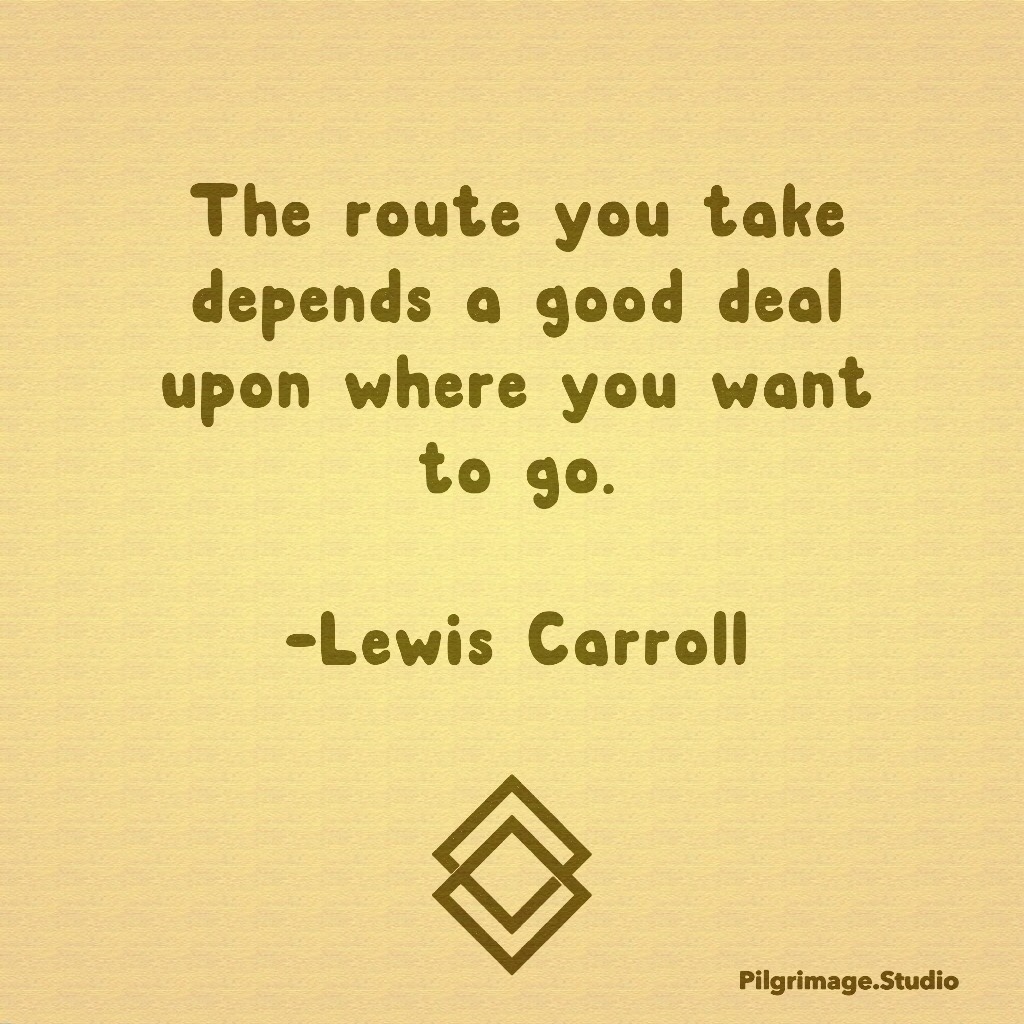
    The route you take depends a good deal upon where you want to go. -Lewis Carroll


    Photo@Pixabay