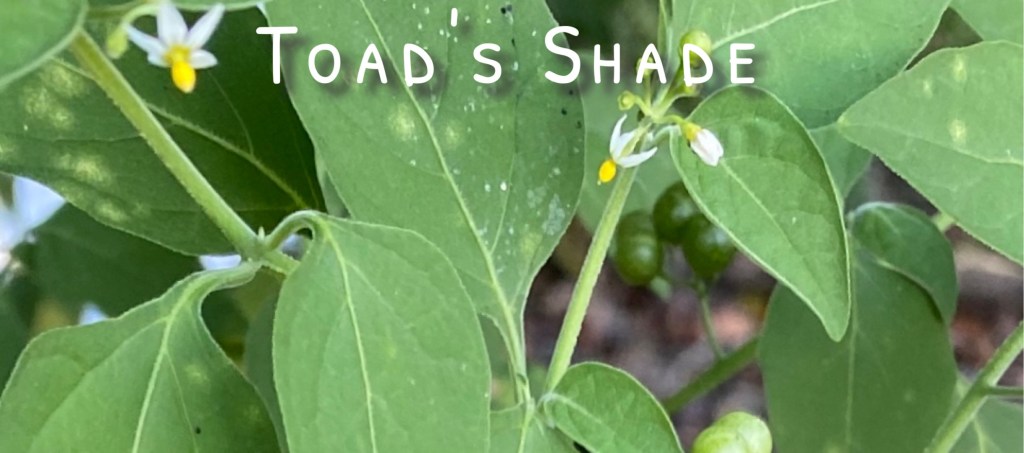
Toad’s Shade

🌿Cee’s Flower of the Day – FOTD🌿
Solanum americanum, or Black nightshade, has family members we know well, such as tomatoes and eggplants. It has been called Garden nightshade, American black nightshade, Common nightshade, Petty morel, Glossy nightshade, Apple of Sodom, Small-Flowered nightshade, Common purple nightshade, Hound’s berry, and The Black Toad. This plant has, many times, been synonymously referred to as Solanum nigrum. Like other humble-looking garden plants such as the dandelion, its leaves provide shade for garden toads.
Misconception
This plant has been confused with the black, berry-producing plant called belladonna (also used as medicine – such as in homeopathic remedies), which is very poisonous and often called, “deadly nightshade”. While there are very toxic nightshades, the ripe, Black nightshade berries and young greens have been used for food. Also referred to as, Wonderberries or Sunberries, they have been made into sauces and jams and the plant is also considered to have medicinal properties. *The green berries can be toxic.
“Do not mistake the deadly nightshade for this, if you know it not, you may then let them both alone.” – – Nicholas Culpepper
Noticing the Difference
Belladonna berries, and the bracts (calyx) at the base of the berries, are much larger on the Deadly nightshade than on the the Black nightshade plant. Photos showing the difference between the Black Nightshade and Belladonna. The flowers of the belladonna are also different than the Black Nightshade.
Of course, when in doubt… do not eat unknown berries or plants. The ripe, Black nightshade berries from my picture were sweet but we didn’t dare eat much from it until we read more about the plant.
Be well, be safe, and happy foraging friends!











 Pilgrimage Studio