Blog

  • 90/10

    90/10

    by Beth Haley

    IIN Class Notes

    This is the first diet I have studied for my integrative nutrition class with the Institute for Integrative Nutrition (IIN). I instantly liked this one because, for me, an eating style that is easy to sustain, and one that is more of a lifestyle than a “diet”, would be something I would try.

    The 90/10 (Integrative Nutrition Diet) was created by IIN’s founder and director, Joshua Rosenthal, MScEd

    Sources: Joshua Rosenthal’s Integrative Nutrition: Feed Your Hunger for Health and Happiness


    What is Bio-Individuality?

    The foods that work for one person, aren’t necessarily the foods that work for another person. There is no “one-size-fits-all” diet. Each person is different.


    What are Primary foods?

    Health isn’t just food. Primary foods are not found on your plate. They are lifestyle elements such as cooking, finding enjoyable ways to be active, doing work you love that is satisfying, developing your spirituality, getting adequate sleep, playing board games with friends and family, getting the kids to the park to play, getting out into nature, inviting people over for dinner, and establishing and maintaining healthy and supportive relationships. When these primary foods are in healthy balance, along with a healthy diet, the body tends to be able to heal itself on its own.

    Toxic people and unhealthy relationships, unhealthy practices or habits, and stress and tension should be kept at a minimum.

    Dr. Tieraona Low Dog from the Mountain Rose Herbal Radio Podcast episode titled: “5 Tips for a Healthy Lifestyle” which was recorded at the Free Herbalism Project and hosted by Mountain Rose Herbs, stated it this way (paraphrased):

    There was a large study done by Brigham Young University, more than 144 studies (that’s more than 300,000 people), which found that being lonely or socially isolated was as dangerous for their health, as smoking 3/4 of a pack of cigarettes a day, being an alcoholic, never exercising, and was twice as dangerous as being obese.

    Nourishing our social relationships (a huge part of our primary foods) is necessary for wellness, healing, and overall health.

    The New York Times

    Science Daily

    BYU News


    90/10 Integrative Nutrition Diet

    The idea of the 90/10 Integrative Nutrition Diet is that you eat healthy foods 90% of the time and eat less healthy foods 10% of the time.

    In other words: instead of fighting your wants, you can indulge cravings 10 percent of the time, and then adhere to your healthy foods 90 percent of the time. This gives you some flexibility to indulge guilt-free, while maintaining a healthy overall balance.

    The 90/10 plan is easy to follow, and you decide how to organize it to best suit your needs.

    The general food list includes more fruits and vegetables, sweet vegetables to help with sweet cravings, beans, experimenting with whole grains and proteins, and drinking plenty of water.

    Useful tool: Food Journaling. This may include elements such as, your emotions surrounding certain foods which affect your eating habits.


    Included:

    • Vegetables

    • Fruits

    • Whole grains

    • Meat

    • Poultry

    • Fish

    • Eggs

    • Beans

    • Dairy

    • Nuts and seeds

    • Healthy oils


    Foods to avoid:

    • Sugar

    • Processed foods

    • Refined grains

    • Trans fats

    • Caffeine

    • Tobacco


    PROS

    • It’s a lifestyle not a diet

    • There is a wide variety of foods and nutrients that you can eat

    • It is very adaptable to each individual


    CONS

    • Some people need a more rigid guideline to meet specific goals

    • People with allergies may not be able to eat the variety of foods allowed

    • Journaling can be a helpful tool unless it becomes obsessive


    This is a general outline of the 90/10 Integrative Nutrition Diet, and some of the principles Joshua Rosenthal works with in his book, Integrative Nutrition: Feed Your Hunger for Health and Happiness, and in his course at the Institute for Integrative Nutrition.

  • Perceptions

    Perceptions

    by Beth Haley

    What we concentrate on and what we perceive is what creates our reality, not just the events themselves. As we begin to look at things more through the eyes of beauty, we begin to see more beauty in our lives.

    It is the same in choosing to see limitations: we begin to see limitations everywhere.

    With our basic senses, we notice sound, smell, touch, taste, and sight. Perception is how we interpret what we sense. But, perception is not only what our senses recognize. Perception is also how we choose to see things and that determines how we respond to the information.

    Our perceptions shape our reality. As we shift perceptions, we also shift our reality.

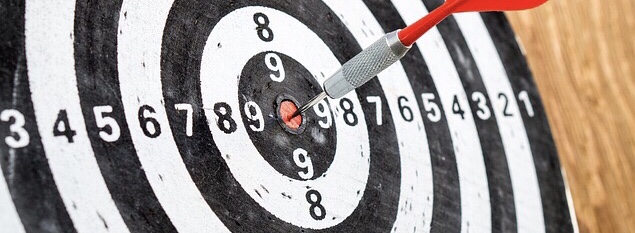
    Is the glass half full or half empty?

    You get to decide.


    KELLEPICS@PIXABAY

  • Choosing Your Own Mantra

    by Beth Haley

    Mantras are positive phrases, words, or statements used to inspire and motivate change and transformation in our lives. They can be a quote, proverb, saying, or any word, name, or statement that holds great meaning to you.

    Mantras can be complex or very simple. Examples of mantras that you could make up or adopt as your own could be:

    Happiness

    Love

    I write my Destiny

    Peace

    The Divine is in all Things


    Here is an interesting way I have learned to choose a mantra:

    Choose a favorite short verse, quote or passage. Read this passage over until you are familiar with it enough to repeat it to yourself without reading it. Once memorized, close your eyes and repeat the verse in your mind. If one particular word grabs your attention, remain focused on that word and its meaning. If it resonates strongly with you, use it as a personal mantra. Or, use part or the whole verse!

    Combining your word with the word before it, and the word after it, may make a catchy phrase. Or make up your own phrase using this word…

  • Balance

    Balance

    by Thela Foxgood

    In times past, the Goddess was seen as a Trinity: the maiden or virgin, the mother, and the crone.

    The virgin belonged to herself and was owned by no one. Sometimes she dedicated herself to spiritual service, belonging to a higher call, rather than to earthly attachments.

    The mother was in touch with her creative powers, whether creating new life, art, creatively nurturing her environment, or by fulfilling many other roles out in the world.

    The crone represented the wisdom of age.

    Both women and men can connect to Goddess. To women, the Goddess represented their inner-self and the nurturing, receptive power within them. The crone represented not only wisdom, but also how all phases of life are sacred. To men, the Goddess represented a connection to female aspects within themselves.

    We each have our own unique balance of male and female strengths within us. This balance is not one that can be dictated by others. Our true nature is inherent within us. When we accept our true self, it is, or becomes an instinctive knowing.

    We were not born to be carbon copies that meet societal expectations. We each have our own distinct balance of male and female which makes us whole.

    What male or female strengths do you have within yourself?

  • Uncarved Block

    Uncarved Block

    Haiku by Thela Foxgood


  • Origami

    Origami

    by Beth Haley

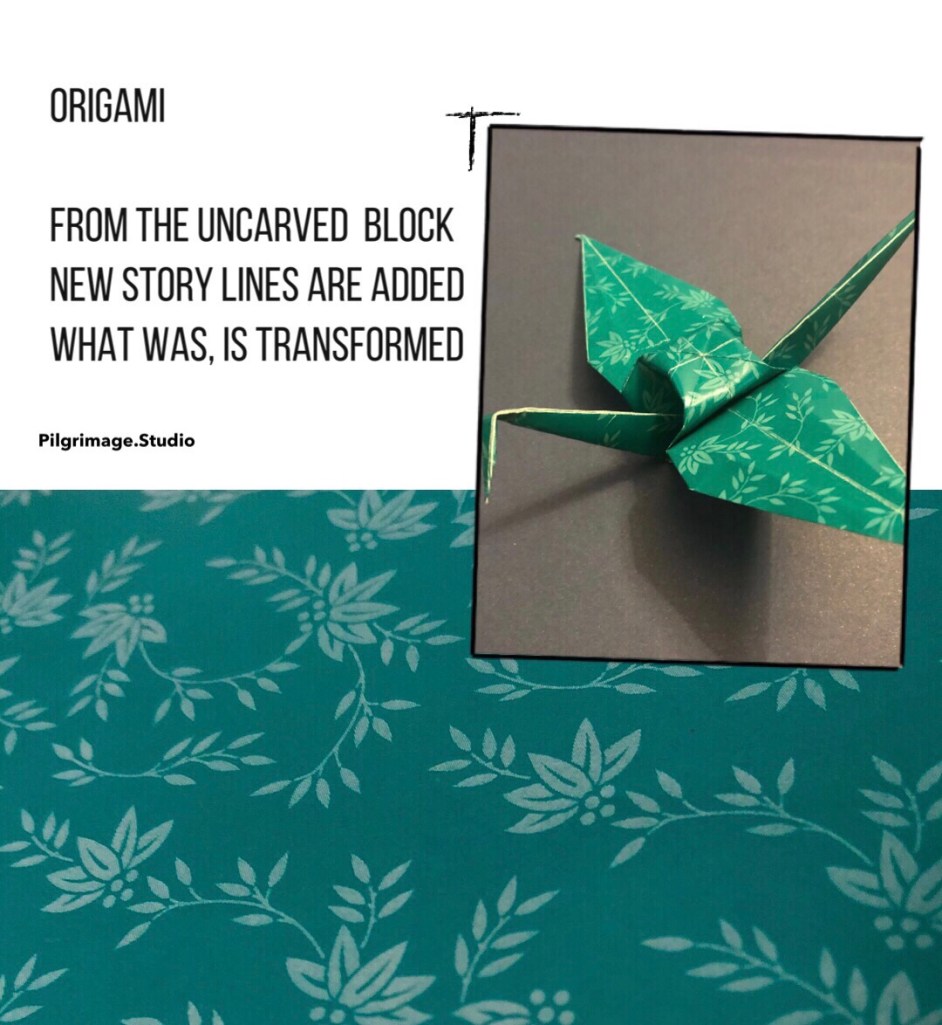
    From this blank square of paper, the zen question, “Who am I?” becomes, “What am I?”

    This seemingly simple art can fold and unfold into many layers of meaning.

    The end result is, not necessarily, as important as the process of creating. If we are mindful throughout this creative endeavor, we may each see something different.


    “All things are given life and form.”

    Religion in Chinese Garments by

    Karl Ludvig Reichelt


    The square is the uncarved block (Pu is a Chinese word meaning “unworked wood”). The Taoist meaning of Pu is: perception without prejudice and without the distinctions of right or wrong, beautiful or ugly, good or bad, black or white.

    This square of paper is my uncarved block.


    Transformation

    Fold after fold. Crease and un-crease; a new creation is coming into being. Just like we can take the old lines and creases of our life and transform them into something new.


    Memory

    The paper has memory; it remembers its past lines. They are like scars on the soul. They may heal, but once there, those lines remain.


    Self examination

    We can unfold (turn back time), and remember our past. Then, make new creases and story lines to form a new shape, outlook, new picture, or a new present and future.


    Haley 2019


  • Sacred Numbers

    Sacred Numbers

    by Thela Foxgood

    In every culture, or religion, there are numbers considered to have special meaning. For instance, in Celtic tradition, you see the number three, and its multiples, represented in many different ways.

    The most important multiple of three was nine, which is the natural result of three-times-three.

    Nine is a number that always returns to itself.


    To test this for yourself, multiply any number by nine.

    9 x 3 = 27

    Add the sum (2 and 7) together : 2 + 7 and you’ve returned to 9


    620 x 9 = 5580

    5 + 5 + 8 + 0 = 18

    1 + 8 = 9


    6958 x 9 = 62622

    6 + 2 + 6 + 2 + 2 = 18

    1 + 8 = 9


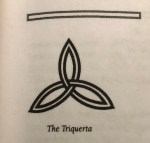
    The Triquerta (or spelled Triquetra) or Trinity knot, is one of the best known Celtic symbols.

    Interlaced triquetra : trefoil

    Triquetra; from the Latin adjective triquetrus, three-cornered) denotes a particular complicated shape formed of three vesicae piscis (the leaf-like shape in between two equal diameter circles each centered on the circumference of the other), sometimes with an added circle in or around the three lobes. 

    Wikipedia


    Celtic Knot @ Pixabay

  • Post-It Notes 5

    Post-It Notes 5


    Today, I also re-wrote, “I Thought I Couldn’t Meditate.” Someone had mentioned that the original post wasn’t very “reflective” and I realized that it was reflective, but not in a zen sort of way.

    Instead, it reflected some of the sharp edges of frustration that I encountered during my early days in meditation.

    So, thank you friend for your wise words 😊

  • Ritual Acts

    Ritual Acts

    by Thela Foxgood

    There’s something about starting and ending the day with a simple ritual that can bring us a peace and sense of well-being. Many of us create and attend to our own rituals every day.

    Rituals can be speaking specific words (mantras, prayers), going through the routine of certain actions, singing a song, journaling, working through some yoga poses, walking in the woods, meditating, or even dancing. These can transform states of mind, emotion, and our physical condition as well.

    Choosing a specific state of mind enables a shift from one state-of-being to another.

    For example, focusing my mind on an attitude of gratitude in the morning, instantly shifts my mind and emotions to a specific outlook for the day ahead. It is an intentional act and the more I do this, the more habitual it becomes.

    For me, ending the day with certain rituals determines how the sun sets on my internal world which then affects my external environment.

    Regardless of what has happened during the day, when I get home and hit the yoga mat for a reiki treatment, some quiet time, meditation, prayer and writing, it changes everything.

    Because it changes me.

    These rituals bring certain aspects of myself that have gotten frayed, bent out of shape, or out of balance throughout the day, back into alignment.

    When simple acts are repeated, especially when they are repeated with intention, they increase in meaning.

    A simple ritual I grew up with is bedtime prayers. Normally this involves speaking a blessing over family and friends, our sleep, our dreams, and our welfare for the next day.

    We got into the habit of taking turns, and on one particular night we didn’t realize that the person chosen for this evening ritual was completely exhausted. We joined hands and huddled up, waiting expectantly for our evening blessing. And, instead of our usual ritual, she stated simply:

    “Dear Lord, please pray for us.”

    In the space of time it took to blink after this unusual (for us) request, she would have passed out into the arms of deep slumber…

    If it had not been for the fact that the rest of us were rolling on the floor in laughter.

  • I Thought I Couldn’t Meditate

    I Thought I Couldn’t Meditate

    by Thela Foxgood

    For years I tried meditation. I came to the conclusion that “meditation” was just a nice-sounding word for a concept that was completely beyond my grasp. It appeared to me, at that time, that meditation was for a select group of gifted individuals.

    And, that I was not one of them.


    I mean

    “f o c u s o n y o u r b r e a t h”

    was interesting for like five seconds.

    I kept hearing Crush in Finding Nemo saying, “Focus dude.”


    Despite my setbacks, I knew there was something in it. I just kept coming back to it.

    While it wasn’t yet within my grasp, I could see it in the distance… something important, almost within reach; if I could just find the right key to unlock it.


    Then one day, I was reading a book called Celtic Myth and Magic by Edain McCoy, in which there is a section on meditation.

    In her book, she mentions holding the image of a symbol in your mind:

    “When you can sustain an image for five to ten minutes without your consciousness wavering, begin to allow your inner-self to feel a kinship to the symbol.”

    I looked at the clock thinking, “Kinship? OK. Five minutes. I’ll try this one more time.”


    The symbol I chose was the triquerta.


    This is how it happened:

    I set my timer for five minutes.

    • I visualized this symbol
    • It was hazy at first, then became crystal clear
    • I gazed at it from a distance
    • Then I stepped closer, scrutinizing every point and curve intently
    • It began to slowly rotate, and I looked at it from all sides
    • I traced it, as though I was drawing it
    • I was fascinated at how the symbol was one fluid line

    My timer went off and I reset it.

    • Small tongues of flame leaped up from the symbol
    • I reached my hand out and touched it
    • I was surprised that, despite the flames, it had a safe and comfortable warmth
    • I let it rest over the palm of my hand
    • The triquerta then changed from flames of orange, yellow and red to frosty blue and white
    • Icicles clung to its frozen surface
    • An icy heat made my hand tingle like drops of peppermint essence

    My timer went off again.

    Ten minutes! It was the first time I had ever successfully meditated.


    From starting out with one symbol or image, you may find in time, that you can add more symbols, motion, color, scent, temperature, taste, and more complex scenes.

    Reflect on the meaning this symbol or picture has to you, and a message you may find.

    Now, I use images all the time. Art and symbolism are wonderful tools. You never know what journey you may take!

    If you haven’t found a specific way of meditating that works for you yet, don’t give up! It’s out there. You’ll find it.

    Now I lead meditations, and this gift that I found for myself has become a gift I share with others.


    My Wish

    I wish you success in finding that key (or keys) that unlock doorways along the path of your personal pilgrimage, journey or quest.


    Edain McCoy